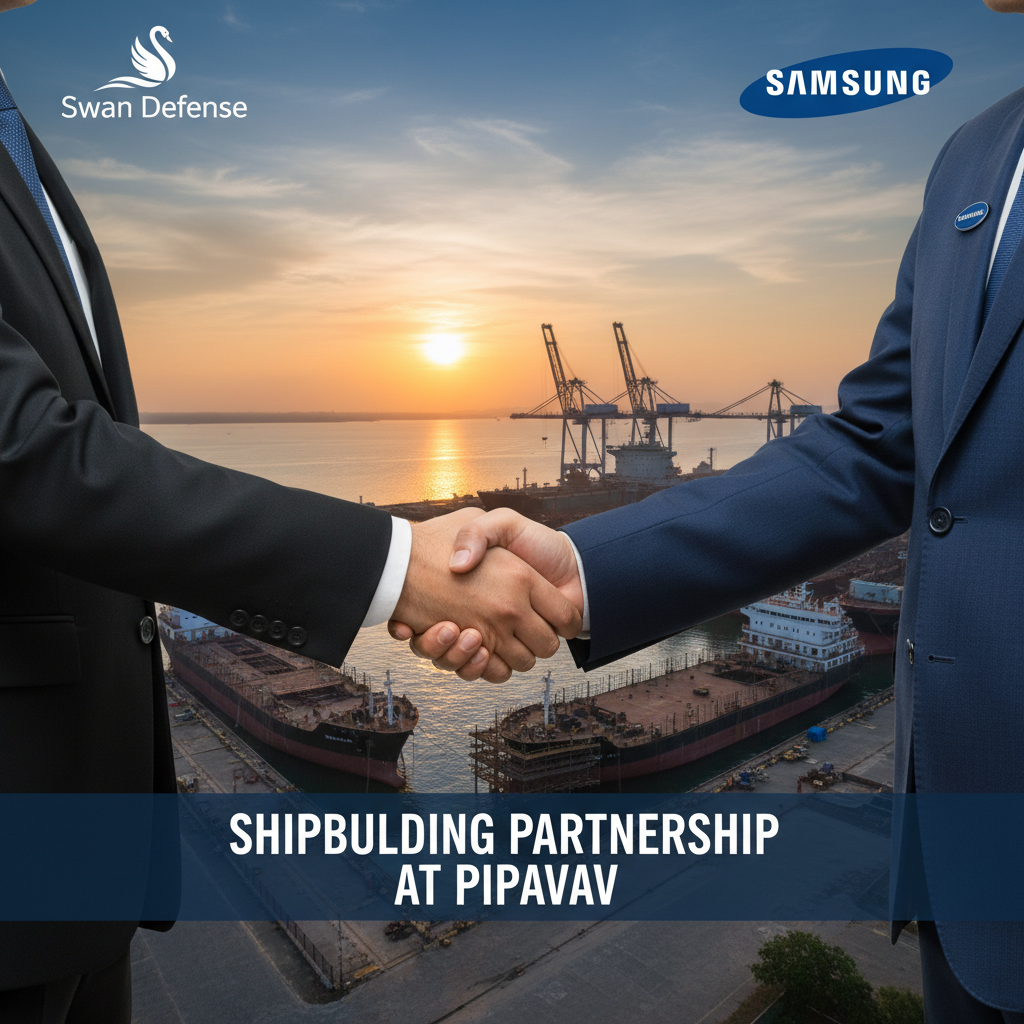
The news hit the wires, and the market seemed to breathe a collective sigh of… potential. Swan Defence, they announced, was teaming up with Samsung. The goal? To build ships. Specifically, tankers and gas carriers, right here in India, at the Pipavav yard.
It’s a move that, on the surface, makes a lot of sense. India wants to build more ships, reduce reliance on foreign yards, and boost its domestic shipbuilding capacity. And Samsung, well, they know how to build things.
The partnership, reportedly a license-led one, is a strategic play. It’s not just about slapping some steel together; it’s about technology transfer, skill development, and, hopefully, a long-term commitment. Officials are hoping this will be a step to compete globally.
The Pipavav shipyard, of course, is key. Located on the coast, it has the infrastructure, the space, and the strategic location to handle large-scale shipbuilding. It has also seen its share of challenges in the past, a factor that makes this partnership all the more crucial.
According to reports, the initial focus will be on tankers and gas carriers. Those are complex vessels, requiring specialized expertise and advanced technology. The fact that the partnership is starting with these kinds of projects suggests a serious commitment to building high-value ships.
But the real question, the one that’s probably keeping analysts busy, is the financial aspect. How will this partnership be structured? What are the terms of the license agreement? And, perhaps most importantly, what kind of return on investment can be expected?
“This is a very interesting development,” said Dr. Priya Sharma, a maritime economist at the Center for Economic Policy Research. “The success of this venture will depend on several factors, including the efficiency of the yard, the availability of skilled labor, and the overall demand for these types of vessels.”
Demand, of course, is a moving target. The global shipping industry is subject to all sorts of fluctuations – geopolitical events, changes in trade patterns, and, of course, the ever-present specter of economic downturn. All of those things could significantly impact the success of this partnership.
It’s important to keep an eye on the details, but it seems like a bet on the future. The Indian government has been pushing for self-reliance in various sectors, and shipbuilding is certainly a strategic one. This tie-up could be a significant step in that direction, or maybe I’m misreading it.
Still, the air in the room felt tense.
The deal’s potential is clear.
And the numbers, they’ll tell the story.
About the Author