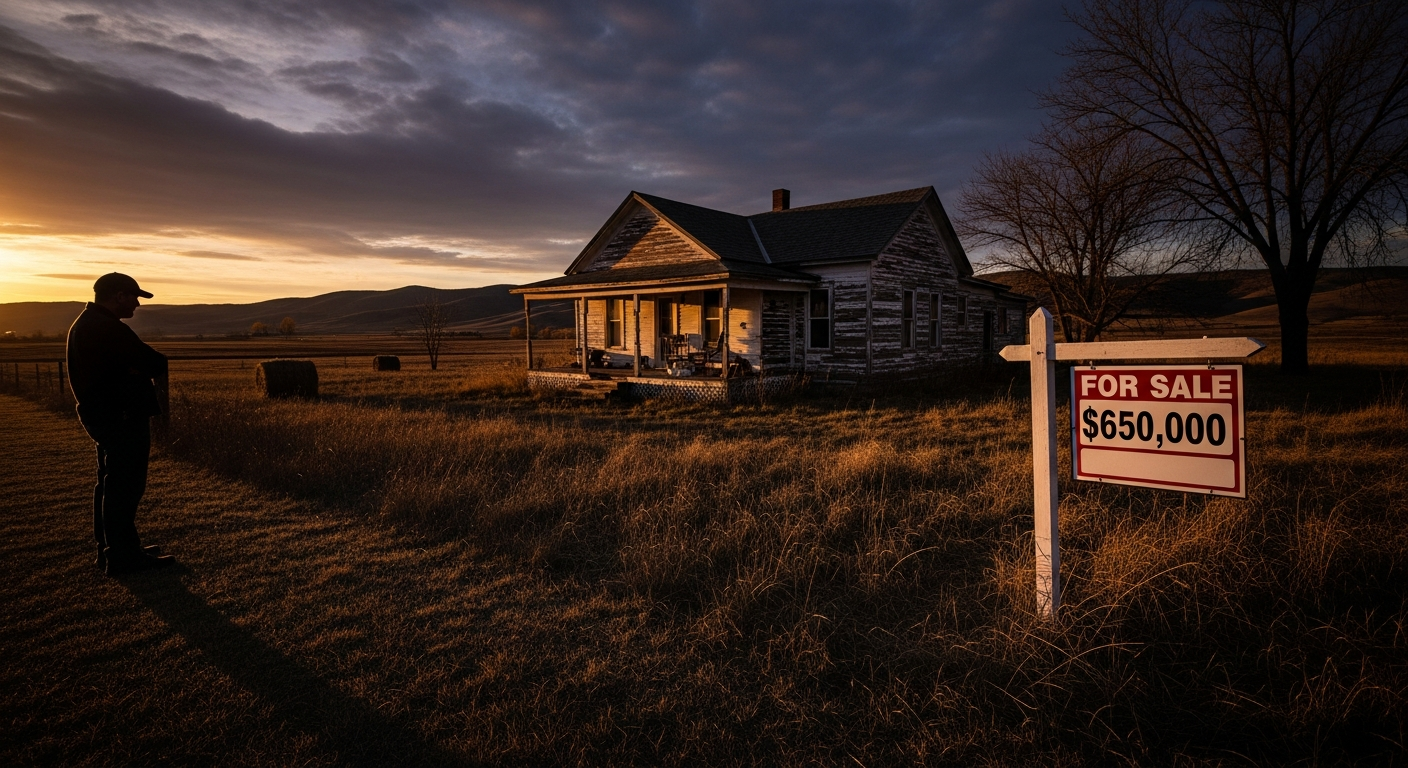
The county fair was still up, the Ferris wheel a skeletal reminder against the twilight sky. Driving through rural Pennsylvania, the signs were subtle, but everywhere: ‘For Sale’ leaned against weathered porches, a quiet desperation. It’s a scene playing out across the country.
The numbers hit hard, like a sudden pothole. According to recent data, the income needed to purchase a home in rural America has jumped a staggering 105.8% since the pandemic. That translates to needing $74,508 annually now, compared to $36,206 back in 2019, before the world changed.
What happened? Where did it go wrong?
The pandemic spurred a migration, a flight from crowded cities. Rural areas, once havens of affordability, saw an influx of buyers. Demand surged. Prices followed. That’s the basic economics, anyway.
But there’s more. Wages in rural areas haven’t kept pace. Existing homeowners, many on fixed incomes, are increasingly property-tax burdened. The dream of homeownership, once a given, is now a distant horizon for many. And the cycle spins: fewer first-time buyers, less turnover, a stagnant market.
“We’re seeing families priced out, forced to move further away from jobs and support systems,” said Sarah Johnson, a real estate agent in rural Maine, in a phone interview. “It’s not just about the numbers; it’s about the erosion of community.”
The implications ripple outward. Fewer teachers. Strained emergency services. Empty storefronts. The fabric of these communities, slowly unraveling, thread by thread. The who, the why, the when — all converge on a single, stark reality.
The government is trying to help, with some programs, but the scope of the problem is vast. The Federal Housing Finance Agency (FHFA) data shows the trends. One town at a time, one family at a time, the story unfolds. It’s a story of rising costs, stagnant wages, and dreams deferred.
The sun sets, painting the sky in bruised purples and oranges. The Ferris wheel stands still. The ‘For Sale’ signs remain.
About the Author