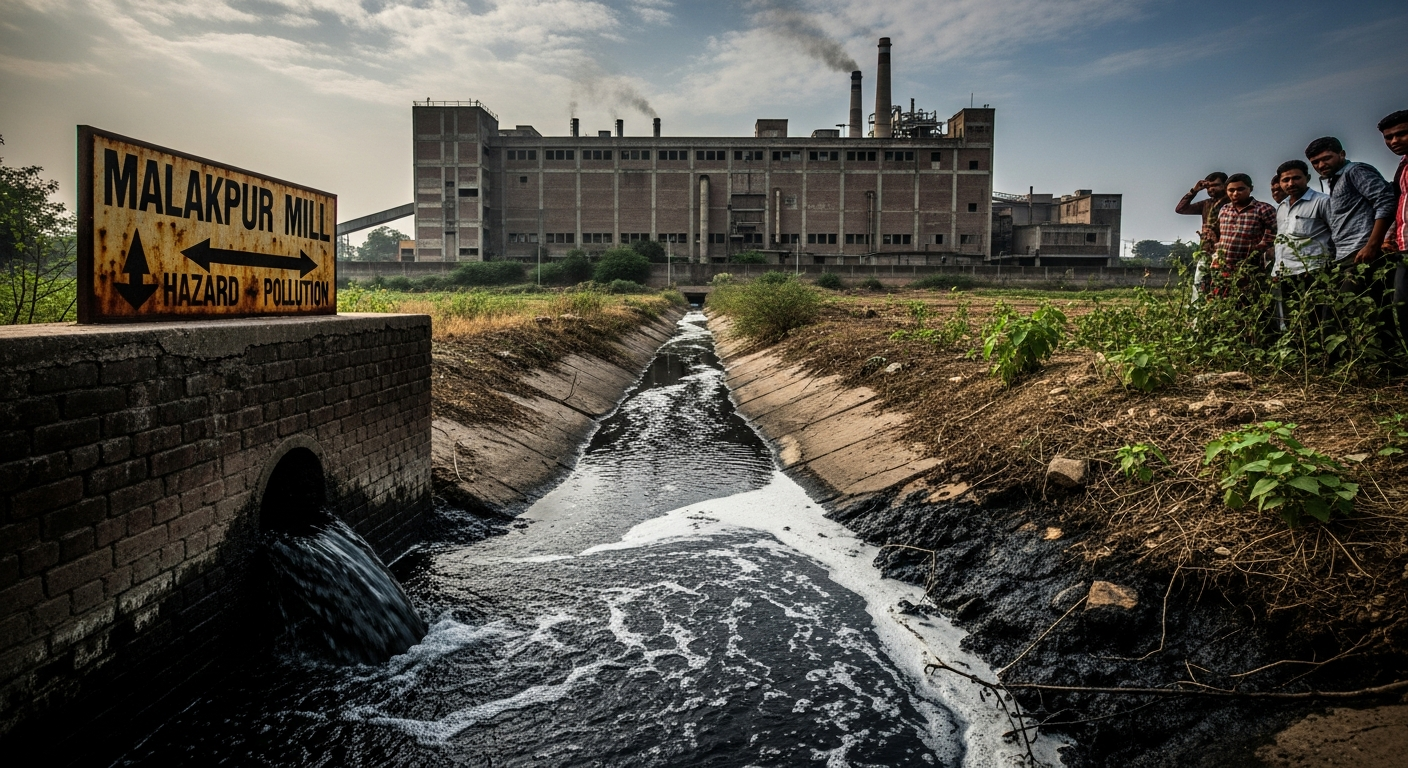
Malakpur Mill’s Unpaid Dues & Toxic Drain Threaten Baghpat
In Baghpat, a concerning situation unfolds as farmers grapple with significant financial burdens and environmental hazards linked to the Malakpur Mill. According to Punjab Kesari, the mill owes farmers a staggering ₹1.84 billion in unpaid sugarcane dues, a situation that has persisted for an extended period.
Unpaid Dues and Farmer Distress
The outstanding payments have placed immense strain on the local farming community. The delayed payments not only affect their immediate financial stability but also impede their ability to invest in future crops, creating a cycle of economic hardship. The farmers, who are the backbone of the region’s agricultural sector, are now left struggling to sustain their livelihoods due to these long-pending dues.
The Resurfacing of the Toxic Drain
Adding to the farmers’ woes is the reopening of the Malakpur sugar mill, which has brought back another significant concern: the resurgence of a toxic drain. This drain, once again flowing through the villages, poses a severe health risk to the residents. This situation is particularly alarming because the drain’s toxic contents can lead to the spread of diseases, directly impacting the health and well-being of the local population.
Environmental and Health Concerns
The toxic drain’s return is a stark reminder of the environmental challenges associated with industrial operations. The mill’s operations, while providing economic activity, are now directly linked to potential health risks for the villagers. This situation demands immediate attention and action from the concerned authorities to mitigate the environmental and health hazards.
A Call for Action
The combination of unpaid dues and the environmental threat from the toxic drain paints a grim picture for Baghpat’s farmers. Addressing these issues requires a multi-pronged approach. Firstly, the Malakpur Mill must prioritize the settlement of outstanding dues to provide financial relief to the farmers. Secondly, there is an urgent need for the government and mill authorities to take decisive action to manage and mitigate the toxic drain’s impact on public health. Only through concerted efforts can Baghpat’s community hope to overcome these challenges and secure a healthier, more prosperous future.
About the Author