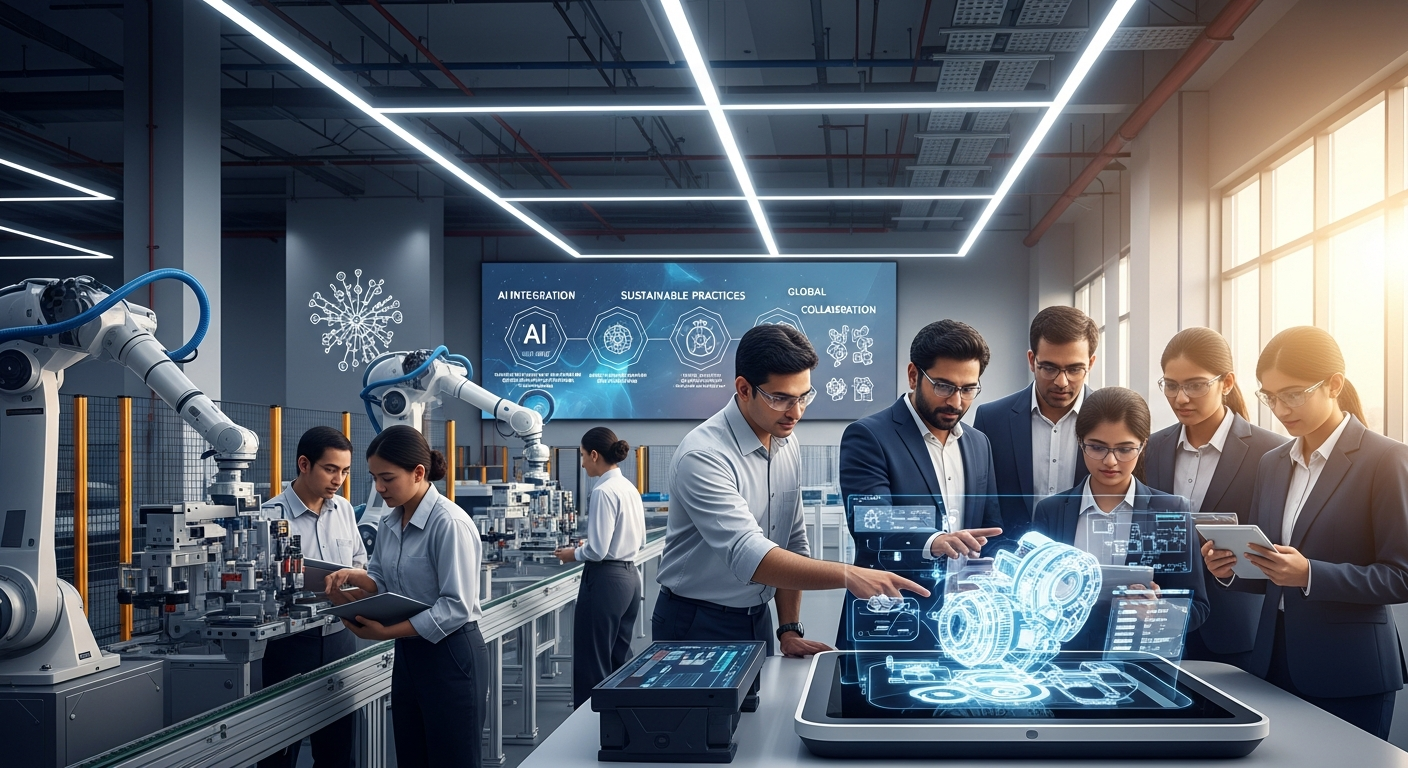
India’s Manufacturing Ascent: AI, Collaboration, and Sustainable Practices
India is on a trajectory to become a global manufacturing hub, a vision underpinned by strategic initiatives and technological advancements. At the core of this transformation lies a commitment to industrial excellence, driven by the integration of cutting-edge technologies and collaborative strategies. This shift is not merely about increasing production; it’s about establishing a robust, sustainable, and technologically advanced manufacturing ecosystem.
The Role of AI in Revolutionizing Manufacturing
Artificial intelligence (AI) is playing a pivotal role in reshaping manufacturing processes across India. AI applications are being utilized to optimize production workflows, enhance quality control, and predict equipment maintenance needs. By leveraging AI, manufacturers can achieve higher efficiency levels, reduce operational costs, and improve overall productivity. The implementation of AI also facilitates data-driven decision-making, allowing businesses to adapt quickly to market changes and customer demands.
Collaboration as a Catalyst for Growth
Collaboration is another key factor in India’s manufacturing evolution. Partnerships between industry stakeholders, including businesses, research institutions, and governmental bodies, are fostering innovation and knowledge sharing. These collaborations are crucial for developing new technologies, sharing best practices, and creating a skilled workforce capable of meeting the demands of a rapidly evolving industry. Such collaborative efforts ensure that India remains competitive on a global scale.
Sustainability: A Cornerstone of Modern Manufacturing
Sustainability is no longer an option but a necessity in modern manufacturing. As India expands its manufacturing capabilities, there is an increasing emphasis on adopting sustainable practices. This includes reducing carbon footprints, conserving resources, and implementing circular economy models. Sustainable manufacturing not only benefits the environment but also enhances the long-term viability and competitiveness of businesses. It aligns with global standards and consumer expectations for responsible business practices.
Design Governance: The Foundation of Industrial Excellence
Design governance is emerging as the backbone of industrial excellence, ensuring that products are not only innovative but also meet stringent quality standards. This involves establishing clear processes for design, development, and testing. Effective design governance promotes efficiency, reduces errors, and ensures that the final products meet both customer expectations and regulatory requirements. It is a critical component in achieving and maintaining a competitive edge in the global market.
Conclusion
In conclusion, India’s journey to becoming a global manufacturing hub is powered by a strategic blend of AI, collaboration, and sustainable practices. With a focus on design governance and a commitment to industrial excellence, India is well-positioned to achieve its ambitious goals, setting a new standard for manufacturing in the 21st century.
Source: Top ET Manufacturing
About the Author