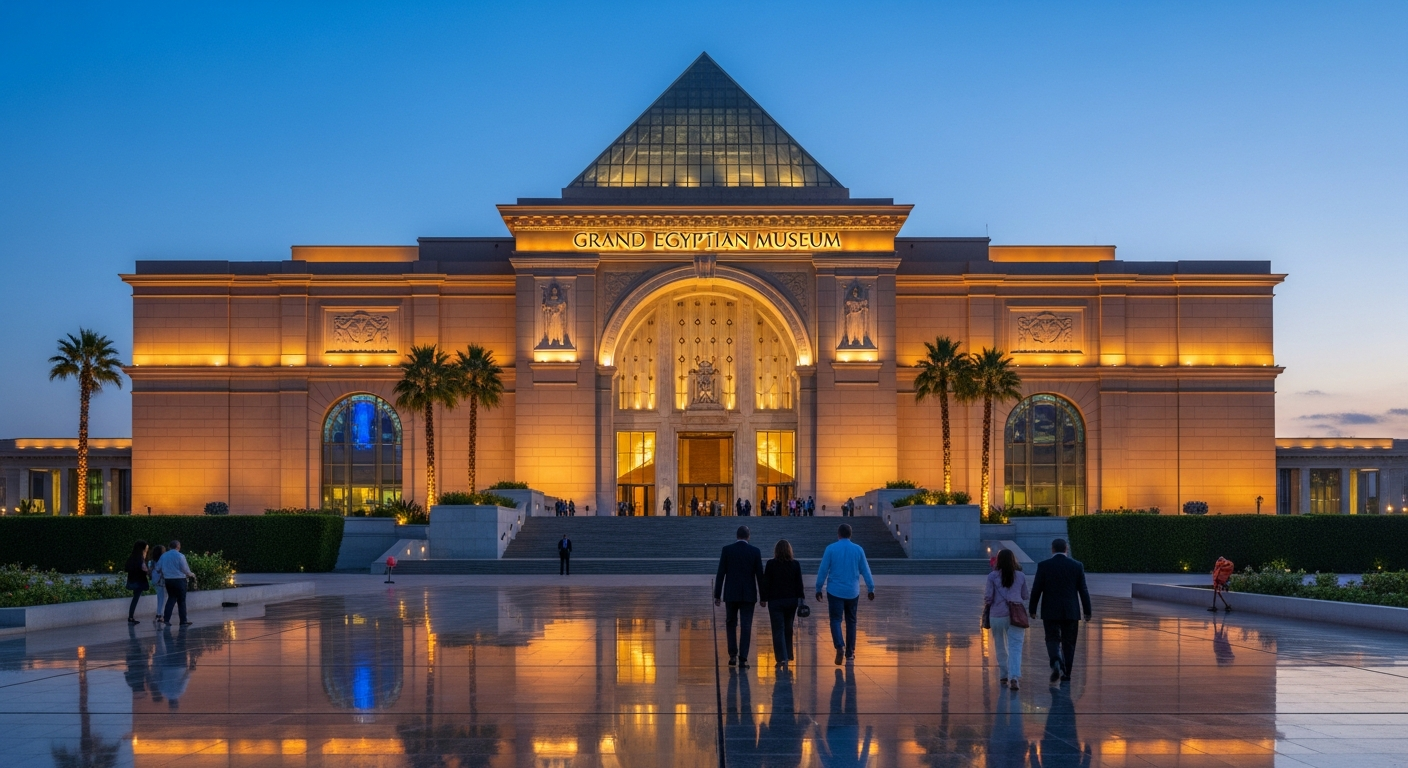
Grand Egyptian Museum: A New Icon for Tourism, Investment, and Economy in Egypt
Egypt is on the cusp of a new era, with the upcoming opening of the Grand Egyptian Museum (GEM) promising to redefine the nation’s economic and cultural landscape. According to Egyptian Finance Minister Ahmed Kouk, this monumental project, spearheaded by President Abdel Fattah El-Sisi, marks a significant moment in history, not just for Egypt, but for the world.
A Beacon for Tourism and Investment
The GEM is envisioned as a catalyst for tourism, investment, and economic growth. Kouk emphasized that the museum, the world’s largest dedicated to a single civilization, is a testament to Egypt’s rich heritage and a symbol of its commitment to progress. The museum’s diverse collection of artifacts and modern display methods are expected to attract a global audience, boosting tourism and related sectors.
Furthermore, the GEM is poised to strengthen Egypt’s appeal to foreign investors. Kouk highlighted the museum’s role in showcasing the strength and diversity of Egypt’s investment environment, with the aim of attracting more direct foreign investment. The project is also seen as a successful example of partnership between the public and private sectors, demonstrating Egypt’s ability to foster sustainable economic returns.
Economic Impact and Future Prospects
The inauguration of the GEM is expected to provide a significant boost to the Egyptian economy. Kouk noted that the museum will enhance the competitiveness and attractiveness of Egypt as a tourist destination. The government is committed to working with all relevant stakeholders to unlock the full potential of the Egyptian economy, with expectations of a brighter future.
Adding to the excitement, commemorative coins made of gold and silver will be available for purchase at the GEM starting next week, further highlighting the museum’s significance and its role in promoting Egypt’s cultural heritage. The GEM is more than just a museum; it is a symbol of Egypt’s ambition, a testament to its past, and a beacon for its future.
Source: Annahar
About the Author