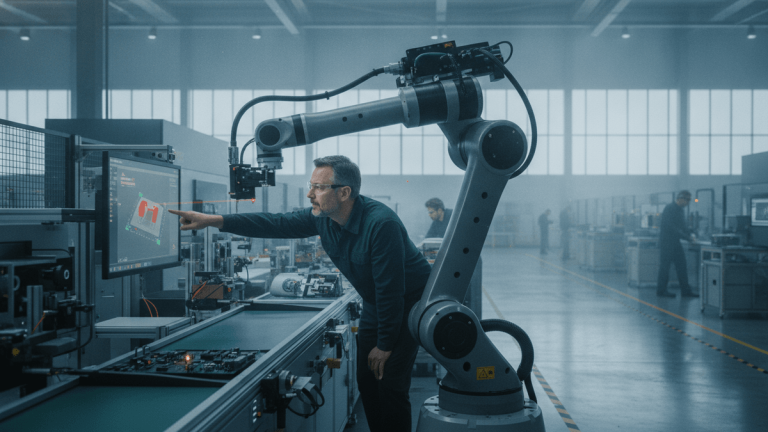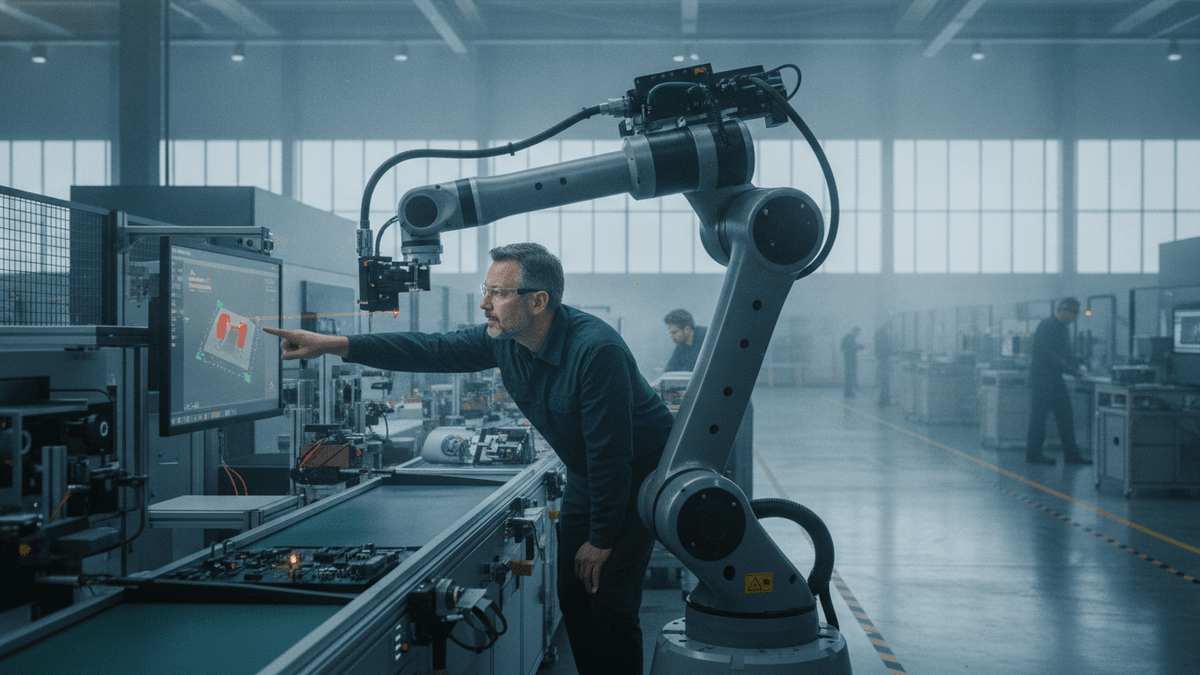
Engineer interacts with robotic arm on an assembly line.
From Reactive Alarms to Predictive Safety: Industry 5.0 Must Be ‘People-First’
For years, the industrial landscape has been dominated by a singular focus: enhancing factory speed and efficiency. However, this pursuit often led to systems designed to react only after an incident had occurred. The advent of Industry 5.0 signals a critical shift, emphasizing a ‘people-first’ approach that moves from reactive alarms to predictive safety.
This evolution recognizes that true industrial advancement lies not just in optimizing processes, but in safeguarding the human element within them. While Industry 4.0 laid the groundwork for automation and data exchange, Industry 5.0 seeks to re-center the human worker, fostering collaboration between humans and machines. The goal is to create industrial environments that are not only productive but also inherently safer and more resilient.
The transition to predictive safety means leveraging advanced analytics and AI to anticipate potential hazards before they materialize. Instead of simply alerting workers to a problem that has already happened, systems will be designed to identify precursor conditions and intervene proactively. This proactive stance is crucial for preventing accidents, minimizing downtime, and ultimately, improving the overall well-being of the workforce.
As industries embrace Industry 5.0, the emphasis on human-centric design will become paramount. This involves creating systems and processes that augment human capabilities, rather than replace them, and ensuring that technology serves to enhance safety and job satisfaction. The future of manufacturing lies in a harmonious integration of human expertise and technological innovation, driven by a commitment to predictive safety and the well-being of its people.
About the Author