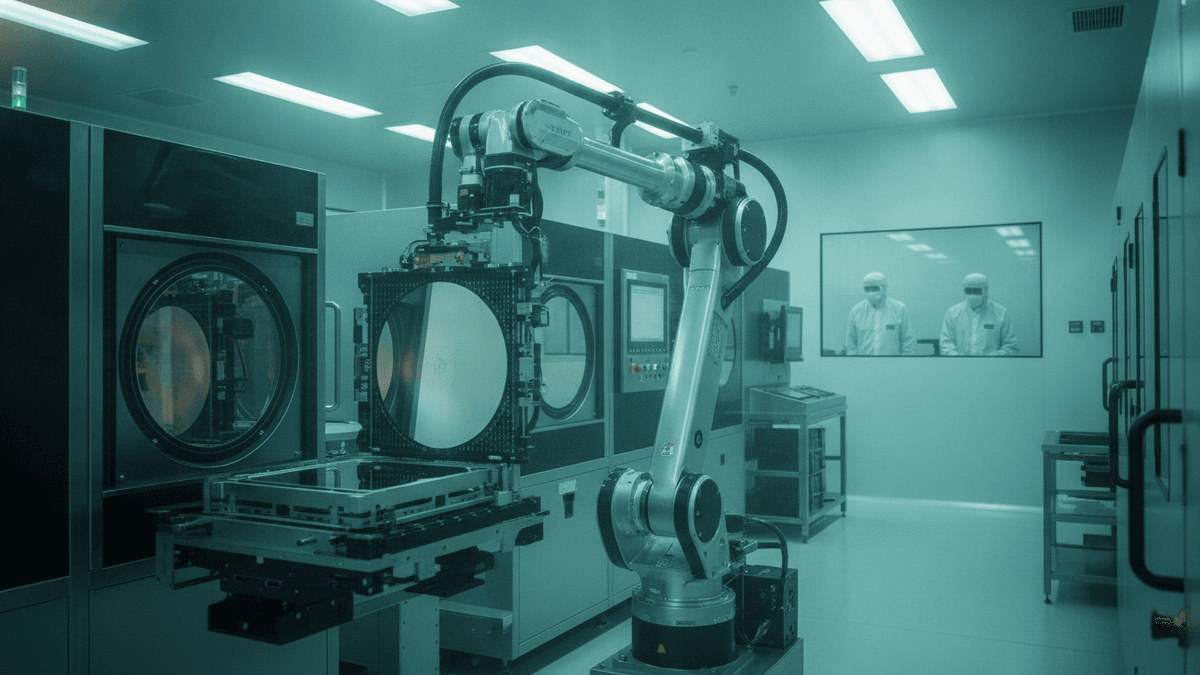
Robotic arm handling silicon wafer in a sterile chip manufacturing cleanroom
Apple customers should brace for potential price increases on their favorite devices as the tech giant grapples with escalating costs for memory and storage chips. CEO Tim Cook has stated that these price hikes are now “unavoidable.”
In an interview with The Wall Street Journal, Cook acknowledged that Apple has strived to absorb these rising expenses but can no longer shield consumers entirely from the impact. While he did not specify when the price adjustments would take effect or which products would be affected, Cook emphasized the unsustainable nature of the current situation.
“Unfortunately, price increases are unavoidable,” Cook told the outlet. “We’re doing our best to mitigate the huge increases that are being passed to us, and we’ve been trying to shield our customers from the increases, but the situation has become unsustainable.”
The remarks come at a time when the burgeoning artificial intelligence (AI) sector is consuming vast quantities of memory and storage chips. Research firm TechInsights estimates that Apple might need to add approximately $270 to the cost of its next iPhone Pro model to maintain its profit margins.
Cook highlighted DRAM chips as a particular concern, noting their increased utilization in AI servers. “There’s less supply at a time when consumers want devices and the memory guys are passing along huge price increases,” Cook explained. “We definitely need memory pricing and supply to return to reasonable levels for consumer products. That’s the bottom line.”
While Apple may leverage its cash reserves to bolster chip supply, the company has no plans to construct its own memory factories. Cook described the current market condition as a “hundred-year flood,” stating he has never witnessed anything comparable in his over 40 years of experience.
This news follows Apple’s earlier announcement that Tim Cook will step down as CEO on September 1st, after 15 years at the helm. He is set to transition to the role of executive chairman, with John Ternus, senior vice president of hardware engineering, succeeding him.
About the Author