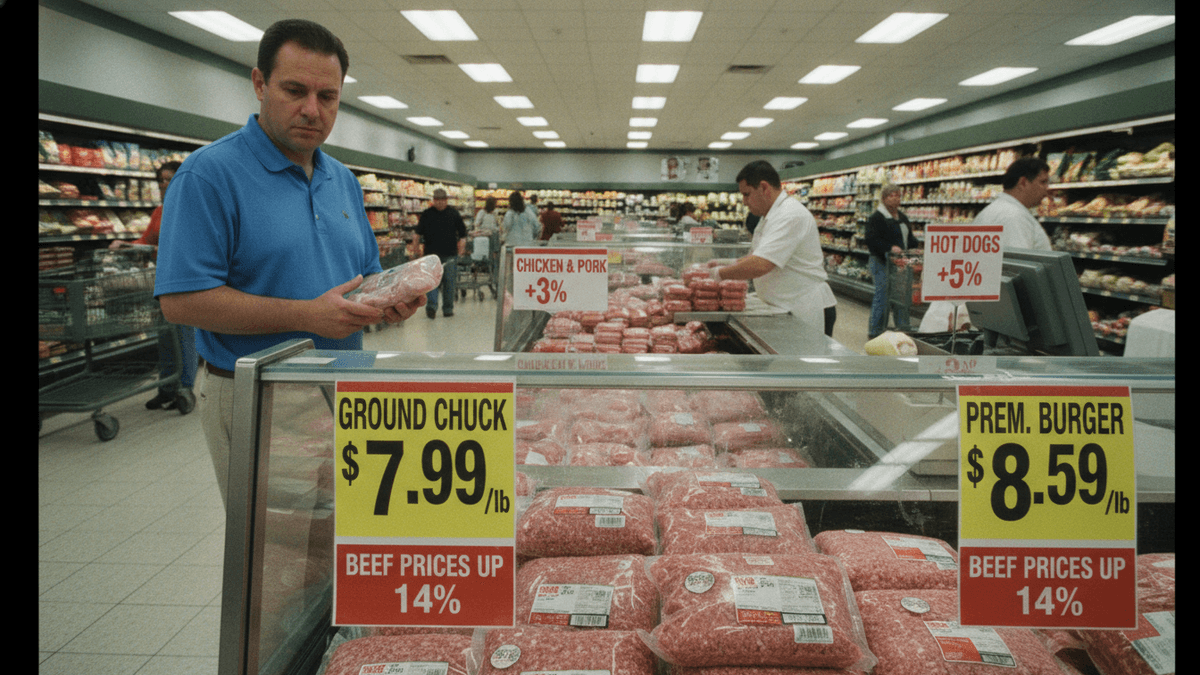
Man scrutinizing packaged ground chuck in a brightly lit supermarket meat aisle.
Americans looking forward to firing up the grill this weekend are facing a significant price hike, with the cost of a typical summer barbecue for 10 people now averaging $161. This increase, detailed in a recent Wells Fargo report, is largely driven by a 14% surge in hamburger beef prices, a staple of backyard gatherings.
While the overall cost of hosting a cookout has risen by 2.4% year-over-year, the jump in beef prices is the primary contributor to the increased expense. Wells Fargo Agri-Food Institute head Robin Wenzel noted that while some food categories, like fresh fruits and vegetables, might see price moderation due to increased acreage planted by growers, convenience items and meats are expected to remain costly.
Prepared foods, Wenzel explained, are influenced more by labor, packaging, and energy costs, allowing retailers to maintain higher prices. Even other grilling favorites are not immune: chicken and pork products have seen a 3% increase, while hot dogs and frankfurters are up 5%.
The trend aligns with broader inflation data, as the May consumer price index (CPI) showed a 0.5% increase from the previous month and a 4.2% rise from the previous year, the highest annual figure since April 2023. This inflation is impacting side dishes as well, with potato salad prices up 3%, cornbread up 4%, and raw vegetables up 6%. Dessert items are also seeing increases ranging from 1% to 4%.
The report suggests cost-saving strategies for hosts, such as preparing ribs from scratch rather than buying pre-cooked options. While pork generally offers better value than beef, making sides like deviled eggs (where egg prices are down 14%) from scratch can also help manage costs. The report recommends chicken and pork as more budget-friendly protein choices, alongside fruits like watermelon and strawberries (both down 3%), and homemade desserts.
For those looking to keep costs down, Wenzel also suggested asking guests to bring their own beverages (BYOB), as beer and wine prices, while not climbing significantly, still contribute to the overall bill.
About the Author