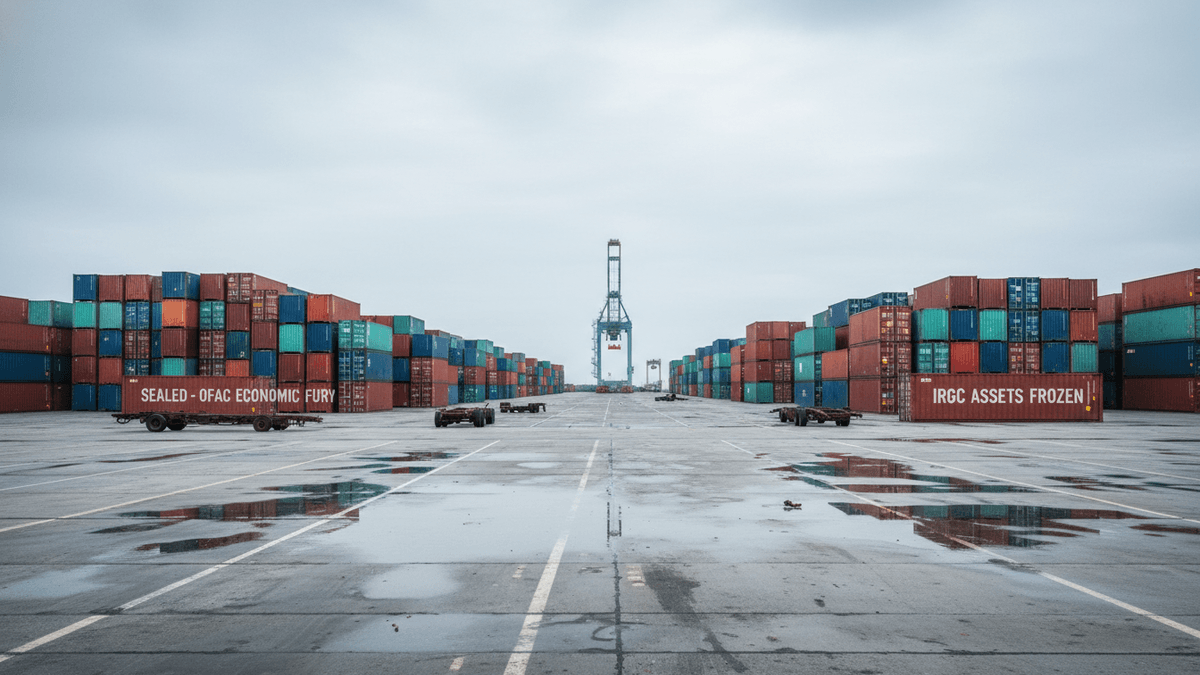
Container terminal under overcast sky with stacked cargo and wet tarmac
Larry Kudlow highlights Treasury Secretary Scott Bessent’s aggressive financial strategy against Iran, suggesting it’s a key factor driving American economic optimism. Kudlow points to Bessent’s ‘Economic Fury’ campaign, which has reportedly cut off Iran’s access to monetary resources.
According to Kudlow, Bessent’s actions include blockading Iranian ports to halt oil sales, dismantling Iran’s shadow banking system through the Office of Foreign Assets Control (OFAC), and seizing offshore bank accounts, including crypto accounts, potentially totaling nearly $1 trillion.
Kudlow emphasizes the significance of targeting the Islamic Revolutionary Guard Corps, which he claims owns half of Iran and relies on oil sales and offshore accounts. He argues that Bessent’s measures have effectively disrupted these financial channels.
Furthermore, Kudlow asserts that these actions against Iran have strengthened the U.S. dollar’s reserve currency status, aligning with a Trumpian policy supported by Bessent. He connects this financial warfare to broader economic policies such as low tax rates, deregulation, and free trade, which he believes have contributed to a resilient American economy.
Kudlow notes that despite a temporary increase in energy and gasoline prices, business remains strong in America. He cites soaring profits, record-breaking stock markets, and robust consumer spending as indicators of economic health.
As negotiations with Iran potentially begin, Kudlow observes a decrease in oil and gasoline prices, along with long-term interest rates. He interprets this as a sign of confidence in the American war effort and the economic leadership of Donald J. Trump and Scott Bessent, fostering a sense of optimism reminiscent of the Reagan era.
About the Author