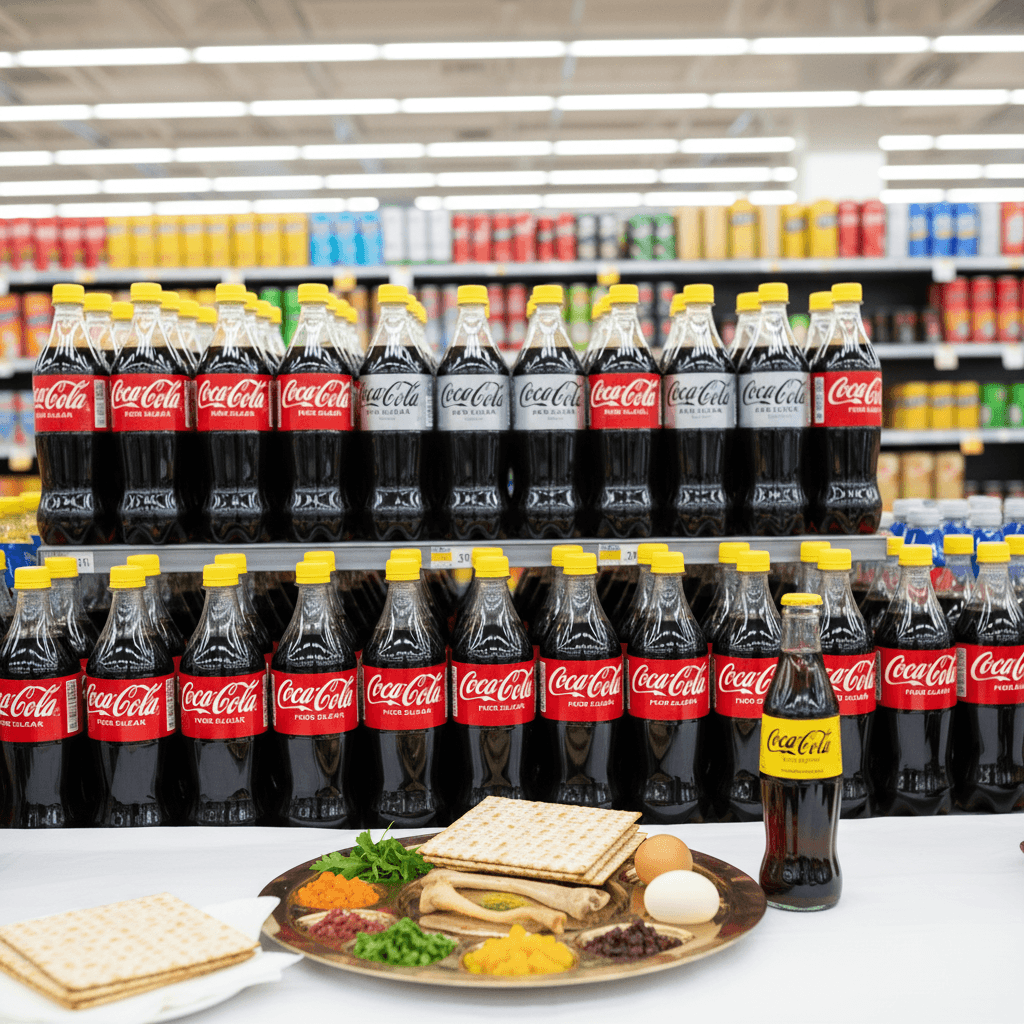
Coca-Cola's yellow-capped bottles and a Seder plate for Passover.
Every spring, Coca-Cola bottles get a makeover with bright yellow caps, sparking curiosity and comparisons to Mexican Coke. But the tradition has roots in a 1930s quest to make Coke kosher for Passover.
Rabbi Tobias Geffen of Atlanta’s Orthodox Jewish community played a pivotal role, according to The Atlanta Jewish Times. He initially found two concerns: non-kosher beef tallow-derived glycerin and corn syrup.
Coca-Cola addressed the glycerin issue by switching to cottonseed and coconut oil. However, Passover presented a further hurdle as many Jews avoid grain products, including corn syrup, during the holiday.
The company then replaced grain-derived ingredients with cane and beet sugars, allowing Jews to enjoy Coke during Passover and year-round. When Coca-Cola shifted to high fructose corn syrup in the U.S. in the 1980s, the Passover version remained an exception.
These days, the yellow caps signal that the soda is sweetened with cane sugar instead of corn syrup. This has drawn comparisons to Mexican Coke, which also uses cane sugar but is typically sold in glass bottles at a higher price.
The renewed interest in cane sugar soda prompted Coca-Cola to expand its use of the sweetener. In October 2025, Coca-Cola began rolling out cane sugar soda packaged in glass bottles. The change garnered the support of President Donald Trump, who said the cane sugar soda was “better” than the high fructose corn syrup alternative. The product was introduced in select markets, though Coca-Cola has not indicated whether it plans to shift away from high fructose corn syrup entirely.
Some social media users are encouraging others to buy the seasonal yellow-cap bottles for the lower price of cane sugar soda. The availability of cane sugar is a factor, according to Coca-Cola Company’s Chief Financial Officer John Murphy, who told Bloomberg News that there “is only a certain amount of cane sugar available in the United States.”
About the Author