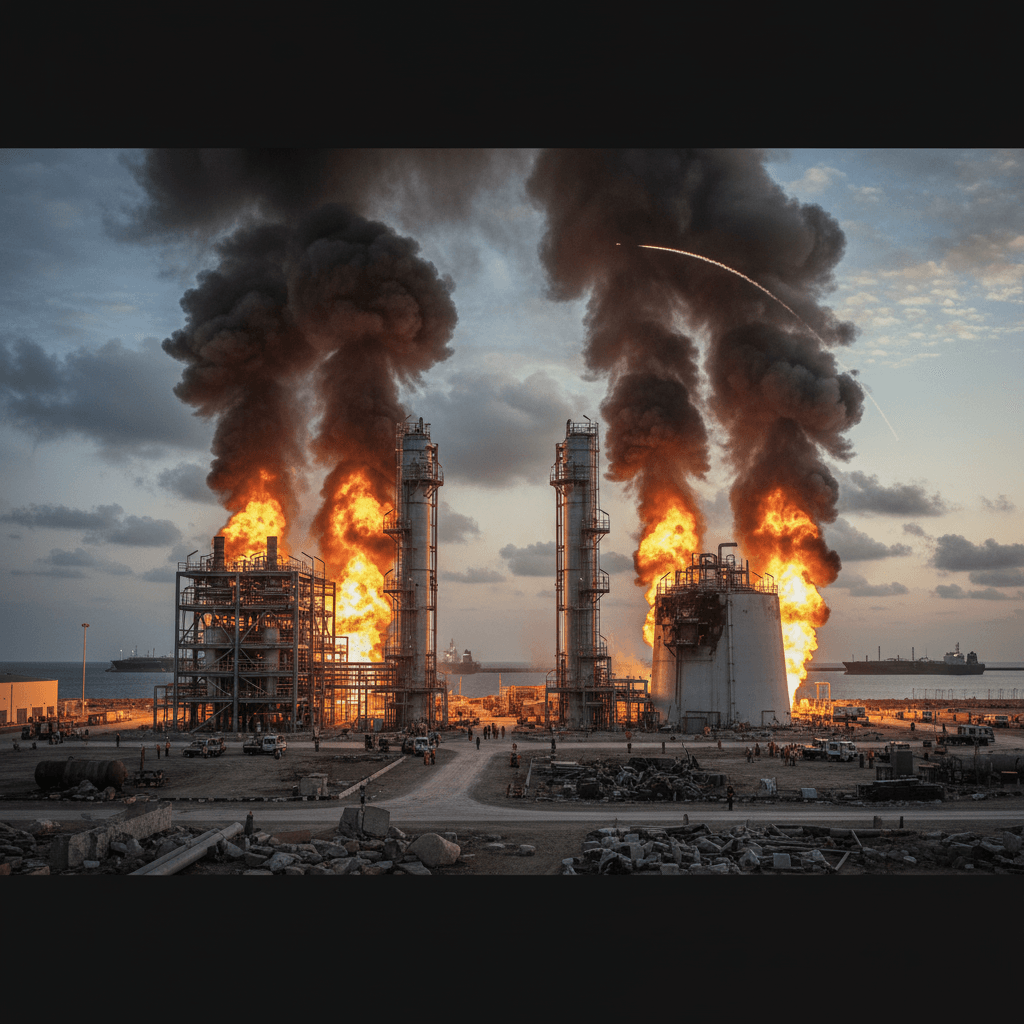
Fires at a Qatar LNG facility after strikes.
Iranian strikes on Qatar’s Ras Laffan facilities have cut about 17% of Doha’s liquefied natural gas (LNG) export capacity, according to QatarEnergy’s CEO Saad al-Kaabi. In a recent interview, al-Kaabi estimated the disruption could result in approximately $20 billion in lost annual revenue, threatening supplies to Europe and Asia.
The CEO of the state-owned energy company noted that damage to two LNG trains and one of its two gas-to-liquids facilities will sideline roughly 12.8 million tons per year of output for three to five years.
QatarEnergy stated on X that missile and rocket attacks on its facilities at Ras Laffan Industrial City caused fires and extensive damage but no casualties.
Qatar is one of the world’s largest LNG exporters, accounting for nearly 20% of global supply, according to the U.S. Energy Information Administration.
In response, President Trump stated on his Truth Social platform that Israel would halt further strikes on Iran’s South Pars gas field unless Tehran escalates. Trump warned that the United States could respond with overwhelming force if Qatar’s LNG facilities are targeted again.
Al-Kaabi told Reuters QatarEnergy declared force majeure on its entire LNG output following the attacks on Ras Laffan, allowing it to suspend deliveries due to the damage. The state-owned company will have to declare force majeure on long-term contracts for up to five years covering supplies to Italy, Belgium, South Korea, and China due to damage to the two LNG trains.
Al-Kaabi stated that everyone should stay away from oil and gas facilities.
About the Author