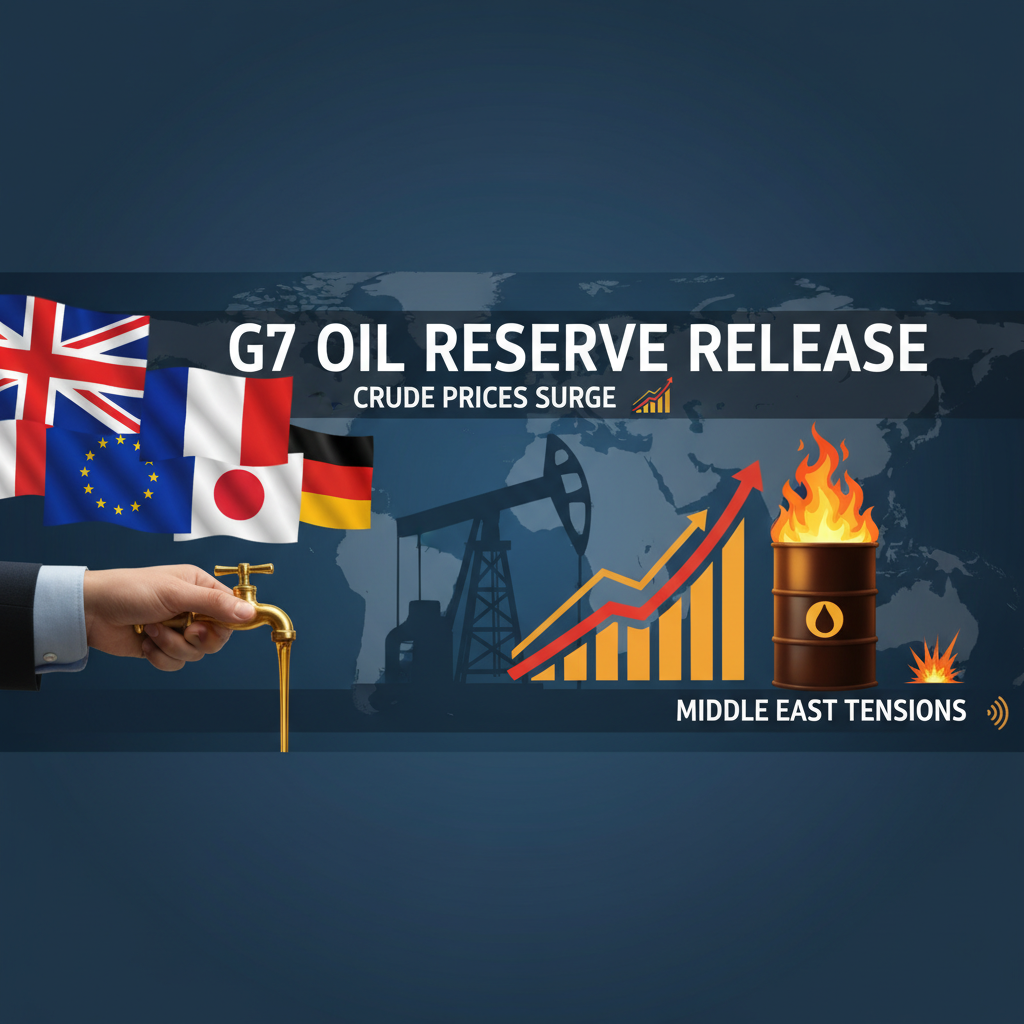
The escalating cost of gasoline is forcing the G7 finance ministers to consider a drastic measure: releasing emergency oil reserves. This move comes as crude oil prices surge past $115 per barrel, fueled by rising tensions in the Middle East, which is threatening the stability of the global economy. This situation presents a complex challenge for policymakers and investors alike.
The primary driver behind this potential intervention is the sharp increase in gas prices. The ‘what’ of the situation centers around the ‘what’ of the situation centers around the impact of surging crude oil prices. The ‘why’ behind this is the escalating tensions in the Middle East. The ‘where’ is the Middle East.
The ‘who’ in this scenario is the G7 finance ministers, who are now tasked with navigating this turbulent market. Their response, potentially an emergency oil reserve release, underscores the gravity of the situation. The ‘how’ they do this is by tapping into existing reserves.
The ‘what’ in question is the global economic stability which is at risk. The release of oil reserves is a strategic move to stabilize prices. The ‘why’ is to counter the impact of rising oil prices on consumers and businesses. The ‘where’ is the global market.
The decision by the G7 finance ministers reflects a broader concern about the economic implications of high energy costs. The potential release of reserves is a short-term solution, but the underlying geopolitical issues and market dynamics require a more comprehensive, long-term strategy. The ‘what’ is the economic stability, and the ‘why’ is to curb soaring gas prices.
The G7’s actions will be closely watched by investors, energy companies, and consumers. The outcome of their deliberations will have far-reaching consequences for the global economy and the energy sector.
About the Author