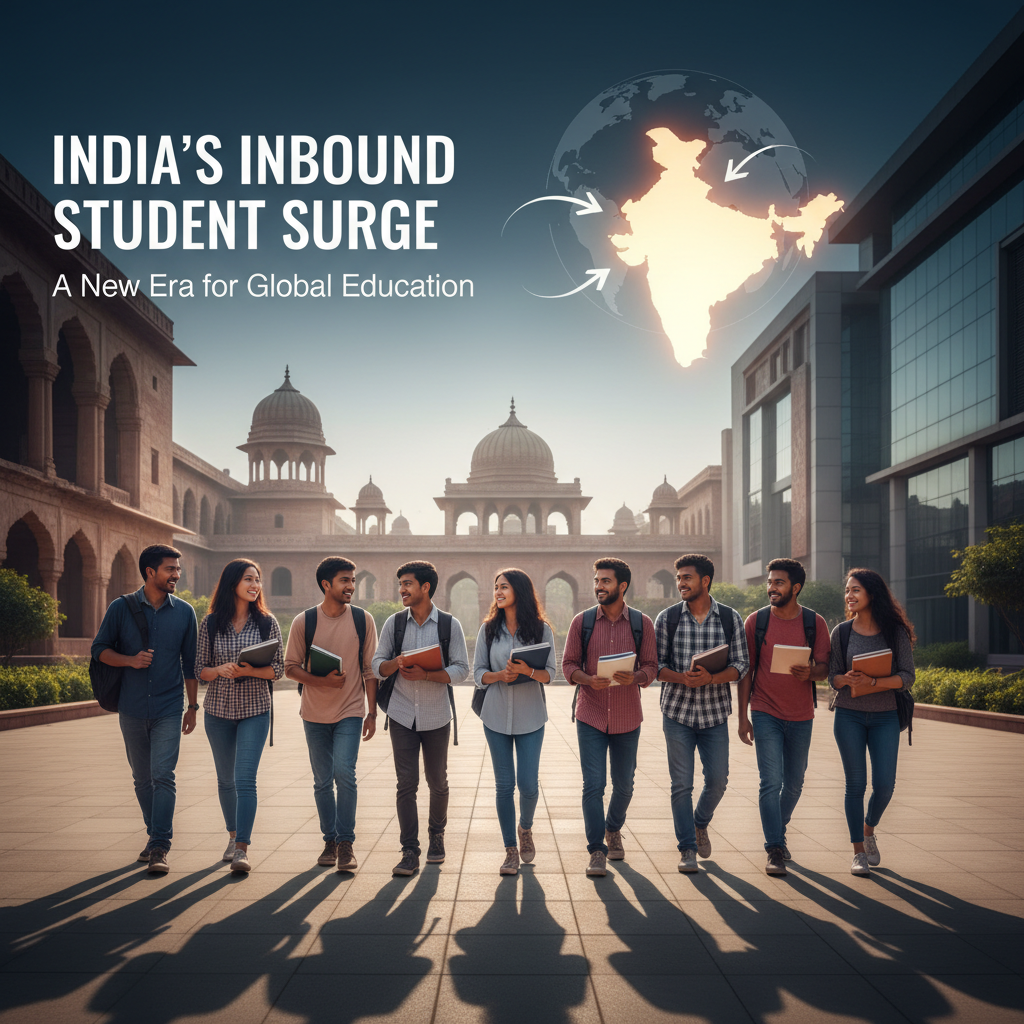
India’s Inbound Student Surge: A New Era for Global Education
The landscape of international education is undergoing a significant transformation, with India emerging as a pivotal player. According to a recent report by QS (Quacquarelli Symonds), India is on track to become a top global study destination. This shift is fueled by a projected annual increase of 8% in inbound student numbers, starting from 2025. This positive trend underscores India’s growing prominence in the global education market and its appeal to international students.
A Growing Magnet for Global Learners
The anticipated surge in inbound student numbers reflects India’s evolving educational ecosystem and its capacity to attract a diverse student population. This growth trajectory is particularly noteworthy when compared to traditional study destinations that may be facing stricter policies or other challenges. The QS report highlights India’s potential to capitalize on these shifts and solidify its position as a preferred destination for students seeking quality education and global exposure.
Key Source Regions Driving the Trend
The influx of international students into India is expected to be largely driven by students from specific regions. The QS report identifies South Asia, Africa, and the Middle East as key source regions. This influx will not only enrich India’s educational environment through diverse perspectives, but also foster stronger international collaborations and cultural exchange. The increasing interest from these regions highlights India’s growing reputation and the appeal of its educational offerings.
Beyond Indian Shores: Exploring Global Educational Opportunities
While India is set to witness a rise in inbound students, Indian students are also broadening their horizons by exploring educational opportunities in other countries. The report indicates that Germany, France, and the UAE are among the popular destinations for Indian students seeking international education. This trend underscores the global perspective of Indian students and their desire to gain diverse educational experiences. These students are contributing to the global education landscape, bringing their talent and perspectives to institutions worldwide.
Policy and the Future of International Education
The projected growth in India’s inbound student numbers is also influenced by policy considerations. The evolving educational policies, both in India and in the source regions, play a crucial role in shaping student mobility. Favorable policies that support international student recruitment, simplify visa processes, and provide adequate support services will be instrumental in sustaining the growth momentum. As India aims to become a prominent global study destination, proactive policy measures will be essential to foster a welcoming and supportive environment for international students.
In conclusion, the QS report paints a promising picture for India’s role in international education. With an anticipated 8% annual growth in inbound student numbers from 2025, India is set to become a major player in the global education landscape. The influx of students from key regions like South Asia, Africa, and the Middle East, along with the increasing global mobility of Indian students, highlights the dynamic nature of international education. India’s success in attracting and retaining international students will depend on its ability to offer high-quality education, supportive policies, and a welcoming environment, thus solidifying its status as a leading global study destination.
Source: Industry-Economic Times
About the Author