The hum of servers filled the air as engineers at a Bangalore EV startup reviewed thermal tests for a new battery management system. On the screen, a heat map pulsed with data, the culmination of weeks spent optimizing the chip’s performance. This wasn’t just about making a better electric vehicle; it was about India’s ambitious bet on an AI-first future, a strategy that, as the Economic Times recently reported, is poised to reshape manufacturing and beyond.
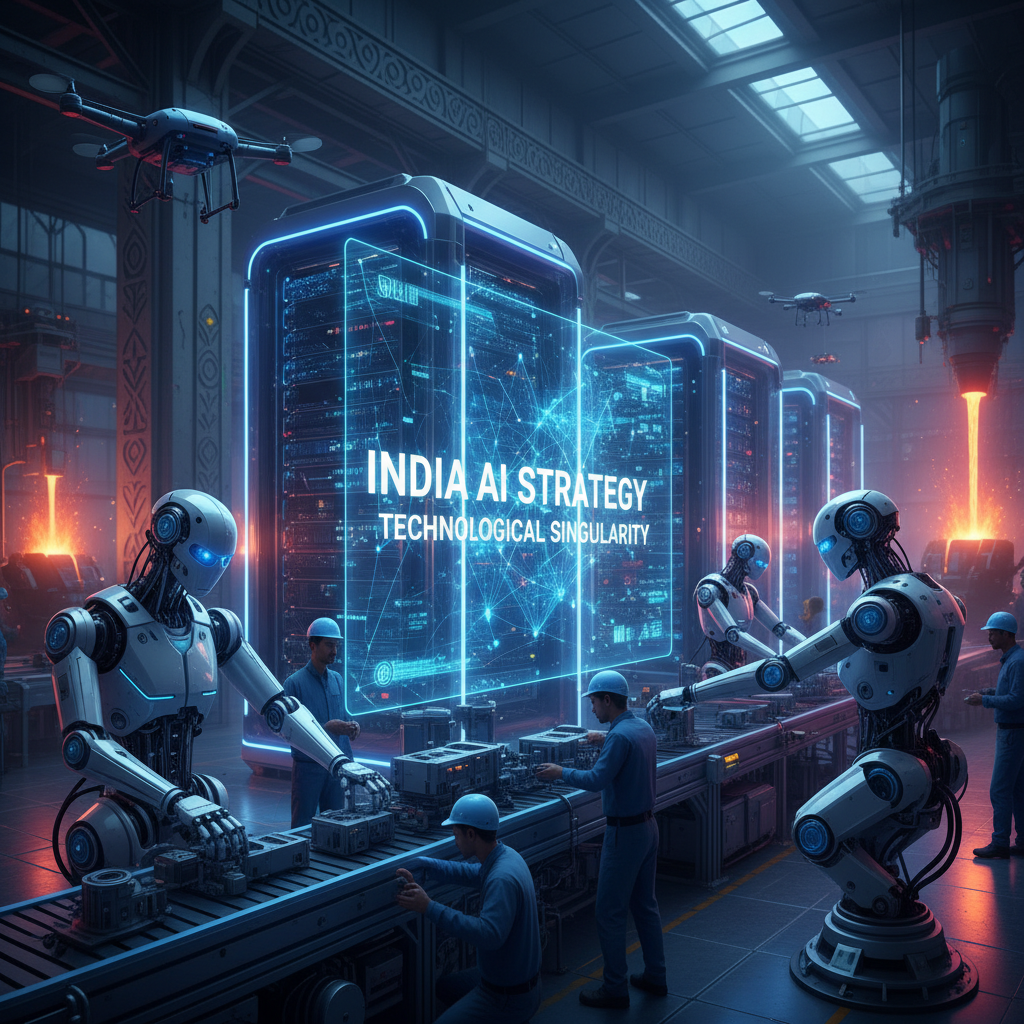
India is embracing AI across industrial and social sectors, aiming for enhanced work quality and speed, the article noted. This is especially crucial in automotive and electric vehicles, where innovation and economic growth hinge on advanced technologies. But as the engineers in Bangalore knew, the path isn’t straightforward. The promise of AI, particularly in the context of advanced manufacturing, means preparing for the unknown, for what some call the technological singularity.
“It’s not just about automating existing processes; it’s about fundamentally rethinking how things are made,” said Dr. Priya Sharma, a leading AI researcher, in a recent interview. “We’re talking about systems that can learn, adapt, and even design themselves.” The implications are enormous. Imagine factories where robots not only assemble products but also optimize production lines in real-time, responding to supply chain fluctuations or predicting equipment failures before they happen. That kind of agility could give Indian manufacturers a significant edge, especially as global demand for EVs continues to surge. Analyst forecasts predict the Indian EV market to reach $100 billion by 2027.
But the road to singularity, or even advanced AI integration, is paved with challenges. One of the primary hurdles is access to advanced semiconductors. India currently relies heavily on imports, and global supply chains, as everyone knows, are under pressure. Export controls, particularly from the US, add another layer of complexity. The Indian government has launched initiatives to boost domestic chip manufacturing, but building fabs is a years-long process, not a quick fix. As a result, companies are exploring diverse strategies, from partnerships with global chipmakers to investing in local design and manufacturing capabilities.
The situation isn’t lost on investors. A senior analyst at Deutsche Bank, speaking on condition of anonymity, noted a cautious optimism. “There’s a lot of excitement, but also a healthy dose of realism,” they said. “The AI revolution won’t happen overnight. It requires sustained investment, skilled labor, and, most importantly, a clear understanding of the risks and opportunities.” It’s a sentiment echoed across the industry. The conversation isn’t just about the next generation of GPUs (graphic processing units) or LLM (large language model) training; it’s about creating an ecosystem that can support AI at scale. That includes everything from data centers to software development to training a workforce capable of navigating this new landscape.
Take the automotive sector. AI is already used in various stages, from design and simulation to manufacturing and quality control. But the next leap involves integrating AI into every aspect of the vehicle, from self-driving capabilities to personalized in-cabin experiences. This requires massive computational power, advanced sensors, and sophisticated algorithms. It also demands a new level of collaboration between automakers, tech companies, and government agencies. This is particularly true for India, where the government is actively promoting AI adoption through various initiatives, including the National Program on AI.
As the engineers in Bangalore continued their review, the heat map on the screen flickered. The future of Indian manufacturing, perhaps, was unfolding one data point at a time, a complex interplay of technology, policy, and human ingenuity. The path to AI singularity is long, but India seems determined to walk it, one step at a time, with its eyes fixed firmly on the horizon.
About the Author