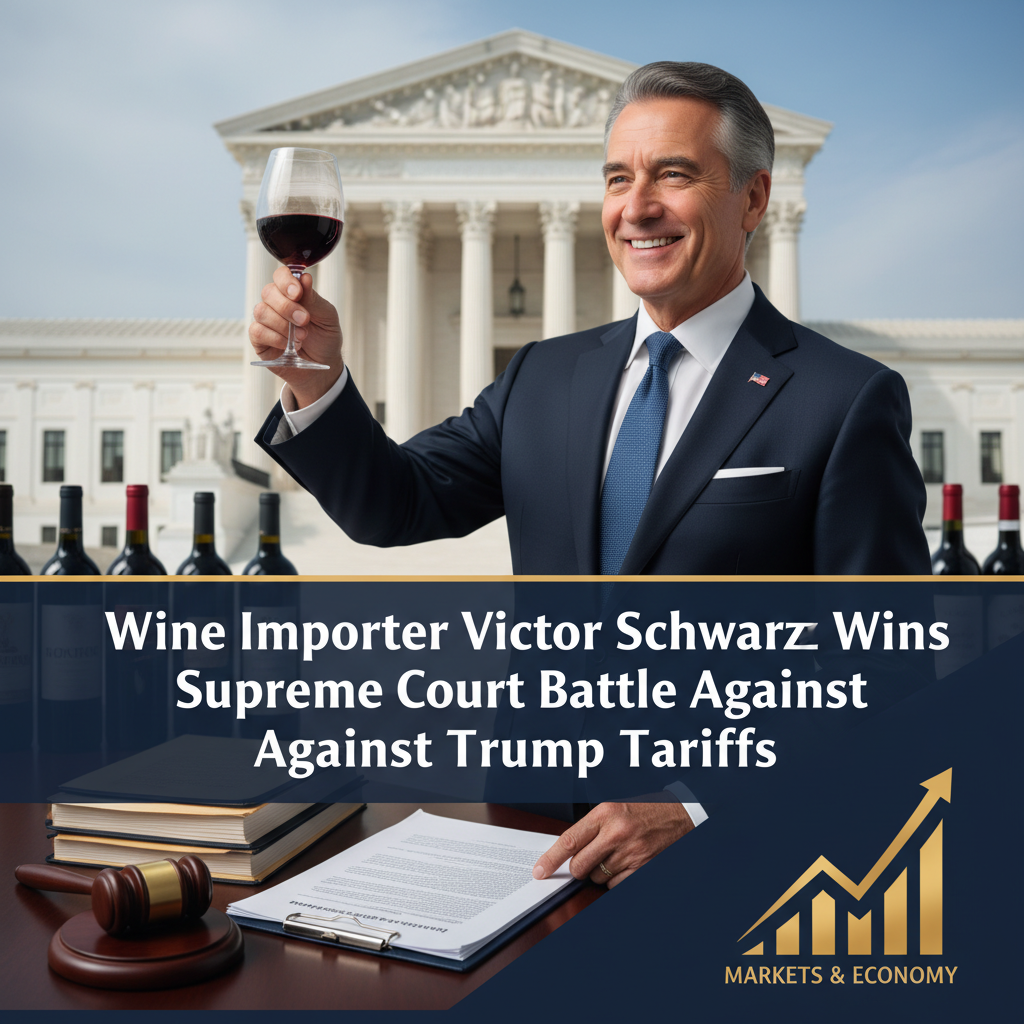
In a significant victory for trade and a blow to former President Trump’s trade policies, wine importer Victor Schwartz has won his Supreme Court challenge against the tariffs imposed during the Trump administration. This decision has far-reaching implications for the future of trade regulations and the economy.
The Genesis of the Challenge
The core of the dispute revolved around the tariffs imposed by the Trump administration. Schwartz, facing potential survival threats to his business, decided to challenge these tariffs in the Supreme Court. His motivation stemmed from the belief that the tariffs were unjust and harmful to businesses like his, which relied on international trade.
The Supreme Court’s Ruling
The Supreme Court’s ruling in favor of Schwartz has been interpreted as a setback for the trade agenda. While specific details of the ruling are still emerging, the victory underscores the importance of adhering to established legal and constitutional standards in trade policy. The court’s decision will likely influence how future administrations approach trade regulations and the extent of their authority in imposing tariffs.
Strategic Implications
This case highlights the risks businesses face when navigating trade disputes and the potential impact of tariffs on their operations. It also underscores the importance of legal recourse in challenging government policies that are perceived as unfair or damaging to businesses. For Schwartz, the win is a vindication of his stance and a testament to the resilience of those who fight for fair trade practices.
What Happens Next?
The immediate impact of the Supreme Court’s decision will likely be felt by businesses that were adversely affected by the tariffs. They may now have grounds to seek redress. Furthermore, the ruling could prompt a reevaluation of existing trade policies and a more cautious approach to future tariff implementations. The case serves as a reminder of the checks and balances inherent in the American legal system and the power of individuals and businesses to challenge government actions.
This victory for Victor Schwartz not only protects his business but also sets a precedent that could shape the future of trade policy and the economy.
About the Author