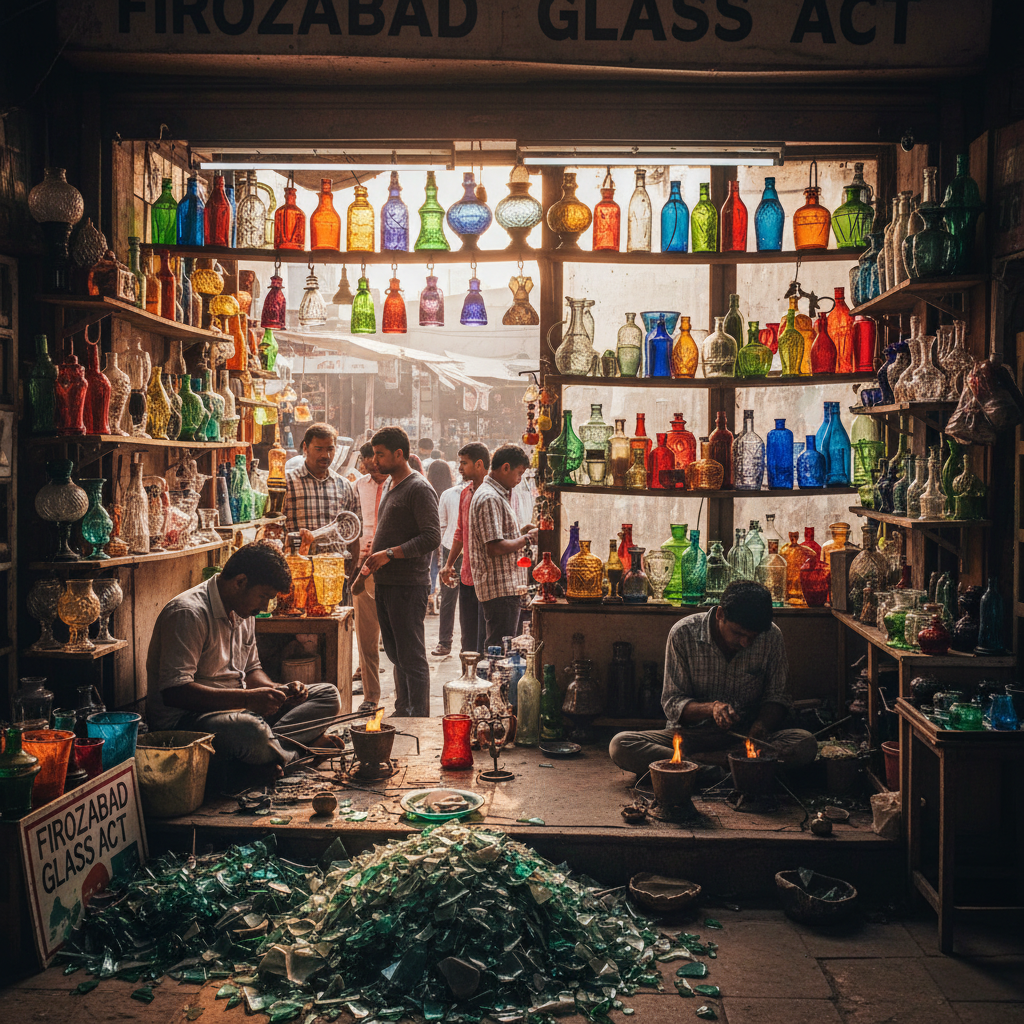
The numbers, they say, are what matter. But the air here, in the workshops of Firozabad, smells of something else: history, maybe, or at least a very specific kind of grit.
It’s a city known for glass, a legacy stretching back generations. Now, it’s also becoming known for something new: turning recycled glass into vintage collectibles. The process blends traditional furnace craft with a modern eye for design, all while tapping into the global market. And it’s working.
The One District One Product (ODOP) framework, which aims to boost local economies, has played a significant role. Officials say exports have increased by nearly 30% in the last year, though exact figures are difficult to pin down. Still, the impact is visible: more workshops, more workers, and a palpable buzz around the possibilities.
The whole operation is, in a way, a study in contrasts. You have the ancient craft of glassblowing, passed down through families for centuries, meeting the demands of a modern market hungry for unique, handcrafted items. A lot of the raw material comes from discarded bottles and other glass waste, which are then melted down and transformed. It’s a closed loop, in theory.
The design element is key. The artisans of Firozabad are not just making glass; they’re creating art. This involves staying abreast of global trends, understanding what collectors want, and innovating constantly. Some are experimenting with new colors and textures, while others are focusing on specific eras and styles.
“The vintage market is surprisingly resilient,” as per a recent report from the Brookings Institution, “especially when tied to a story of sustainability and local craftsmanship.”
The economics, though, are a little more complex. Labor costs, fluctuating raw material prices, and the vagaries of international shipping all play a part. There’s also the challenge of competing with mass-produced goods. But the focus on quality, uniqueness, and the recycled aspect seems to be paying off.
The workshops themselves are a sight. The heat, the noise, the organized chaos. It’s a far cry from the sleek showrooms of the big design houses. But there’s a certain energy here, a sense of making something new from something old.
And the future? It’s hard to say. The vintage market is fickle, and the global economy is, well, what it is. But in Firozabad, the glass keeps flowing, and the furnaces keep burning.
Or maybe I’m misreading it.
About the Author




