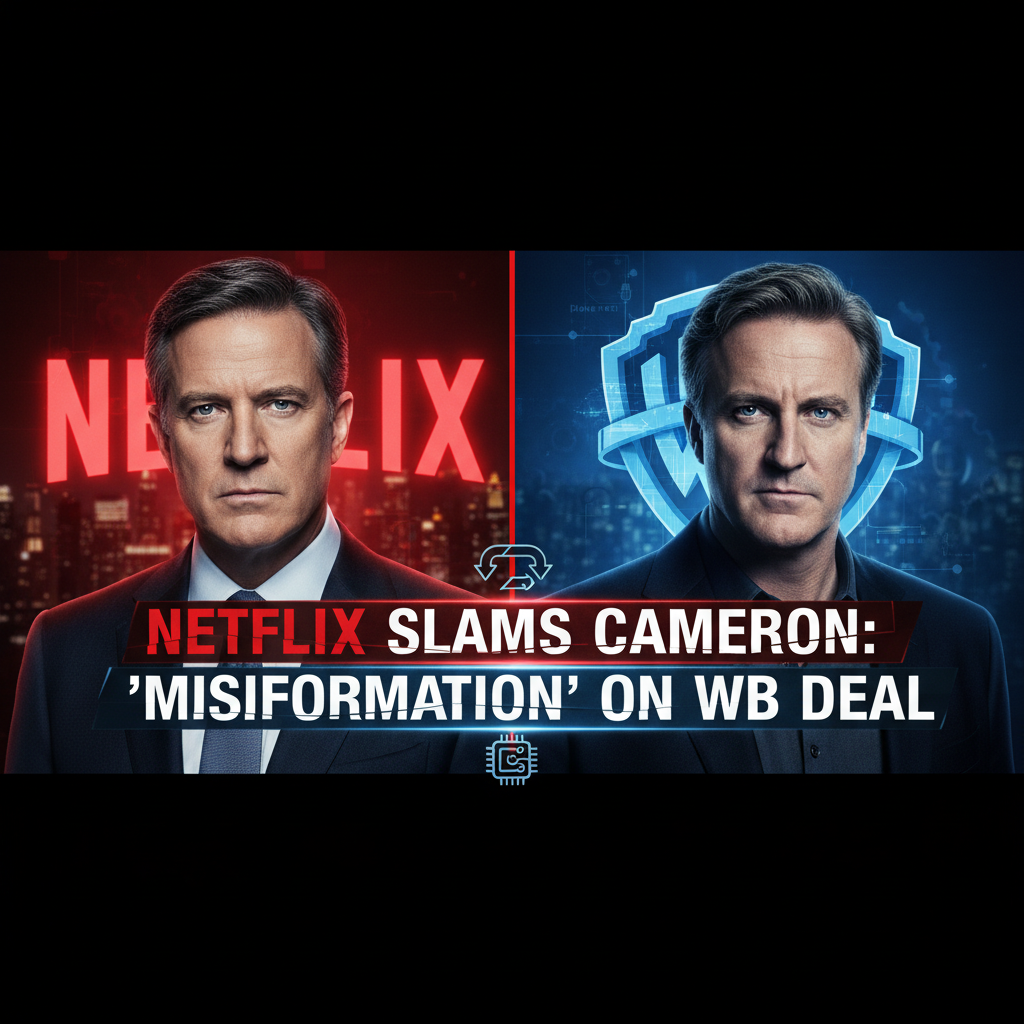
The hum of servers filled the air, a constant thrum in the Netflix engineering war room. It was late October, and the team was knee-deep in Q4 projections, trying to model the impact of the proposed Warner Bros. Discovery acquisition. A Slack ping cut through the noise: a link to James Cameron’s latest comments on the deal.
Ted Sarandos, Netflix’s co-CEO, didn’t mince words. He publicly accused the famed director of spreading ‘misinformation’ about the proposed acquisition, a move that sent ripples through the industry. The core of the dispute? Cameron’s criticism of the deal, specifically his concerns about the potential impact on the creative landscape. But Sarandos saw it differently, framing Cameron’s statements as inaccurate and potentially damaging to the company’s public image.
The deal itself, still pending regulatory approval at the time, was a complex beast. Analysts at Deutsche Bank, for example, were projecting a potential cost synergy of around $3 billion annually, if the merger went through. But the devil, as always, was in the details. The integration of Warner Bros. Discovery’s vast content library and its impact on Netflix’s existing subscriber base was a key concern. How would the deal affect content licensing agreements, and what about the competitive dynamics in the streaming wars?
The room went quiet. Someone, probably a senior engineer, muttered something about ‘optics.’ The pressure was on. One of the many unknowns was how the acquisition would affect the company’s investment in original content. Netflix had been pouring billions into its own productions, and the addition of Warner Bros. Discovery would change the game completely. The long-term implications were huge.
“Sarandos is playing a high-stakes game of reputation management,” noted a media analyst from JPMorgan, speaking off the record. “He needs to control the narrative, especially when someone like Cameron, with his influence, starts throwing stones.” The analyst went on to explain that the company’s valuation depended heavily on its ability to maintain subscriber growth, and any negative perception could hurt its stock price.
The situation underscored the broader trend in the media industry: the increasing convergence of content creation and distribution. The deal, if it went through, would reshape the competitive landscape. But the clash between Sarandos and Cameron was a reminder that it wasn’t just about the numbers; it was about the stories, the people, and the creative visions that drove the industry forward.
A few of the engineers went back to their work. The air was thick with the silent hum of the servers, a constant reminder of the scale of the operation and the high stakes of the game.
About the Author