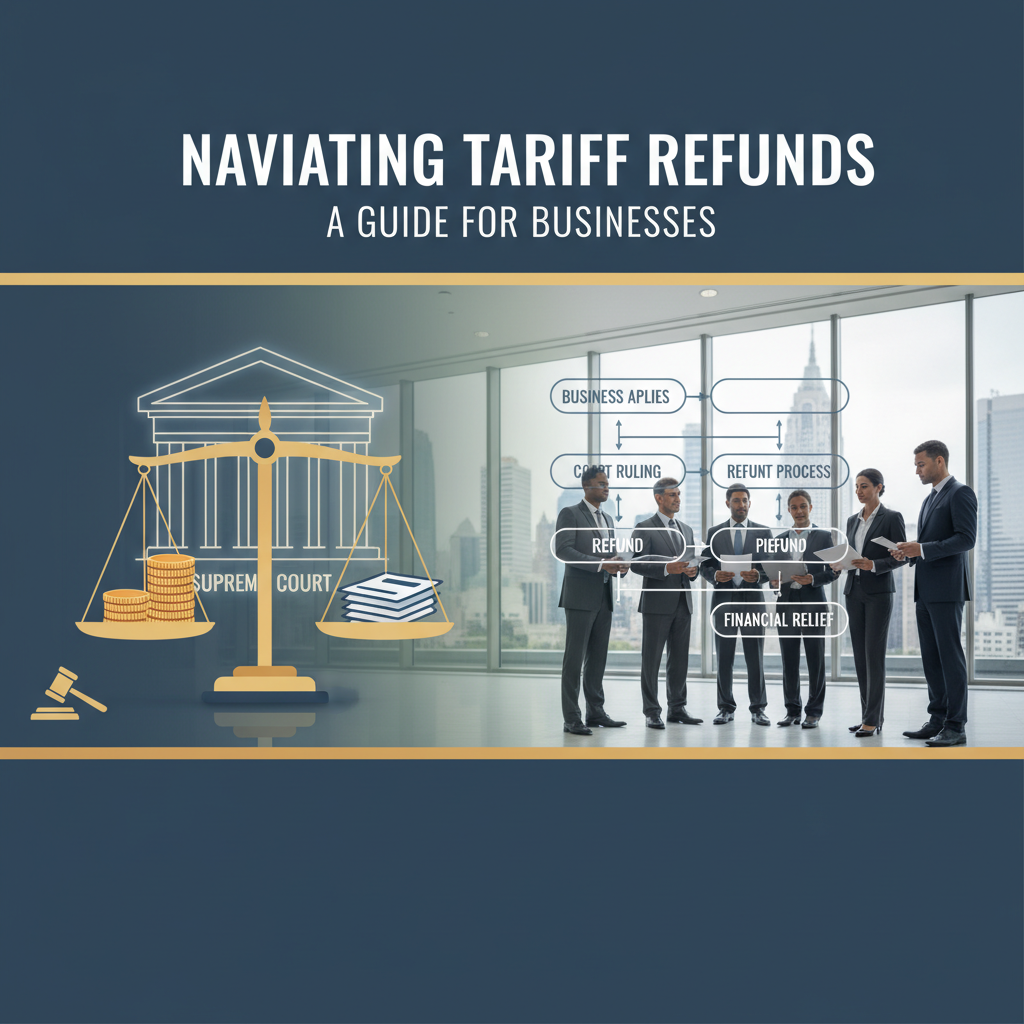
In the wake of recent developments, businesses are facing new challenges in securing tariff refunds. Trade experts are advising companies on the necessary steps to recoup their money after the Supreme Court’s ruling. This article provides a strategic overview of the situation and what businesses should consider.
Understanding the Landscape
The core issue revolves around the process of obtaining tariff refunds. With the Supreme Court’s decision setting a new precedent, the pathways for businesses to reclaim their funds have become more complex. The primary methods for businesses to pursue these refunds involve appealing to the CBP (Customs and Border Protection) or, if necessary, the Court of International Trade.
Strategic Considerations for Businesses
For businesses, understanding the nuances of these appeal processes is critical. Here’s a breakdown of what businesses need to know:
- CBP Appeals: Initially, businesses should consider appealing directly to the CBP. This involves submitting the necessary documentation and evidence to support their claim for a tariff refund.
- Court of International Trade: If the CBP appeal is unsuccessful, the Court of International Trade offers another avenue. This involves a more formal legal process, requiring a strong understanding of international trade law.
Expert Insights
Trade experts emphasize the importance of meticulous record-keeping and a thorough understanding of the regulations. Businesses must be prepared to provide detailed documentation to support their claims. The process can be time-consuming and may require legal expertise, particularly when dealing with the Court of International Trade.
Looking Ahead
The implications of the Supreme Court’s ruling and the subsequent actions by businesses will continue to unfold. Businesses should stay informed on the latest developments and seek expert advice to navigate these complex processes effectively. The ability to successfully obtain tariff refunds can significantly impact a company’s financial health, making strategic planning and execution essential.
About the Author