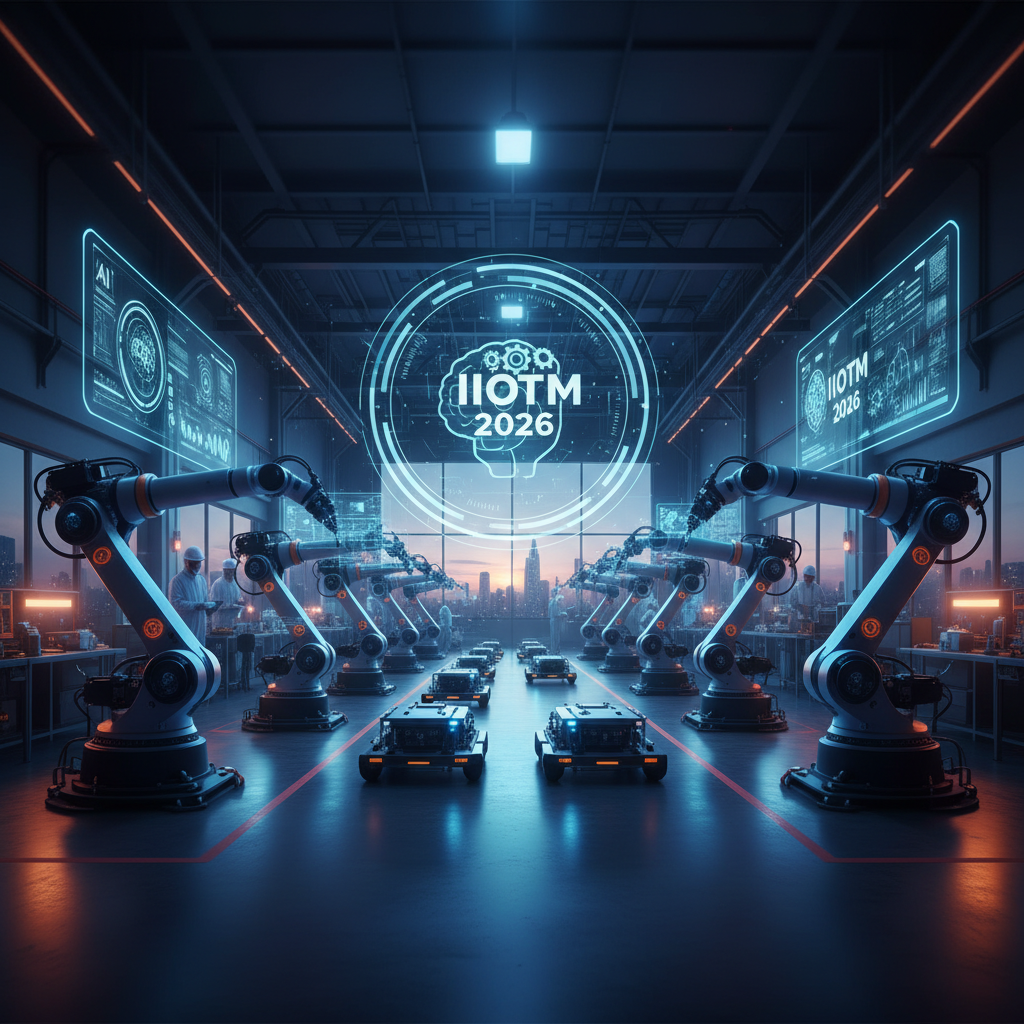
The hum of servers filled the conference hall in Mumbai, a low thrum underpinning the buzz of IIOTM 2026. Data scientists hunched over laptops, reviewing real-time thermal tests. Outside, the city’s monsoon season was in full swing, but inside, the focus was squarely on the future of manufacturing. The topic of the day: how AI, specifically deterministic AI, is reshaping operations, assets, and supply chains.
“We’re moving from automation to autonomy,” said Dilip Sawhney, Managing Director of Rockwell Automation India, during a panel discussion. He emphasized the critical need for industrial AI to be both deterministic and explainable. This is crucial, he argued, for India’s ambition to become a global manufacturing powerhouse. The goal is clear: increase productivity, build resilience, and gain a competitive advantage.
The transition isn’t just about faster machines; it’s about smarter systems. Experts discussed scaling intelligent systems to handle the complexities of modern manufacturing. This includes everything from predictive maintenance to optimizing supply chains in real-time. One of the major challenges, as several speakers pointed out, is the need for AI models that can be trusted implicitly.
The shift to AI-driven autonomy requires significant investment in infrastructure and talent. Some analysts predict the market for industrial AI solutions will reach $20 billion by 2027, but that estimate could be conservative. The real impact, however, is likely to be felt in the factories themselves, where human workers and intelligent systems will collaborate more closely.
The conference also touched on the practical realities of implementation. Export controls and supply-chain constraints were mentioned repeatedly. The availability of advanced chips, for example, remains a bottleneck. SMIC, the leading Chinese chipmaker, faces restrictions, while TSMC in Taiwan is dealing with global demand. It’s a delicate balancing act, as companies in India and elsewhere navigate these challenges, striving to build the factories of the future.
“It’s not just about the technology,” one engineer remarked during a coffee break. “It’s about the people.”
About the Author