As anticipation builds for Super Bowl LX, the convergence of high-stakes sports and lucrative advertising is on full display. The event, set to take place at Levi’s Stadium in Santa Clara, is not just a championship game; it’s a major economic event that draws significant attention from sports fans and businesses alike.
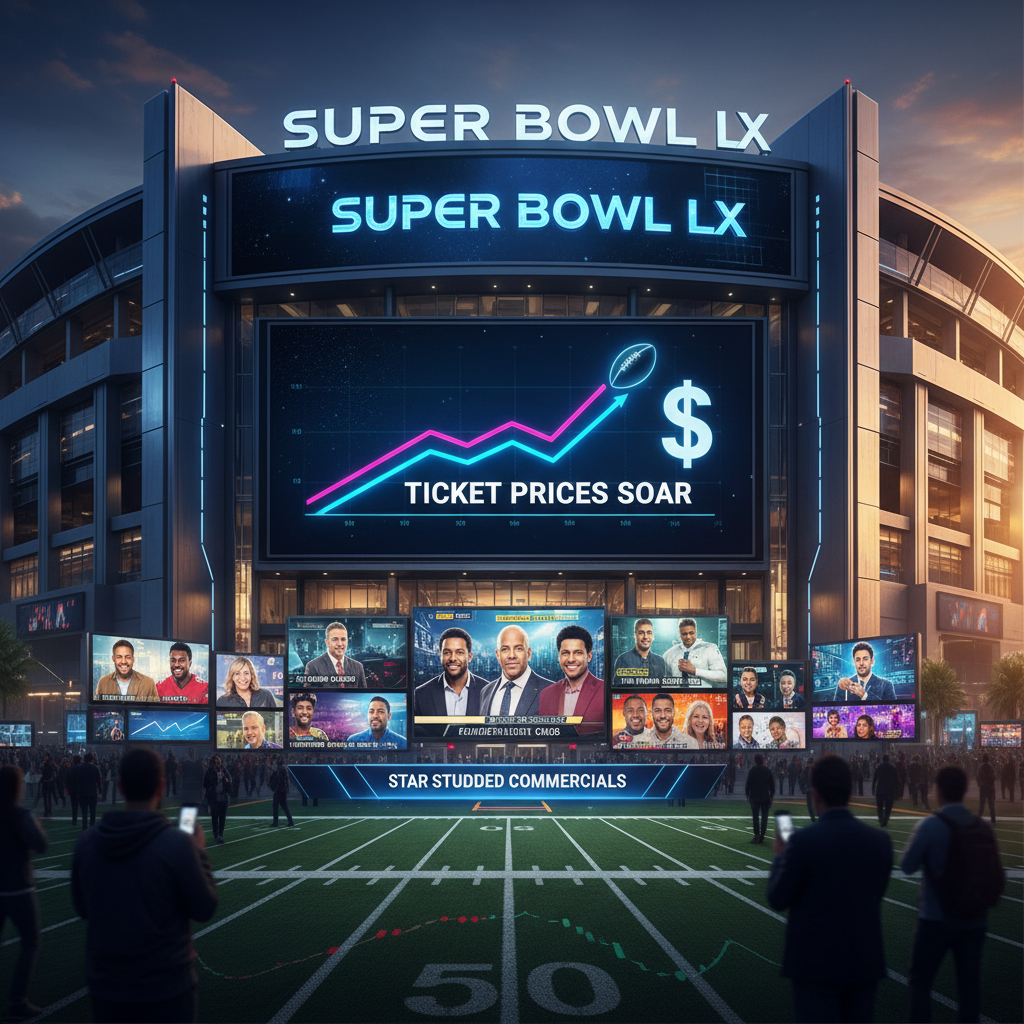
One of the most immediate indicators of the Super Bowl’s economic impact is the soaring cost of attendance. Ticket prices have reached staggering levels, with the cheapest seats starting at $3,590 and the most expensive tickets topping out at $30,112. This reflects the immense demand to witness the game live, fueled by the event’s prestige and the limited availability of seats.
Beyond the game itself, Super Bowl LX is a prime stage for advertising, with companies investing heavily in commercials that will air during the event. This year’s commercials will feature a star-studded lineup, including Bradley Cooper, Matthew McConaughey, Ben Affleck, and Lady Gaga. The presence of such high-profile celebrities underscores the Super Bowl’s reach as a cultural phenomenon, capable of capturing the attention of millions. Los Angeles Rams wide receiver Puka Nacua will also make an appearance in a new Toyota commercial during the big game.
The Super Bowl’s significance extends beyond the sports arena and the entertainment industry. It highlights the intersection of events, markets, and the economy, with significant implications for businesses, advertisers, and consumers. The event serves as a major platform for advertising, with companies investing heavily in commercials that will air during the event. These commercials are designed to entertain viewers and generate buzz, making the Super Bowl a key moment for brands to connect with a vast audience.
In conclusion, Super Bowl LX is shaping up to be a showcase of both athletic competition and commercial innovation. With high ticket prices and a lineup of star-studded commercials, the event continues to be a major event in the sports and entertainment calendar.
About the Author