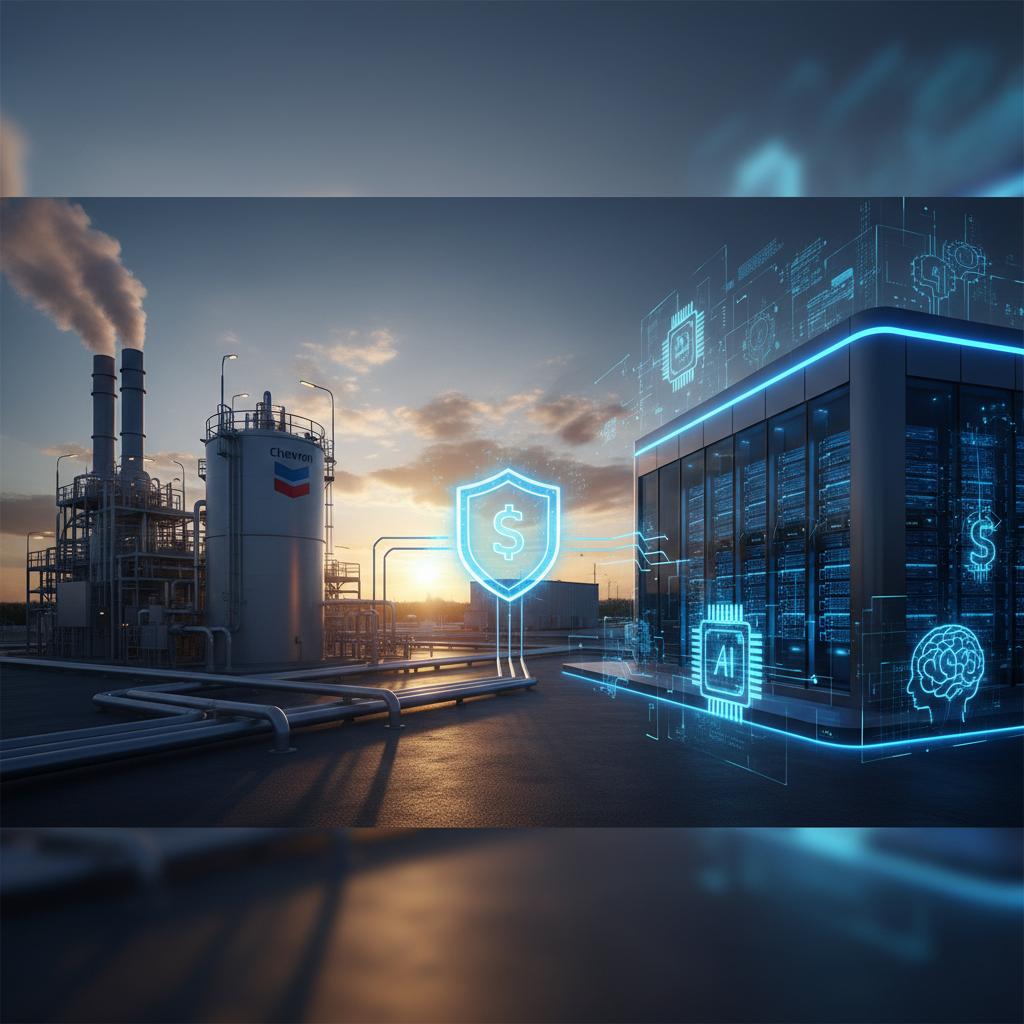
The hum of the servers is a constant, a low thrum that vibrates through the floor of the data center. Engineers, heads bent over glowing screens, track the thermal output of the latest AI training runs. It’s a race against the clock, a battle against the rising cost of power. And Chevron, the oil and gas giant, is stepping into the arena.
The company’s CEO recently outlined a strategy to shield consumers from the soaring energy demands of AI. The plan? To power AI data centers with natural gas, a move that could potentially offset the rising costs associated with the technology. This is no small undertaking, given the exponential growth in AI’s energy needs. The insatiable demand for processing power, especially for large language models (LLMs), is driving a surge in electricity consumption. Think of it: training a single cutting-edge LLM can consume as much energy as a small town.
Chevron’s approach centers on developing off-grid energy parks, with the first slated for Texas. These facilities will use natural gas to generate electricity, providing a dedicated power source for AI data centers. “It’s a play to control costs,” says energy analyst Sarah Jones of Deutsche Bank, “but also a way to diversify Chevron’s portfolio in a changing energy landscape.” Jones projects that the demand for natural gas in this sector could increase by 30% by 2027.
The technical details are complex. Natural gas-powered turbines will generate electricity, which will then be fed directly to the data centers. This bypasses the traditional grid, minimizing transmission losses and, potentially, costs. The exact capacity of these Texas energy parks hasn’t been disclosed, but the scale is expected to be significant to handle the power-hungry AI chips, like those from Nvidia’s H100 or the upcoming H200. The heat generated by these chips is immense, requiring sophisticated cooling systems.
The move also presents a strategic advantage, especially as the industry grapples with the implications of export controls and domestic procurement policies. While the US government continues to debate regulations around the export of advanced AI chips, Chevron’s strategy offers a degree of insulation from supply chain disruptions. Furthermore, by controlling the energy source, Chevron can potentially offer more stable and predictable pricing to data center operators, a crucial factor in an industry where every millisecond counts.
The implications are far-reaching. It’s not just about Chevron. It’s about the future of energy, the evolution of data centers, and the balance between technological advancement and consumer costs. And right now, the engineers are still staring at those screens. The numbers are changing. Constantly.
About the Author