The hum of servers filled the air, a constant reminder of the data deluge. Inside a Bengaluru tech park, engineers at a leading electronics firm were deep in a thermal test review. It was early 2026, and the implications of the Union Budget, announced just weeks before, were still rippling through the industry. Finance Minister Nirmala Sitharaman’s allocation of ₹40,000 crore for the electronics Production Linked Incentive (PLI) scheme was the headline, a clear signal: India was doubling down on domestic manufacturing.
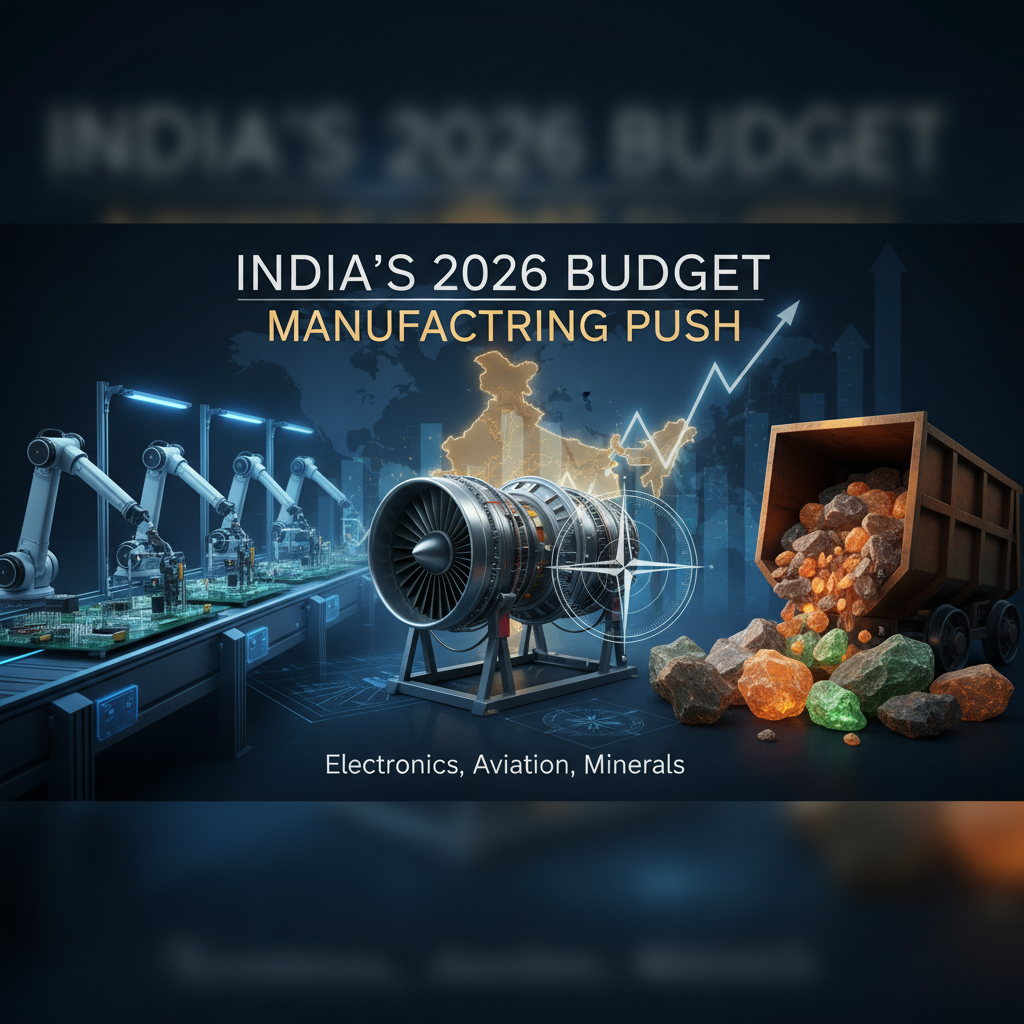
The budget, unveiled in February, outlined a strategy to bolster several key sectors. Electronics, aviation, and critical minerals were the primary beneficiaries. For the electronics sector, the enhanced PLI scheme aimed to strengthen domestic manufacturing, improve high-technology production, and expand export potential. “This is not just about incentives; it’s about building an ecosystem,” noted Rajesh Sharma, a senior analyst at Counterpoint Research, in a recent briefing. “They are trying to create a robust supply chain, which is key.”
The government’s focus extended beyond electronics. The budget proposed support for rare earth corridors in Odisha, Kerala, Andhra Pradesh, and Tamil Nadu. The goal: to boost mining, processing, research, and manufacturing of critical minerals. This move is designed to reduce the country’s reliance on imports, particularly from China, and ensure a steady supply of materials essential for high-tech manufacturing. Simultaneously, the budget supported aviation manufacturing through duty cuts, MRO (Maintenance, Repair, and Overhaul) expansion, and infrastructure upgrades. Demand was soaring, and the government was keen to meet rising passenger and fleet needs.
The ISM 2.0 initiative also received a boost, with greater emphasis on industry-led research and training centers. The goal is to build advanced technology capabilities and a skilled semiconductor workforce. India aims to sharpen its chip supply-chain resilience, a critical concern given global shortages and geopolitical tensions. One engineer, reviewing a schematic, muttered about the challenges: “It’s about more than just funding; it’s about execution. SMIC versus TSMC is a world of difference.”
The budget’s emphasis on domestic manufacturing and infrastructure development reflects a broader strategic shift. The aim is to achieve sustained economic growth and reduce dependence on foreign suppliers. The commitment to the PLI scheme, coupled with investments in critical minerals and aviation, is a clear indication of India’s ambition to become a global manufacturing hub. The stakes are high, but the potential rewards—a more resilient economy, advanced technological capabilities, and increased export opportunities—are even higher.
About the Author