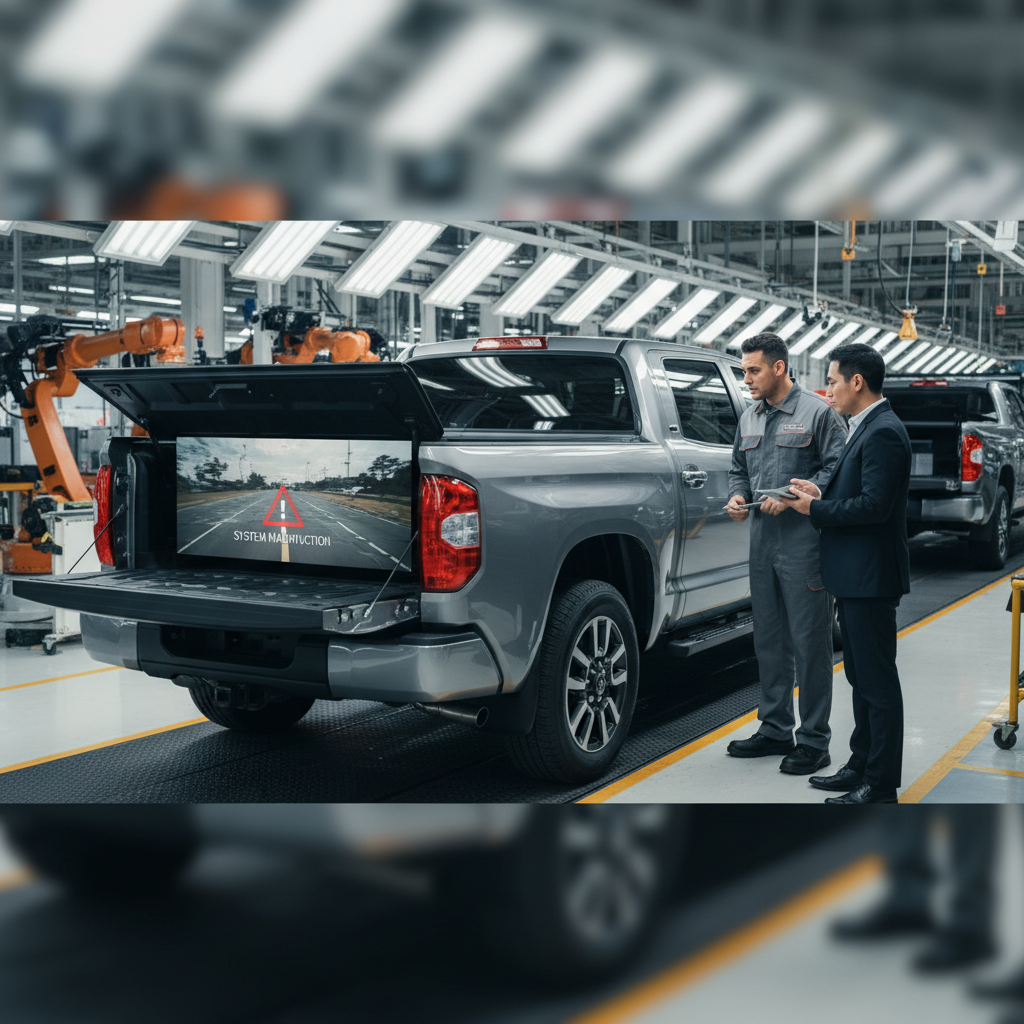
Toyota is recalling more than 161,000 Tundra trucks due to a software defect that could potentially disable the rearview camera, increasing the risk of accidents. This recall, announced by the automaker and reported by federal regulators, highlights ongoing safety concerns within the automotive industry.
The core issue revolves around a software glitch that might prevent the rearview camera from displaying its feed. This malfunction can pose a significant safety risk, especially when drivers are backing up or maneuvering in tight spaces. The absence of a functioning rearview camera can impair a driver’s ability to see obstacles, pedestrians, or other vehicles, thereby increasing the likelihood of collisions.
According to the latest reports, the recall impacts a substantial number of Tundra trucks, underscoring the potential widespread implications of the software defect. Toyota has not yet specified the exact models or production dates affected, but further details are expected. The recall reflects the importance of rigorous quality control and the continuous monitoring of software performance in modern vehicles. This is particularly crucial as automobiles become increasingly reliant on complex electronic systems.
The manufacturing sector is closely watching how Toyota addresses this issue. The recall also underscores the importance of thorough testing and validation processes to ensure the safety and reliability of vehicles. As the automotive industry continues to innovate, the risk of software-related defects will likely persist. Therefore, manufacturers must prioritize robust testing and rapid response mechanisms to mitigate potential safety hazards.
In conclusion, the Toyota Tundra recall serves as a critical reminder of the potential safety implications associated with software defects in modern vehicles. It highlights the need for manufacturers to maintain stringent quality control measures and prioritize the safety of consumers. The incident is likely to prompt further scrutiny of software reliability within the automotive sector, influencing future design and manufacturing practices.
About the Author