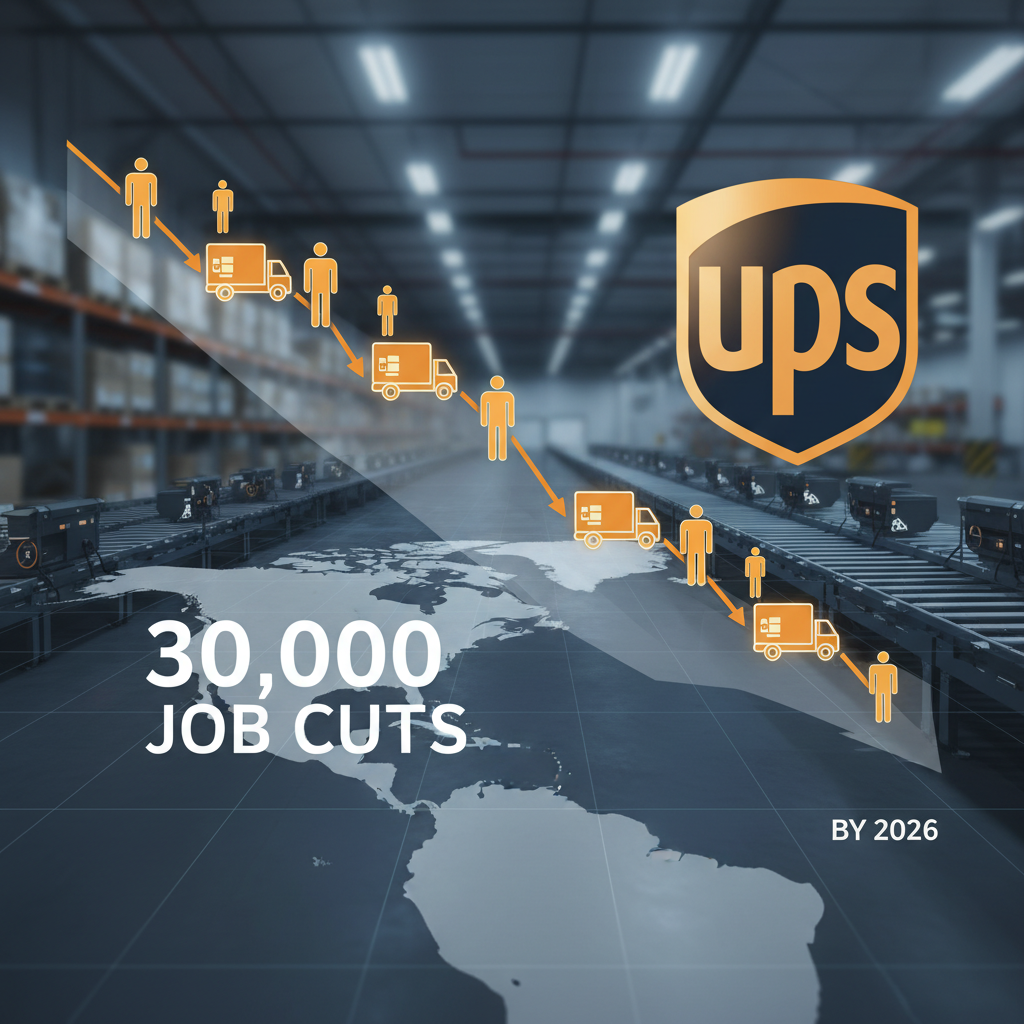
In a move signaling significant shifts within the logistics giant, UPS is set to cut up to 30,000 operational jobs by 2026. This decision, reported by Fox Business, is a key component of a broader transformation strategy aimed at optimizing network operations and enhancing overall productivity.
Context: The job cuts reflect UPS’s strategic pivot to streamline its operations in response to evolving market dynamics and competitive pressures. The company is likely seeking to adapt to changes in package volume, delivery methods, and the broader economic landscape.
Analysis: This restructuring indicates UPS’s commitment to efficiency and cost management. By focusing on network optimization, the company aims to improve its service capabilities while reducing operational expenses. The decision to eliminate jobs suggests that UPS is leveraging technology and automation to streamline processes, potentially including route optimization, warehouse automation, and other technological advancements.
Implications:
- Impact on Workforce: The job cuts will affect a substantial portion of UPS’s operational workforce, raising concerns about employee morale and the need for robust support for affected workers.
- Operational Efficiency: The transformation is expected to enhance operational efficiency, potentially leading to faster delivery times and improved service reliability.
- Competitive Positioning: By optimizing its network and reducing costs, UPS aims to strengthen its competitive position within the logistics industry, allowing it to better compete with rivals like FedEx and Amazon.
- Industry Trends: This move aligns with broader trends in the logistics sector, where companies are increasingly investing in automation, data analytics, and other technologies to improve efficiency and reduce costs.
Conclusion: UPS’s decision to cut 30,000 jobs by 2026 underscores its commitment to adapting to changing market conditions and improving operational efficiency. While this restructuring will likely bring challenges, it also positions UPS to capitalize on opportunities for growth and innovation in the logistics sector. The company’s success will depend on its ability to effectively manage the transition, support its workforce, and execute its transformation strategy.
About the Author




