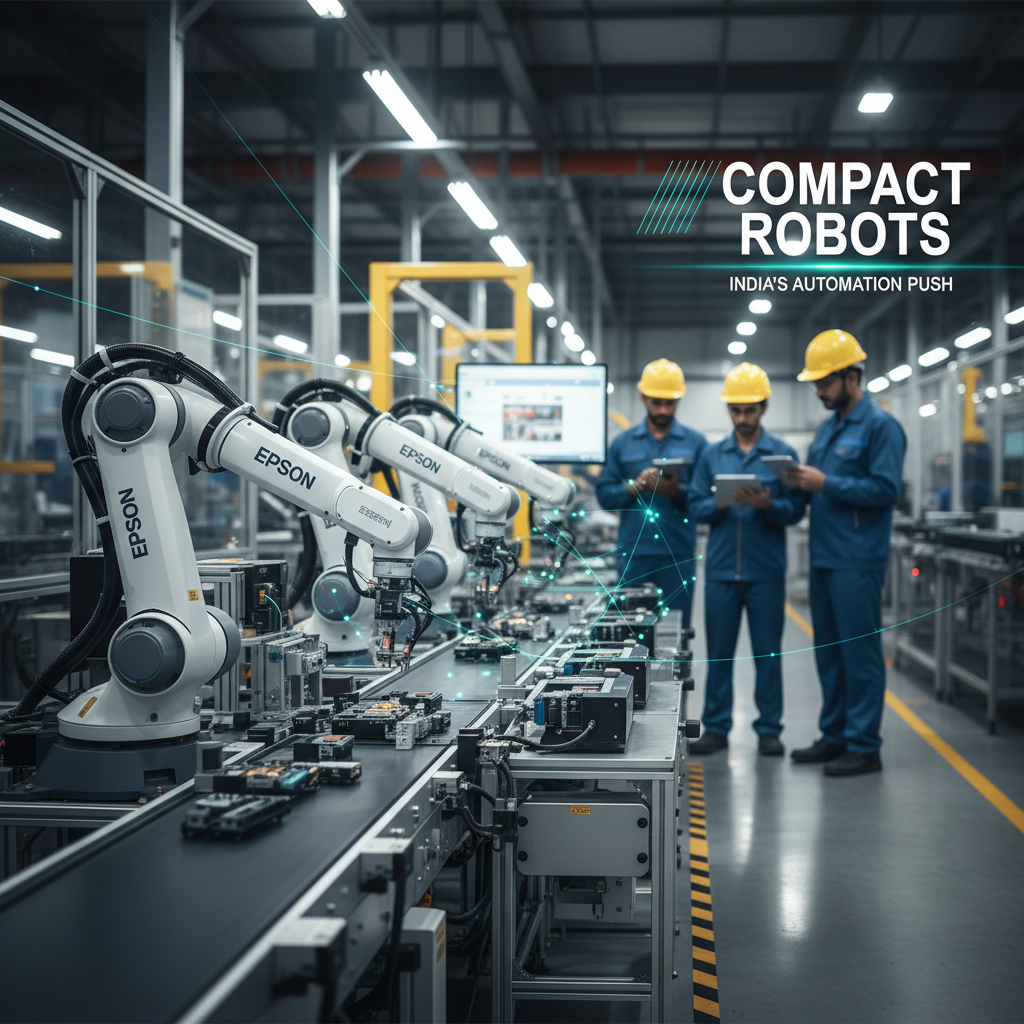
The hum of machinery filled the air, a familiar symphony on the factory floor. But today, something felt different. Instead of the usual clatter and grind, there was a precision, a dance of efficiency. It was here, amidst the controlled chaos of a modern Indian manufacturing plant, that the impact of compact robots became undeniably clear.
Epson India President Samba Moorthy, in a recent interview with ET Manufacturing, highlighted this transformation. He explained how these high-precision robots are not just automating tasks but are reshaping the very fabric of Indian factories. According to Moorthy, these robots are designed to overcome space, cost, and complexity constraints without requiring disruptive overhauls. This is crucial in a market where space is often at a premium and the cost of upgrading infrastructure can be prohibitive. The focus is on boosting productivity and enhancing safety, essential goals for any modern manufacturing operation.
The shift is not just about replacing human labor; it’s about optimizing it. These robots can handle repetitive, dangerous, or physically demanding tasks, allowing human workers to focus on more complex and creative roles. This is a win-win, improving both efficiency and worker safety. A recent report from the Federation of Indian Chambers of Commerce and Industry (FICCI) predicts a 15% increase in manufacturing output over the next five years, fueled in part by this wave of automation.
The benefits extend beyond the factory floor. By improving efficiency and reducing waste, these robots contribute to sustainable manufacturing practices. This is a significant advantage in a world increasingly focused on environmental responsibility. The ability to adapt to different tasks and environments also makes these robots incredibly versatile. From electronics assembly to pharmaceuticals, their applications are vast and growing.
“The adoption of compact robots is not just a trend; it’s a strategic imperative for Indian manufacturers,” notes Dr. Priya Sharma, a leading analyst at the Institute for Manufacturing Excellence. “Companies that embrace this technology will be best positioned to compete in the global market.”
The implications are far-reaching. As more companies adopt these technologies, the Indian manufacturing sector is poised for a period of significant growth and transformation. This will create new opportunities for skilled workers, drive innovation, and ultimately strengthen India’s position in the global economy. It’s a story of progress, one precisely calibrated movement at a time.
About the Author