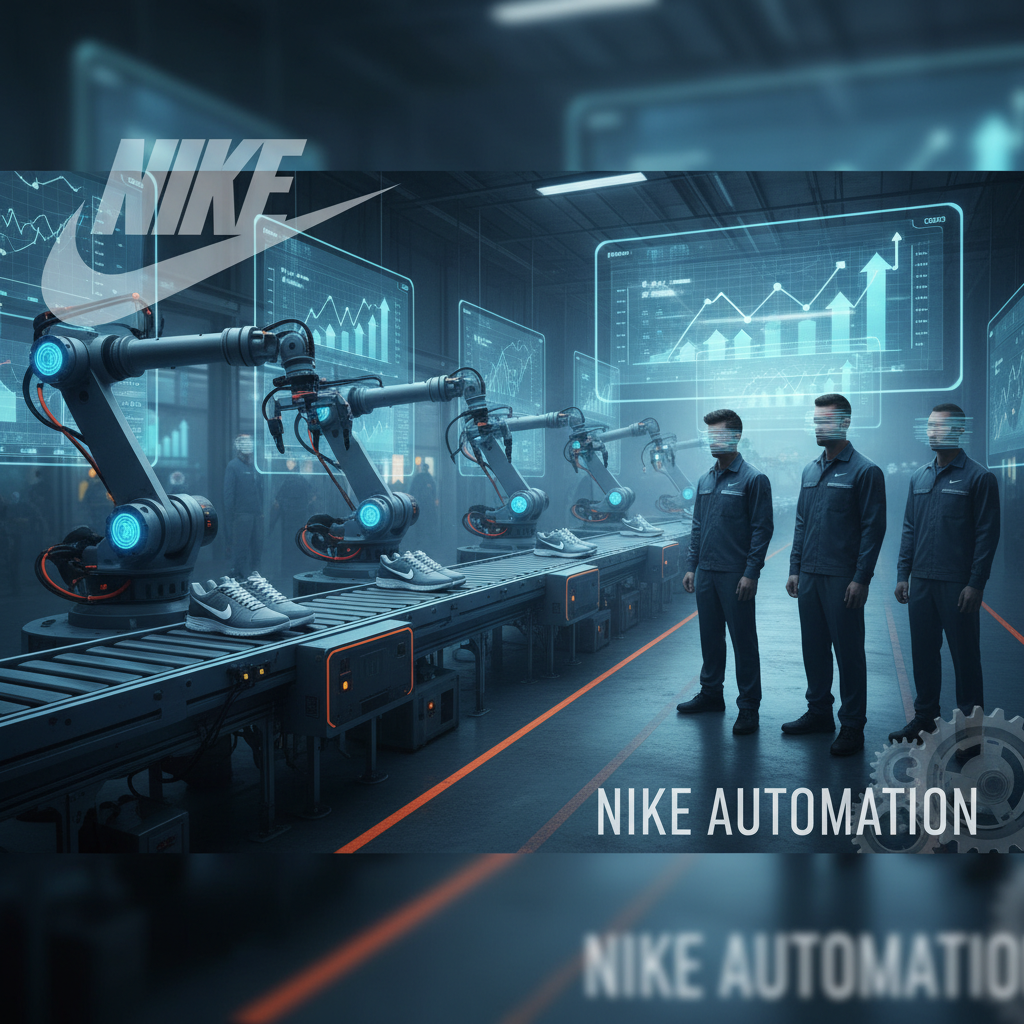
The hum of machinery filled the air, a constant thrum that had replaced the sounds of human hands sorting and packing. Inside a Nike distribution center, the transition was underway. The company announced plans to cut 775 jobs across its Tennessee and Mississippi distribution centers, a move tied directly to its ongoing push for automation.
The decision, revealed in recent business news, underscores a broader trend: as companies seek greater efficiency, automation increasingly claims roles once held by humans. Nike’s strategy aims to streamline its supply chain and reduce operational costs, but the shift comes with a human cost.
“It’s a necessary evolution,” commented analyst Sarah Chen of Wedbush Securities. “Nike is adapting to stay competitive, and automation offers significant advantages in terms of speed and accuracy.” Chen noted that while the initial investment in automation is substantial, the long-term benefits in terms of operational efficiency and reduced labor costs are compelling, particularly as consumer demand continues to evolve.
The details, however, are stark. The job cuts represent a significant upheaval for the affected workers and their communities. Distribution centers, once bustling with employees, will become increasingly reliant on automated systems. These systems can process orders faster, reduce errors, and operate around the clock, but they also displace workers.
The move is not entirely unexpected. Nike, like many major retailers, has been investing heavily in automation technologies. These investments include advanced robotics, AI-powered inventory management systems, and automated picking and packing solutions. The goal is to optimize every stage of the supply chain, from the factory floor to the customer’s doorstep. This efficiency is crucial in a market where speed and responsiveness are paramount.
The implementation of these systems is a complex undertaking, involving significant upfront costs and ongoing maintenance. But the potential rewards are substantial. By reducing reliance on manual labor, Nike can mitigate the impact of rising labor costs and supply chain disruptions.
The broader implications are clear. Automation is reshaping the landscape of the retail and logistics industries. While it creates new jobs in areas like robotics maintenance and data analysis, it also eliminates many traditional roles. The challenge for companies and policymakers alike will be to manage this transition, providing support for displaced workers and ensuring that the benefits of automation are shared broadly.
For Nike, the decision is a strategic move to secure its position in a rapidly changing market. For the workers affected, it is a harsh reality of the evolving economy.
About the Author