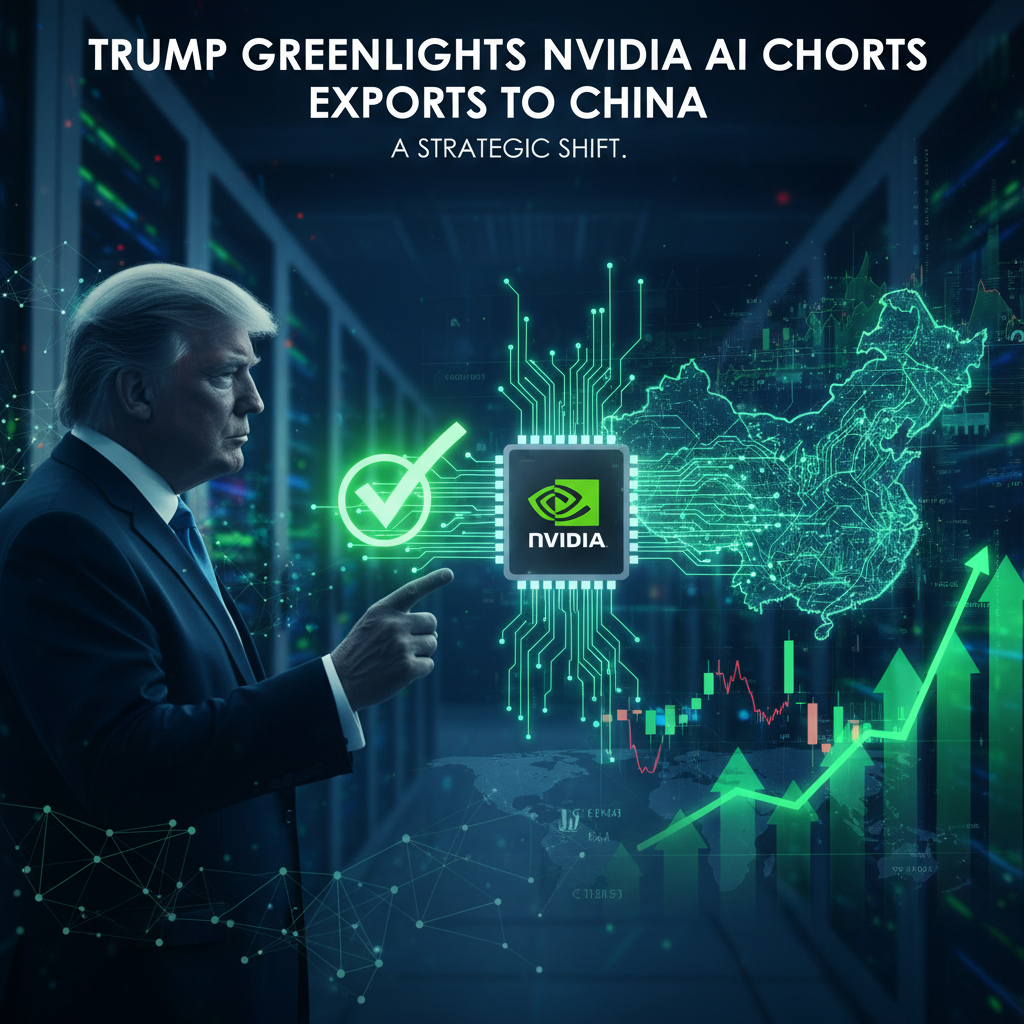
The hum of servers filled the air as engineers at Nvidia reviewed thermal tests. It was late 2020, and the implications of the Trump administration’s decision were starting to sink in. The green light for AI chip exports to China, a move the company hoped would support U.S. jobs and manufacturing, was, in reality, a complex balancing act.
The core of the matter: Nvidia’s cutting-edge GPUs, crucial for AI development, were now flowing into China. The decision, made during the Trump administration, aimed to bolster American leadership in AI. It was a calculated move, one that reflected the economic realities of a globalized tech market. Yet, it also raised eyebrows in Washington.
“This wasn’t just about selling chips,” explained Dr. Emily Chen, a senior analyst at the Brookings Institute, during a briefing. “It was about maintaining a competitive edge in a rapidly evolving technological landscape. China’s ambitions in AI were, and remain, substantial.”
The chips in question, like the A100 and later the H100, are not mere components; they’re the engines of modern AI. They power everything from large language models (LLMs) to advanced data analytics. Nvidia’s chips are built on advanced nodes, and the manufacturing is primarily handled by TSMC. Any export approval was a nod to the fact that these chips were supporting U.S. jobs, manufacturing, and AI leadership.
The policy shift wasn’t without its challenges. Export controls, particularly those targeting China’s semiconductor industry, added a layer of complexity. The U.S. government has been concerned about China’s ability to use advanced chips for military applications, or maybe that’s how the supply shock reads from here. The balance was delicate: enabling Nvidia to compete in the Chinese market while preventing the technology from falling into the wrong hands.
The financial implications were significant. According to a 2021 report by JPMorgan, the market for AI chips in China was projected to reach $10 billion by 2025. Nvidia, with its dominant position, stood to gain substantially. However, the company also faced the risk of increased scrutiny and potential restrictions. The situation was further complicated by China’s own ambitions in the semiconductor space, with companies like Huawei and SMIC making strides in chip design and manufacturing, albeit with limitations.
The Trump administration’s decision, therefore, wasn’t just about exports; it was a strategic bet. A bet that Nvidia could continue to lead the AI revolution, a bet that the company could navigate the intricate web of global politics, and a bet that U.S. innovation could thrive even in the face of rising competition.
About the Author




