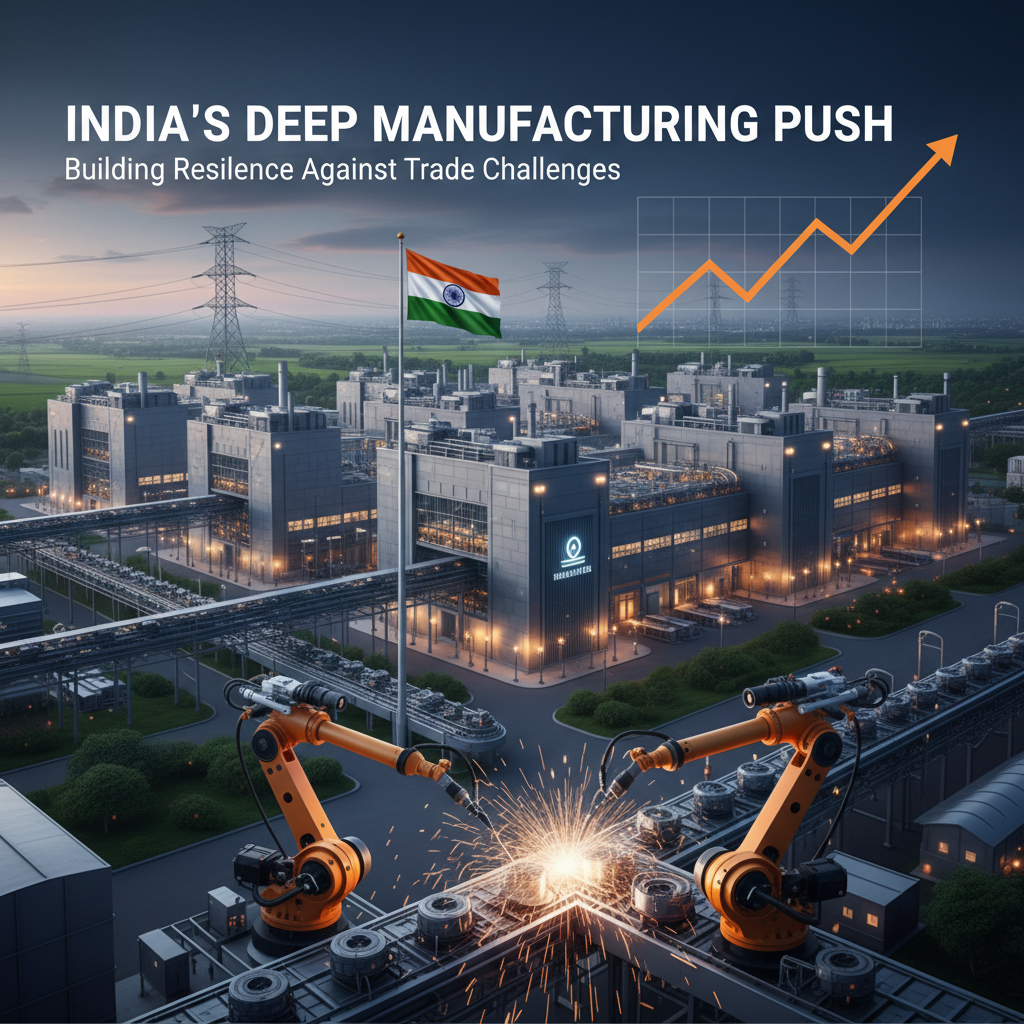
India must accelerate its focus on deep manufacturing to fortify its economy against tariffs and export pressures, according to a recent report by GTRI (Global Trade Research Initiative). This strategic shift is crucial for the nation’s economic resilience and sustained growth, particularly in the face of evolving global trade dynamics.
Context: The GTRI’s analysis underscores the importance of a robust manufacturing sector for India. By prioritizing deep manufacturing, India aims to increase its exports and better manage the challenges posed by global trade. This involves a strategic focus over the next five years, emphasizing the development of advanced manufacturing capabilities.
Analysis: The core of this strategy revolves around strengthening India’s manufacturing base. Deep manufacturing, as highlighted by GTRI, is not just about producing goods but also about developing the technological capabilities and infrastructure necessary to compete globally. This includes investing in research and development, upgrading manufacturing processes, and fostering a skilled workforce. The benefits are multifold: increased exports would boost the Indian economy, creating jobs and attracting foreign investment. Moreover, a strong manufacturing sector makes India less vulnerable to external trade pressures, such as tariffs and supply chain disruptions.
Implications: The success of this initiative hinges on several factors. First, consistent government policies that support manufacturing are essential. This includes streamlining regulations, providing financial incentives, and investing in infrastructure. Second, collaboration between the government, industry, and academia is vital to foster innovation and skill development. Third, India must focus on areas where it can build a competitive advantage, such as electronics, pharmaceuticals, and renewable energy components. The shift towards deep manufacturing will require sustained effort, strategic investments, and a long-term vision.
What Happens Next: India’s commitment to deep manufacturing will likely influence its trade policies and investment strategies in the coming years. We can expect to see increased emphasis on attracting foreign investment in manufacturing, promoting domestic production, and negotiating trade agreements that support Indian manufacturers. The GTRI’s recommendations serve as a roadmap for India to navigate the complexities of global trade, ensuring economic growth and resilience.
Source: Top ET Manufacturing | Latest Manufacturing News : ETManufacturing.in
About the Author