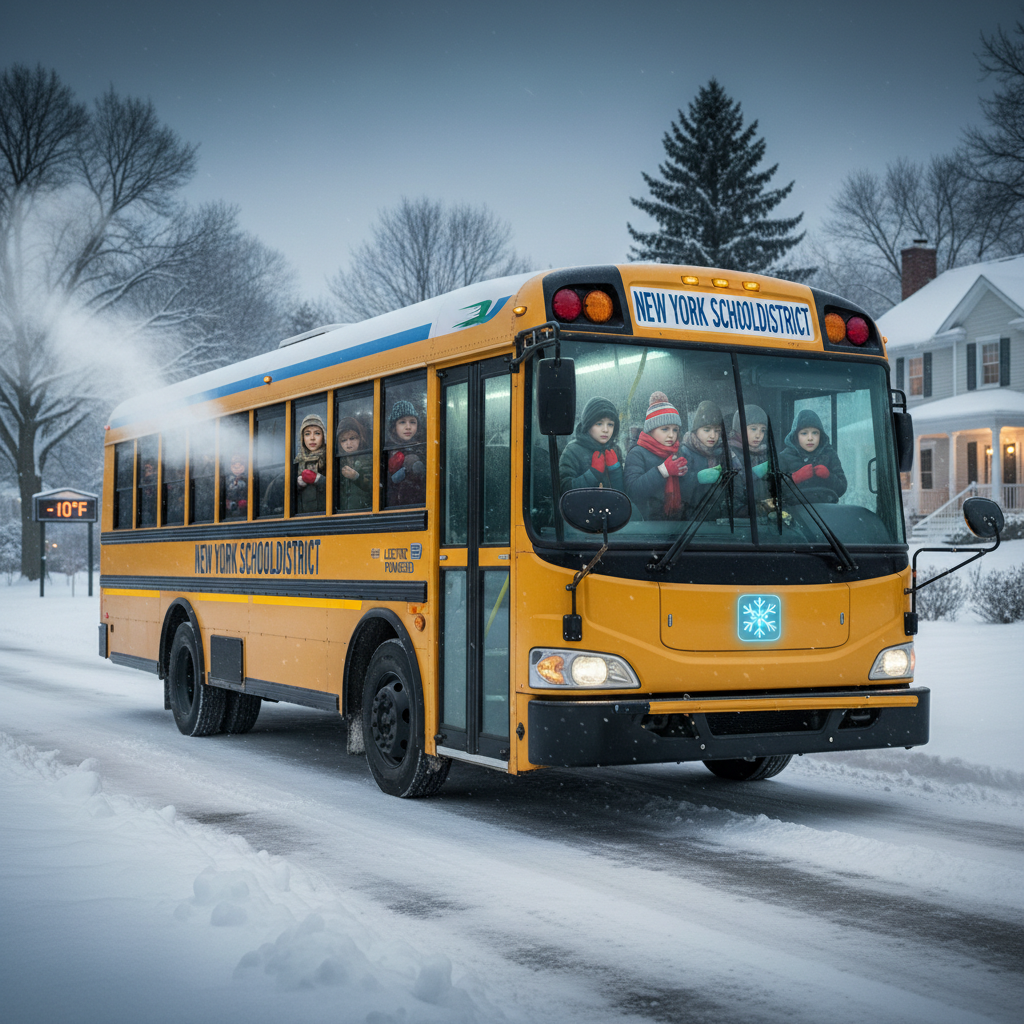
The hum of the electric motor is supposed to be the future. But inside a western New York school district’s maintenance garage, the future feels a lot like a drafty, underheated present. Technicians huddle around a newly arrived electric school bus, its charging port still gleaming, running diagnostic tests. The problem, as parents are quickly learning, is the cold.
Reports are flooding in: children arriving home from school, faces flushed from the cold, bundled in layers despite the bus ride. The mandate for electric school buses, designed to cut emissions and promote green initiatives, is running headfirst into a brutal winter reality. These aren’t just anecdotes. Parents are documenting instances of bus interiors failing to maintain adequate temperatures, leading to what they describe as “freezing” conditions for their children. The issue has become a pressing concern for several districts, according to local news reports and parent groups.
“It’s a classic case of good intentions meeting a harsh environment,” says Sarah Jones, an analyst at GreenTech Insights. “The technology is promising, but the implementation needs to account for the specific demands of a place like New York, where temperatures can plummet and stay low for months.” She points out that the heating systems in these electric buses, which run on the same battery power as the motor, may be struggling to compete with the extreme cold, especially when compared to the older diesel models.
The core of the problem lies in the energy efficiency of the heating systems. Unlike traditional diesel buses, electric models don’t have waste heat from the engine to draw on. Instead, they rely on electric resistance heaters or heat pumps, which consume significant power, reducing the bus’s range and potentially compromising the heating capabilities. For example, if the bus has a range of 100 miles in ideal conditions, the range might drop to 60 or 70 miles in freezing temperatures when the heating system is running at full capacity.
Adding to the problem: the supply chain. The batteries, the heating systems, the control modules – all are subject to the same pressures as the rest of the automotive industry. A delay in the delivery of a critical component can push back the deployment of a whole fleet of buses. And if the buses are not properly winterized – with extra insulation or more powerful heating units – the problem is only exacerbated.
The situation highlights a broader challenge in the transition to electric vehicles: the need to adapt technology to local conditions. What works in California or Florida might not be suitable for the harsh winters of New York or the Midwest. The companies building these buses need to take these regional differences into account, investing in more robust heating systems or offering models specifically designed for colder climates. Otherwise, the promise of electric vehicles will remain a cold comfort for students waiting for their ride home.
The question now becomes: How quickly can these issues be resolved? With state mandates pushing for the rapid adoption of electric buses, the pressure is on manufacturers and school districts. The timeline to retrofit existing buses or deploy new models with improved heating systems is crucial. The kids, after all, are waiting.
About the Author