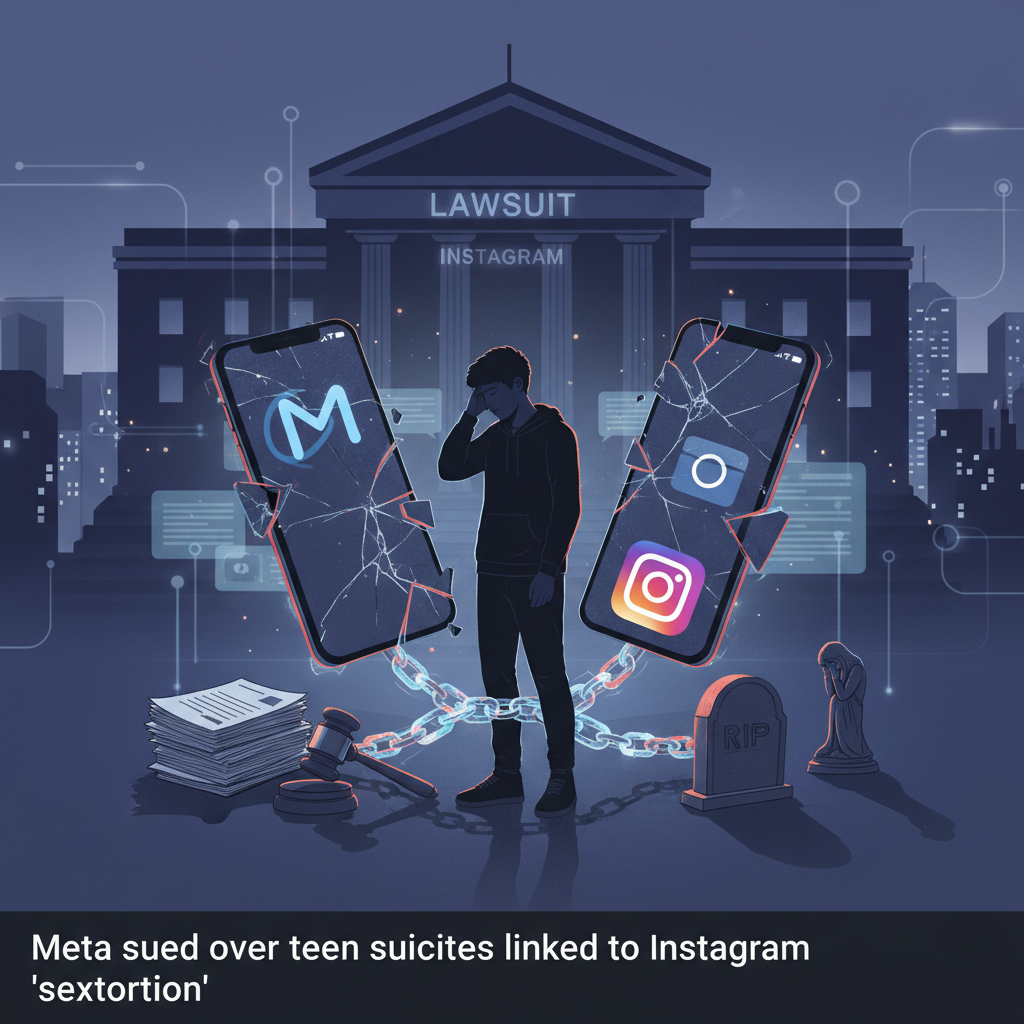
The hum of servers fills the air, a constant thrum in the background. It’s late, and the lights of the Meta campus still burn bright. Engineers, heads bent over glowing screens, are likely poring over the latest reports—or maybe they’re just trying to keep up. The news cycle moves fast, especially when it involves lawsuits. Two families have just filed against Meta, claiming the company’s negligence on Instagram led to their teenage sons’ suicides. The core of the suit: ‘sextortion’ schemes, and the allegation that Meta knew about them but didn’t act.
The families claim their sons were targeted by adult predators using Instagram to solicit explicit images, then threatening to share them unless the boys complied with further demands. The lawsuits allege that Meta failed to adequately protect minors, despite being aware of the risks. The legal documents paint a picture of a company slow to respond to reports of abuse, prioritizing growth over user safety.
This isn’t just a legal issue; it’s a technical one. Instagram’s algorithms, designed to maximize engagement, can also amplify harmful content and connect predators with vulnerable users. “The platform’s design, its very architecture, creates these vulnerabilities,” says Evelyn Mitchell, a tech analyst at Forrester. “It’s a feature, not a bug, if you’re chasing eyeballs.” This means that the constant push for more content, more interaction, and more time spent on the platform can inadvertently create opportunities for malicious actors. Meta, in its defense, will likely argue that it has invested heavily in safety measures, including AI-powered tools to detect and remove harmful content. They’ll point to the 15 million pieces of content they remove daily for violating their policies. But for the families, and for many observers, that’s not enough.
The implications are far-reaching. The lawsuit could set a precedent for platform liability, forcing social media companies to take more responsibility for the content and interactions that occur on their platforms. It could also lead to stricter regulations and increased scrutiny of algorithms. Meta’s stock price, already volatile, is likely to feel the pressure. The company’s market cap, which reached over $1 trillion in 2021, has seen significant drops. The lawsuit adds another layer of complexity to Meta’s already challenging environment, with antitrust investigations, and concerns over the metaverse.
The core issue here is the tension between innovation and responsibility. Meta, like other tech giants, is constantly pushing the boundaries of what’s possible. They are always racing to the future. But the question is: at what cost? The families’ lawsuit is a stark reminder that technology, no matter how advanced, can have devastating consequences when user safety isn’t prioritized. It’s a somber reminder that the human cost of these digital platforms is very real.
About the Author