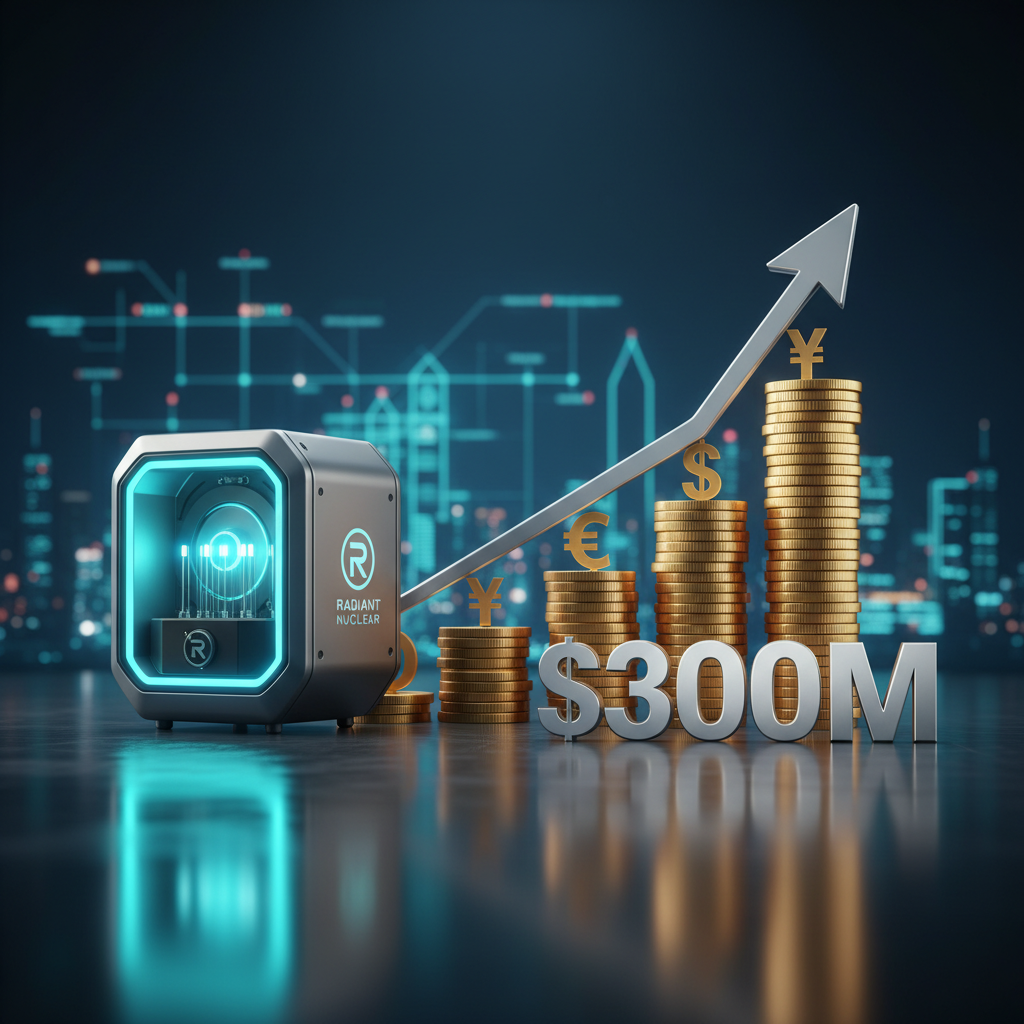
The hum of servers filled the room, a low thrumming that usually signaled another late night for the Radiant Nuclear team. But tonight, there was a different kind of energy, a buzz of anticipation. It was December 17, 2025, and the news had just dropped: Radiant Nuclear had closed a $300 million funding round.
This wasn’t just another venture capital injection; it was a bet on the future of energy. The company, focused on small modular reactors (SMRs), was aiming to disrupt the diesel generator market. Their 1 MW reactor, roughly the size of a semi-truck, promised a cleaner, more reliable power source for remote locations and microgrids. They’d previously raised $165 million back in May, marking a rapid acceleration in their growth.
“This funding allows us to move from pilot projects to full-scale deployment,” said a company spokesperson in a call later that day. “We’re targeting areas where diesel generators are the primary power source, offering a sustainable alternative.” The strategy makes sense. Diesel generators are notoriously polluting and expensive to operate, especially in off-grid locations. SMRs, with their compact size and potential for on-site fuel processing, offer a compelling solution.
But the road isn’t easy. The SMR market faces regulatory hurdles and public perception challenges. “The nuclear industry has a history,” noted energy analyst Sarah Chen of Deutsche Bank. “Overcoming those concerns will be critical for widespread adoption.” She pointed to the need for clear safety protocols and community engagement. Export controls could also play a significant role, depending on component sourcing and deployment locations.
Inside the Radiant Nuclear labs, engineers were poring over thermal test results. The pressure was on to refine the reactor design and ramp up manufacturing. The company’s roadmap, shared in a recent investor presentation, outlined plans for a 2 MW model by 2027. That’s ambitious, but the team seemed undeterred. The goal is to build a more resilient energy infrastructure.
The funding announcement was followed by a flurry of activity. The company’s Slack channel pinged constantly, alerts from the legal team, supply chain updates from procurement. The market responded quickly. Shares in companies involved in nuclear component manufacturing saw a modest bump, reflecting the broader interest in the sector. It’s a long game, but Radiant Nuclear is making its move, one reactor at a time.
About the Author