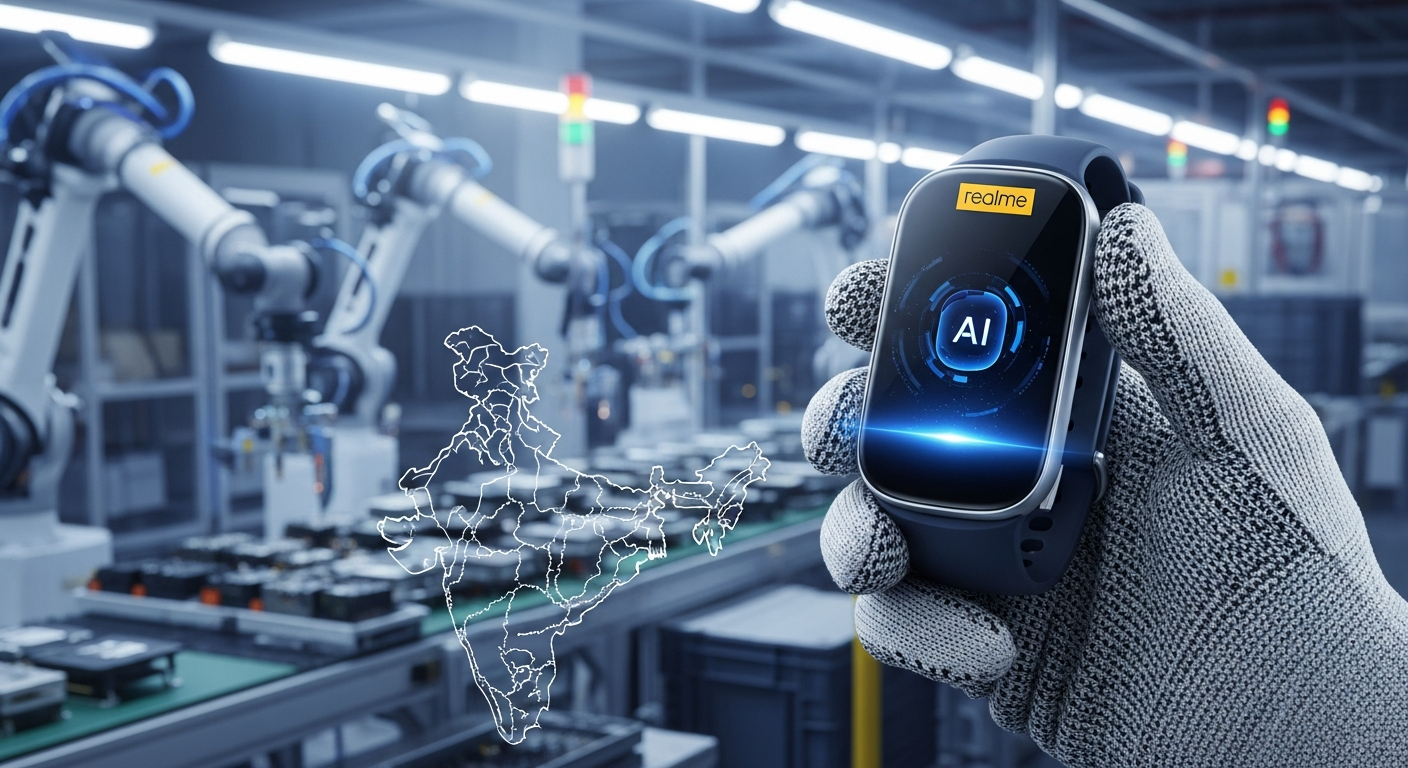
The hum of servers filled the air, a low thrum that vibrated through the floor of the Realme R&D lab in Gurgaon. Engineers hunched over screens, thermal tests flickering across their monitors. This wasn’t just another product launch; it was the beginning of a strategic shift. Realme, the Chinese smartphone maker, is planning to manufacture AIoT (Artificial Intelligence of Things) products in India by 2027, according to a recent report in ET Manufacturing.
The move is a significant bet on India’s growing market and its potential as a manufacturing hub. Realme intends to enhance its Research & Development (R&D) operations and make substantial investments in India-led design and testing infrastructure. The goal: co-create its next generation of AIoT devices. It’s a bold timeline.
“Realme’s commitment to local manufacturing underscores a broader trend,” notes Neil Shah, Vice President of Research at Counterpoint Research. “Companies are increasingly looking to diversify their manufacturing bases, and India offers a compelling combination of market size, skilled labor, and supportive government policies.” He points to the Production-Linked Incentive (PLI) scheme as a key driver, which incentivizes domestic manufacturing.
The implications are far-reaching. By 2027, Realme aims to have a fully integrated AIoT ecosystem designed and manufactured in India. This includes everything from smart home devices to wearables, all powered by AI algorithms. The shift also means a potential boost for local suppliers and a surge in high-tech jobs. But the path won’t be easy.
One major hurdle is the global chip shortage and supply chain disruptions. Realme will need to secure a reliable supply of components, including processors, memory chips, and display panels. The ongoing US-China trade tensions and export controls further complicate matters. Companies like Realme must navigate a complex geopolitical landscape, balancing cost, efficiency, and geopolitical risk.
Inside the lab, the team was focused on the thermal performance of a new prototype. A senior engineer, identified only as Mr. Sharma, pointed to a graph showing heat dissipation. “We’re aiming for a 20% improvement in thermal efficiency,” he explained, “which would allow for more powerful processing in a smaller form factor.” Or maybe that’s how the supply shock reads from here.
The clock is ticking, and the pressure is on. Realme has set an ambitious goal, but the potential rewards are significant. If successful, the company could establish itself as a major player in the Indian AIoT market and gain a significant advantage in the global race for connected devices. It’s an interesting move, for sure.
About the Author