The hum of servers fills the air, a low thrum punctuated by the rapid-fire clicks of keyboards. In a dimly lit corner of the Bangalore facility, a team of engineers huddles around a thermal imaging display. The focus is on a new chip design, a critical component slated for integration into a domestic-built smartphone, a device that must meet the demands of India’s booming electronics market.
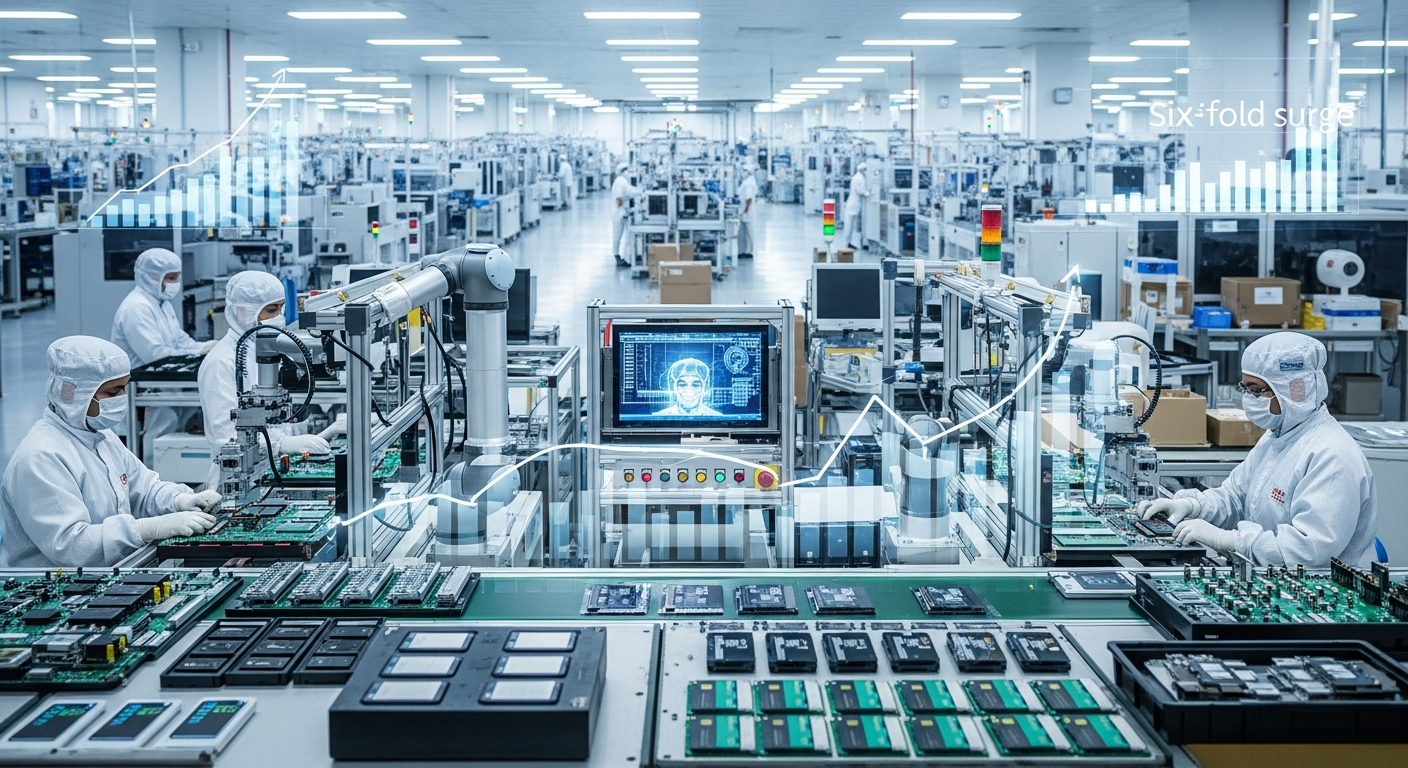
According to recent industry estimates cited by Jitin Prasada, the electronics manufacturing sector in India is experiencing explosive growth. It has expanded six-fold in the last 11 years, reaching an impressive ₹11.32 lakh crore in FY25. This surge is not just about numbers; it translates into significant job creation, with the sector now employing approximately 25 lakh people. This growth reflects a concerted push by the Indian government to establish the nation as a global electronics manufacturing hub, a strategy with profound implications for both domestic and international markets.
The numbers are staggering. Six-fold growth. Over a decade. It’s a testament to the ambitious “Make in India” initiative and the strategic investments in infrastructure and incentives designed to attract global manufacturers. For instance, the Production Linked Incentive (PLI) scheme has been a key driver, offering financial incentives to companies that manufacture goods in India. This has led to a significant increase in domestic production, particularly in mobile phones, IT hardware, and electronic components. The goal is clear: reduce reliance on imports and boost exports, positioning India as a key player in the global electronics supply chain.
“India’s electronics manufacturing sector is at an inflection point,” says Priya Sharma, a senior analyst at a Mumbai-based research firm specializing in the Indian tech market. “The growth is not just about assembling components; it’s about developing a robust ecosystem that includes design, manufacturing, and testing.” She points to the increasing number of domestic and international companies setting up manufacturing facilities, R&D centers, and supply chain operations in India. This includes major players in the smartphone, semiconductor, and consumer electronics industries. They are all racing to establish a footprint in this rapidly expanding market. And they are all competing for talent.
Back in the Bangalore facility, the engineers are running another round of tests. The chip in question, a system-on-chip (SoC), is designed to meet stringent performance and efficiency targets. The team needs to ensure that it can handle the intense processing demands of modern applications while maintaining optimal power consumption. The stakes are high. One misstep could mean delays, cost overruns, and a hit to their competitive edge. The heat map shows the thermal profile; they are looking for hotspots. This is where the rubber meets the road.
The challenges are considerable. India’s electronics manufacturing sector faces hurdles such as supply chain disruptions, infrastructure gaps, and the need for skilled labor. The sector is heavily reliant on imported components, particularly semiconductors and specialized equipment. Any disruption in the global supply chain, such as geopolitical tensions or natural disasters, can have a significant impact on production. The government is working to address these issues by promoting domestic manufacturing of components, investing in infrastructure, and implementing policies to attract skilled labor. The focus is on creating a resilient and self-sufficient ecosystem.
There are also the geopolitical realities. US export controls, for instance, are reshaping the global semiconductor landscape. That is influencing decisions at the highest levels of the Indian government. The need for self-reliance is not just a commercial imperative; it’s a strategic one. As a result, India is investing heavily in its own semiconductor design and manufacturing capabilities, with a focus on attracting foreign investment and technology transfer. The goal is clear: build a domestic ecosystem that can compete on the global stage, and ensure supply chain independence.
The long-term implications are significant. A thriving electronics manufacturing sector could transform India’s economy, creating millions of jobs, boosting exports, and driving innovation. It could also help India become a major player in the global technology landscape, reducing its reliance on foreign imports and increasing its strategic autonomy. The growth trajectory is undeniable. The challenges are real. The future, however, is being built, one chip, one smartphone, one manufacturing facility at a time.
About the Author