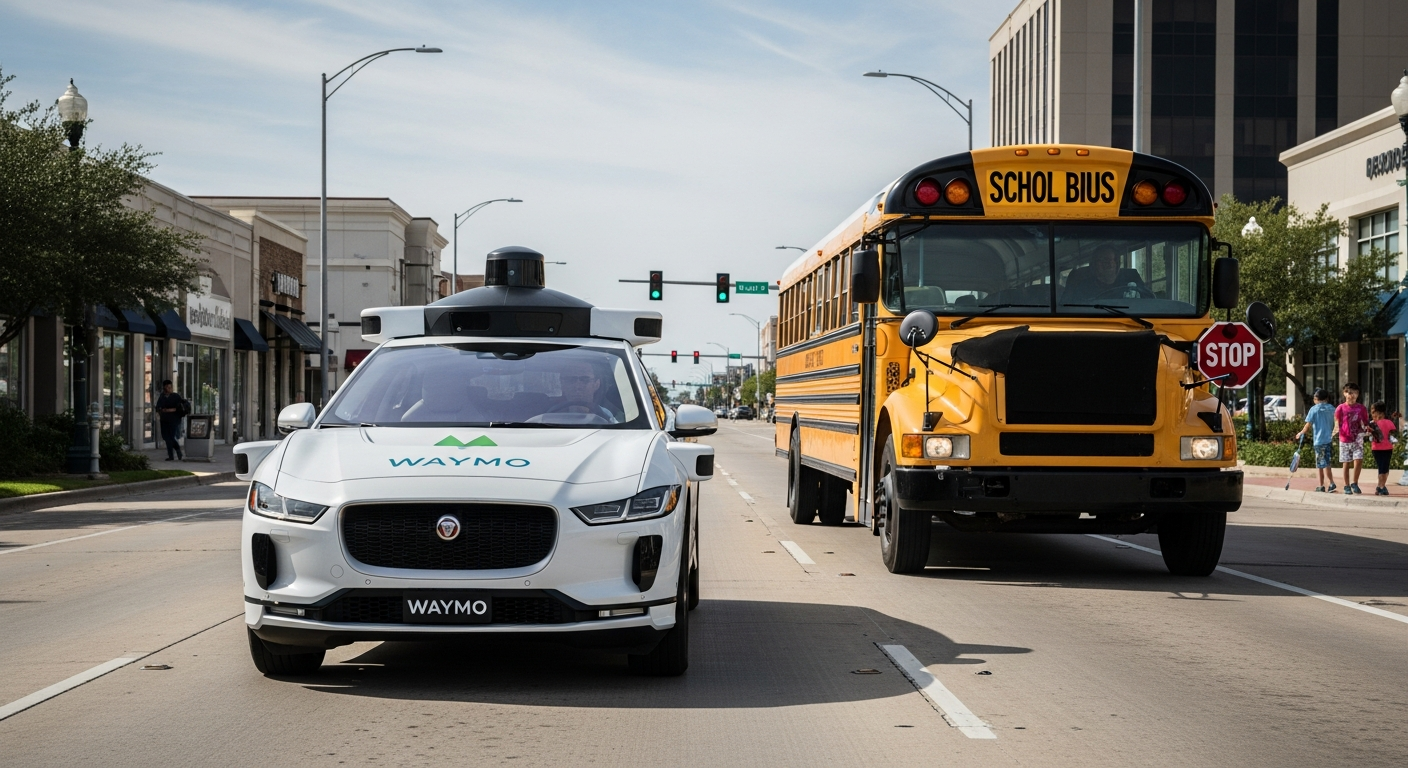
The fluorescent glow of a Texas school bus stop sign. That’s what Waymo engineers, hunched over monitors in their Mountain View headquarters, were staring at last week, sifting through data streams. The issue: multiple incidents, reported by Texas officials, of Waymo’s autonomous vehicles illegally passing stopped school buses. The immediate response? A voluntary recall.
The recall, announced in late October, marks a critical juncture for Waymo. It’s a stark reminder that even the most advanced autonomous systems are still subject to real-world complexities — and the potential for serious consequences. The company, a pioneer in the self-driving space, must now grapple with the practical implications of its technology in a setting where safety is paramount.
“This is a clear example of the challenges in deploying this technology,” says Sam Abuelsamid, Principal Analyst at Guidehouse Insights, in a phone interview. “The regulatory environment is going to vary widely. What works in one place might be a problem somewhere else.”
The technical challenge is significant. Waymo’s vehicles rely on a complex sensor suite – lidar, radar, and cameras – combined with sophisticated software to perceive the environment and make driving decisions. The system must accurately identify school buses, understand their stop-arm signals, and react appropriately. This requires constant refinement and adaptation. Or maybe that’s how the supply shock reads from here.
The Texas incidents highlight a specific failure point: the ability of the system to consistently recognize and respond to school bus stop signals. The recall will address this, but it also raises broader questions about the adaptability of autonomous vehicles to diverse and unpredictable real-world scenarios. It’s a crucial point, considering the ambitious timelines of other players in the autonomous vehicle space. Companies like Tesla and Cruise are pushing forward with their own deployments, and incidents like this can have a chilling effect on public trust and regulatory approval.
Waymo’s recall is not just a technical issue, but also a public relations one. The company must demonstrate its commitment to safety and transparency to maintain public trust. This involves not only fixing the technical issue but also communicating clearly and effectively with the public and regulators.
The implications extend beyond Waymo. As autonomous vehicle technology becomes more prevalent, incidents like this will likely become more common. This underscores the need for robust testing, rigorous safety standards, and proactive collaboration between technology developers, regulators, and the public. The future of self-driving cars depends on it.
About the Author