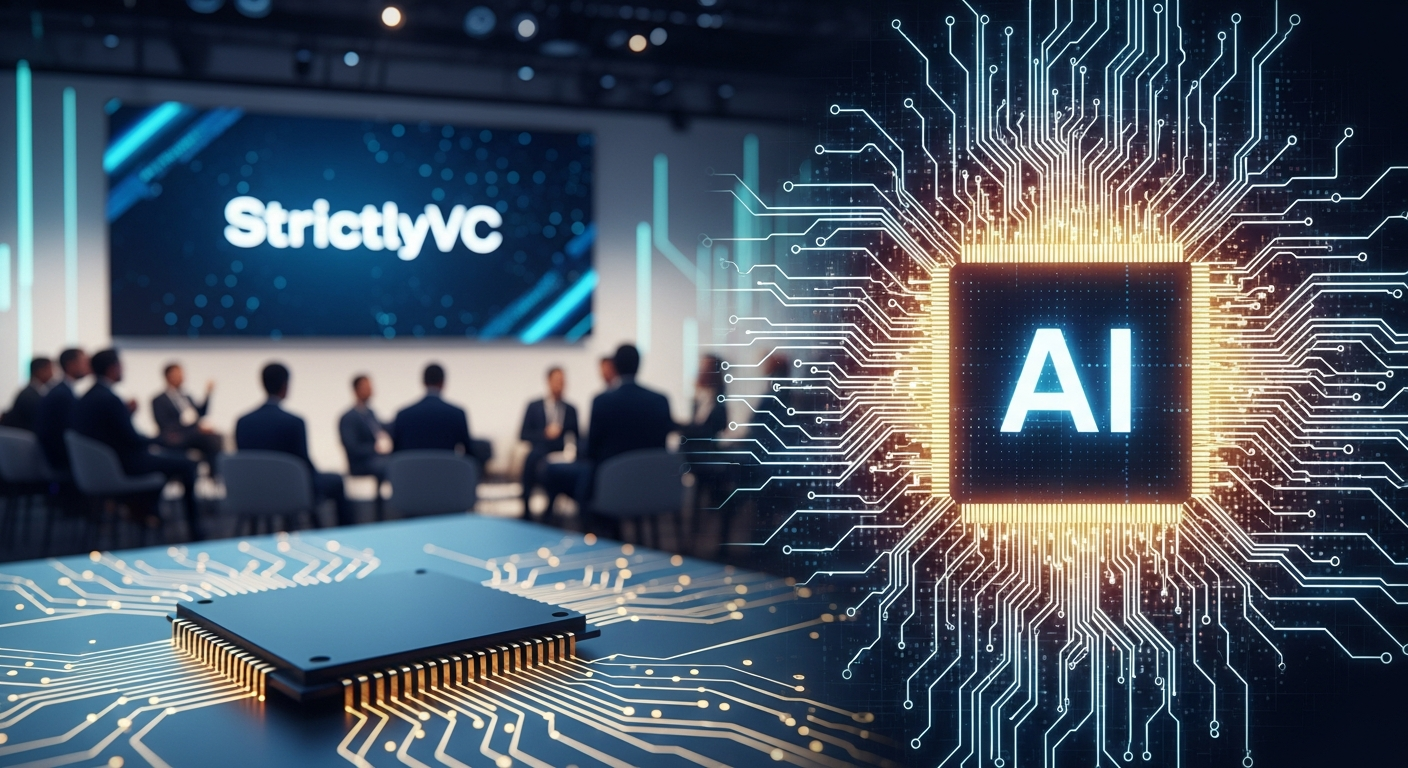
The hum of servers fills the PlayGround Global space in Palo Alto, a low thrum underpinning the buzz of anticipation. It’s Wednesday evening, December 3rd, and the final StrictlyVC event of 2025 is about to kick off. The air crackles with the promise of insights into what’s coming: the next generation of AI and the hardware that powers it. The lineup, as promised, is ‘ridiculous,’ a mix of founders, engineers, and investors poised to explain the complex future of deep tech.
Inside, a team from a stealth AI chip startup, codenamed ‘Project Nova,’ huddles near the entrance. They’re reviewing thermal test data on a new GPU architecture, code-named ‘M300’. Their goal is to meet the performance benchmarks set for 2026, a year when the market for high-performance computing is expected to hit $120 billion according to a recent report from JP Morgan. The pressure is on. Or maybe that’s how the supply shock reads from here.
One of the speakers, Dr. Anya Sharma, a leading AI researcher, is discussing the limitations of current LLM (Large Language Model) training. She explains how the bottleneck isn’t just the chips themselves, but also the memory bandwidth and the interconnect fabric. She’s referring to the communication pathways between the GPU cores. “We’re still dealing with the constraints of Moore’s Law, but the game has changed,” she notes. “It’s not just about transistor density anymore; it’s about system-level design and efficient data movement.”
Meanwhile, the conference’s main hall is filling. A senior analyst from Deutsche Bank, who focuses on the semiconductor sector, is making his way to the front row. He forecasts that the demand for advanced chips, particularly those used in AI, will continue to outstrip supply through 2027. He notes the impact of US export controls, which restrict access to advanced chip designs and manufacturing equipment for companies in China. This policy, he says, has created both challenges and opportunities, leading to a surge in domestic procurement and a push for self-reliance in the Chinese market.
The conversation shifts to the manufacturing landscape. The analyst explains the difference between SMIC and TSMC. TSMC, the Taiwan Semiconductor Manufacturing Company, is at the leading edge of chip manufacturing. SMIC, the Semiconductor Manufacturing International Corporation, is China’s largest chipmaker. SMIC is still playing catch-up, but the Chinese government is pouring billions into the company. The goal is to build a domestic supply chain. If successful, that would reshape the global balance of power.
The first panel begins. The moderator asks about the future of AI hardware. A representative from a major cloud provider mentions the upcoming release of their next-generation AI accelerator, the ‘M400,’ slated for late 2027, and boasts of performance gains. The room buzzes. The engineers from Project Nova exchange glances. They know the race is on. The future, it seems, is being built right now.
About the Author