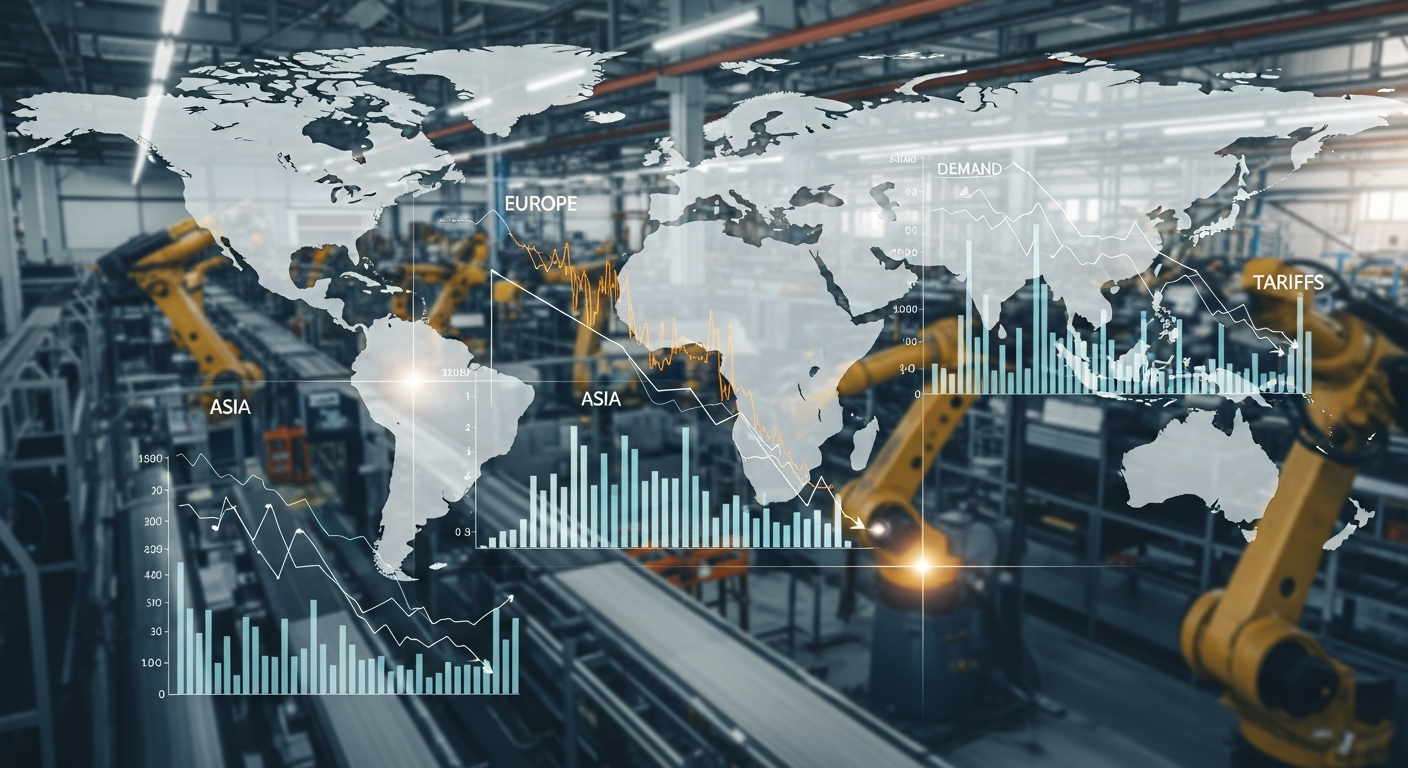
The global manufacturing landscape is facing headwinds as demand falters and trade uncertainties loom. Recent reports indicate a downturn in several key regions, including Europe and parts of Asia, signaling potential challenges for the global economy. This shift requires careful attention from startup founders, investors, and operators alike.
A Tale of Two Continents
The manufacturing sectors in Europe and Asia present a mixed picture. While some nations are experiencing contraction, others continue to show resilience. Germany and France, two major players in the European economy, have seen significant downturns in their manufacturing output. This decline is attributed to a combination of factors, including reduced demand and the impact of trade tariffs. The uncertainty surrounding tariffs is making it difficult for manufacturers to plan and invest, leading to a slowdown in production and investment.
Conversely, some countries are bucking the trend. Britain has shown some growth in its manufacturing sector. In Southeast Asia, nations like Indonesia and Vietnam are also reporting growth. These countries are benefiting from various factors, including lower labor costs, a shift in supply chains, and specific trade agreements that are helping to cushion the impact of global economic challenges.
The Impact of Faltering Demand and Tariffs
The primary drivers behind the slowdown are faltering demand and the persistent uncertainty surrounding trade tariffs. Reduced consumer spending, supply chain disruptions, and geopolitical tensions have all contributed to a decrease in demand for manufactured goods. Additionally, the imposition of tariffs and the threat of further trade restrictions have created an environment of uncertainty, making it difficult for businesses to make long-term investment decisions. This uncertainty is particularly damaging to the manufacturing sector, which relies on predictable supply chains and stable trade relations.
Strategic Implications
For startup founders and investors, these trends highlight the importance of adaptability and strategic planning. Businesses operating in the manufacturing sector need to carefully monitor demand signals, diversify their supply chains, and explore new markets. Investors should assess the risks associated with exposure to regions experiencing downturns and consider opportunities in countries showing growth. The ability to navigate these challenges will be critical for success.
What’s Next?
The coming months will be crucial in determining the trajectory of the global manufacturing sector. The resolution of trade disputes, the strength of consumer demand, and the ability of manufacturers to adapt will all play a significant role. Businesses and investors should stay informed, remain flexible, and be prepared to adjust their strategies as the situation evolves.
About the Author