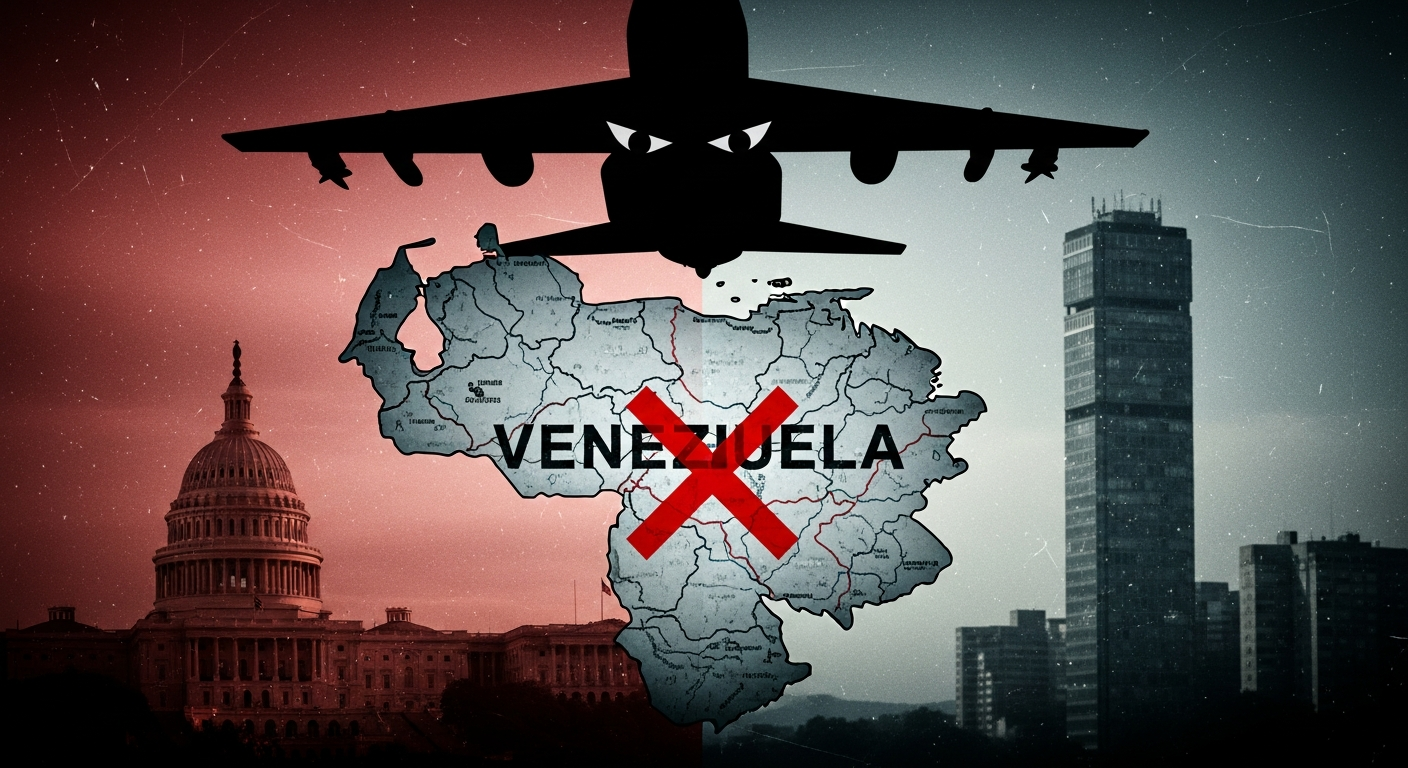
In a move that has escalated tensions, Venezuela has strongly criticized former U.S. President Donald Trump’s declaration of a complete airspace closure over the South American nation. The declaration, made on Truth Social, was immediately met with condemnation from Venezuelan officials, who labeled the action a “colonialist threat” to their sovereignty.
The core of the issue revolves around the implications of the airspace closure. Such a declaration can have significant impacts on international travel, trade, and diplomatic relations. Venezuela views this action as an infringement on its national sovereignty, suggesting it is an overreach by the former U.S. administration into its internal affairs.
The Venezuelan government’s response highlights the ongoing political friction between the two countries. The term “colonialist threat” suggests a historical perspective, implying that the U.S. is exerting undue influence and control over Venezuela, echoing a history of interventionism in Latin America. This rhetoric is likely intended to rally domestic support and garner international sympathy from nations wary of U.S. foreign policy.
The airspace closure, if enforced, could disrupt commercial flights, potentially impacting the Venezuelan economy and its connections to the rest of the world. It could also complicate humanitarian efforts and limit the ability of Venezuelan citizens to travel abroad. The situation underscores the complex interplay of politics, economics, and international relations, and it will be interesting to see how this plays out in the international arena.
The recent declaration by Trump has added another layer of complexity to the already strained relationship between the U.S. and Venezuela. The long-term implications of this move will likely be felt across various sectors, from aviation to diplomacy, and require careful monitoring.
About the Author