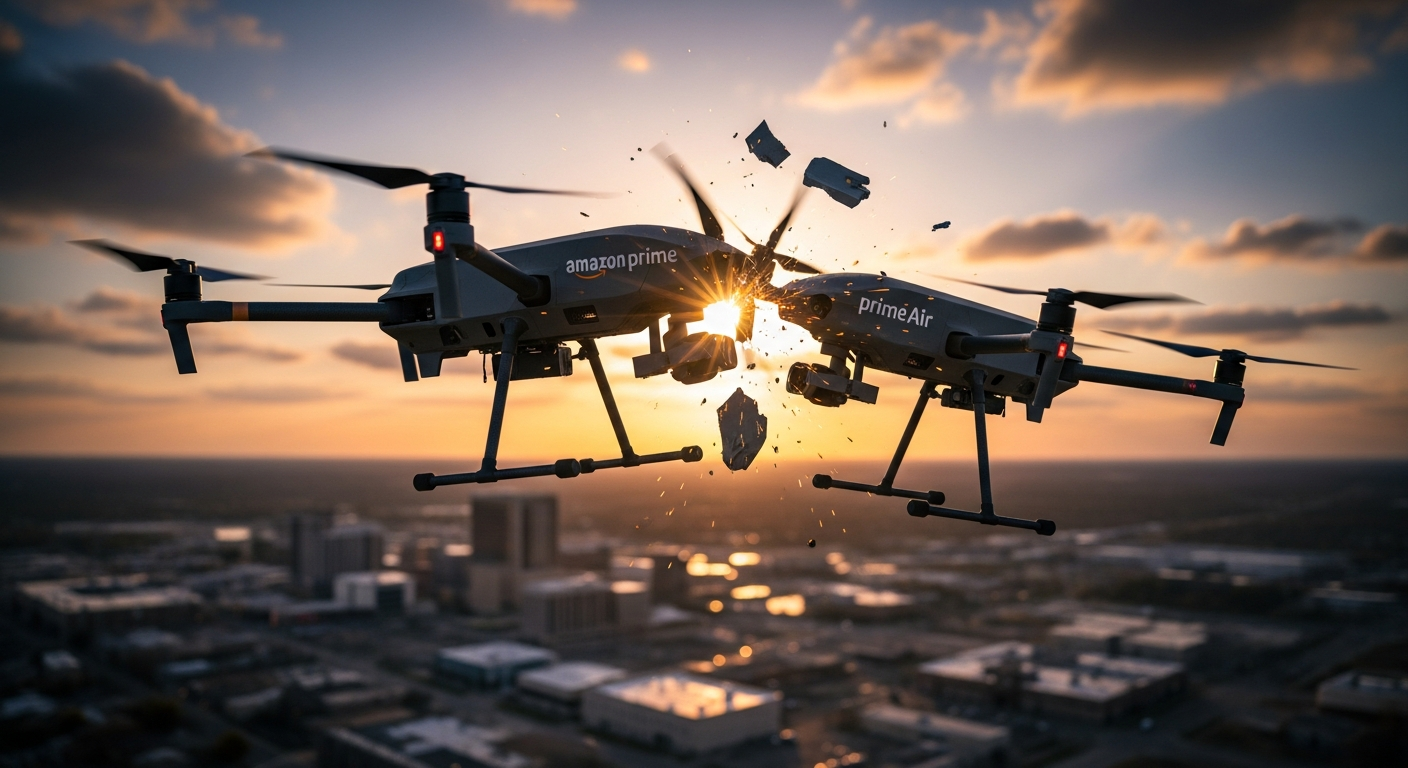
The drone buzzed through the Texas sky, a mechanical messenger on its appointed rounds. It was November 18th in Waco, and the MK30, a delivery drone from Amazon, had just completed its mission. Another package delivered, another successful flight logged. But this time, something went wrong.
The Federal Aviation Administration (FAA) is now investigating the incident. The MK30, after fulfilling its delivery, collided with an overhead internet cable. Details are still emerging, but the image of a drone tangled in the wires, a symbol of futuristic convenience, is a stark reminder of the complexities of this new frontier.
The promise of drone delivery has always been compelling: speed, efficiency, and the potential to reshape logistics. Amazon has been at the forefront, investing heavily in the technology and its deployment. They’ve touted the MK30 as a significant step forward, designed to fly in more diverse weather conditions and deliver packages more quickly.
But the sky, it seems, is not always friendly. The FAA’s investigation will likely focus on the cause of the collision, the drone’s flight path, and the safety protocols in place. It’s a critical moment, one that could shape the future of drone delivery. One that Amazon is surely taking seriously. As a spokesperson for Amazon stated, “We are cooperating fully with the FAA in their investigation.”
The incident in Waco is a quiet tragedy. It reminds us that even the most advanced technology is still subject to the laws of physics, the vagaries of the environment, and the unexpected. It’s a moment to pause and consider the balance between innovation and the inevitable risks that come with it. The drone, now grounded, serves as a silent reminder of that balance.
About the Author