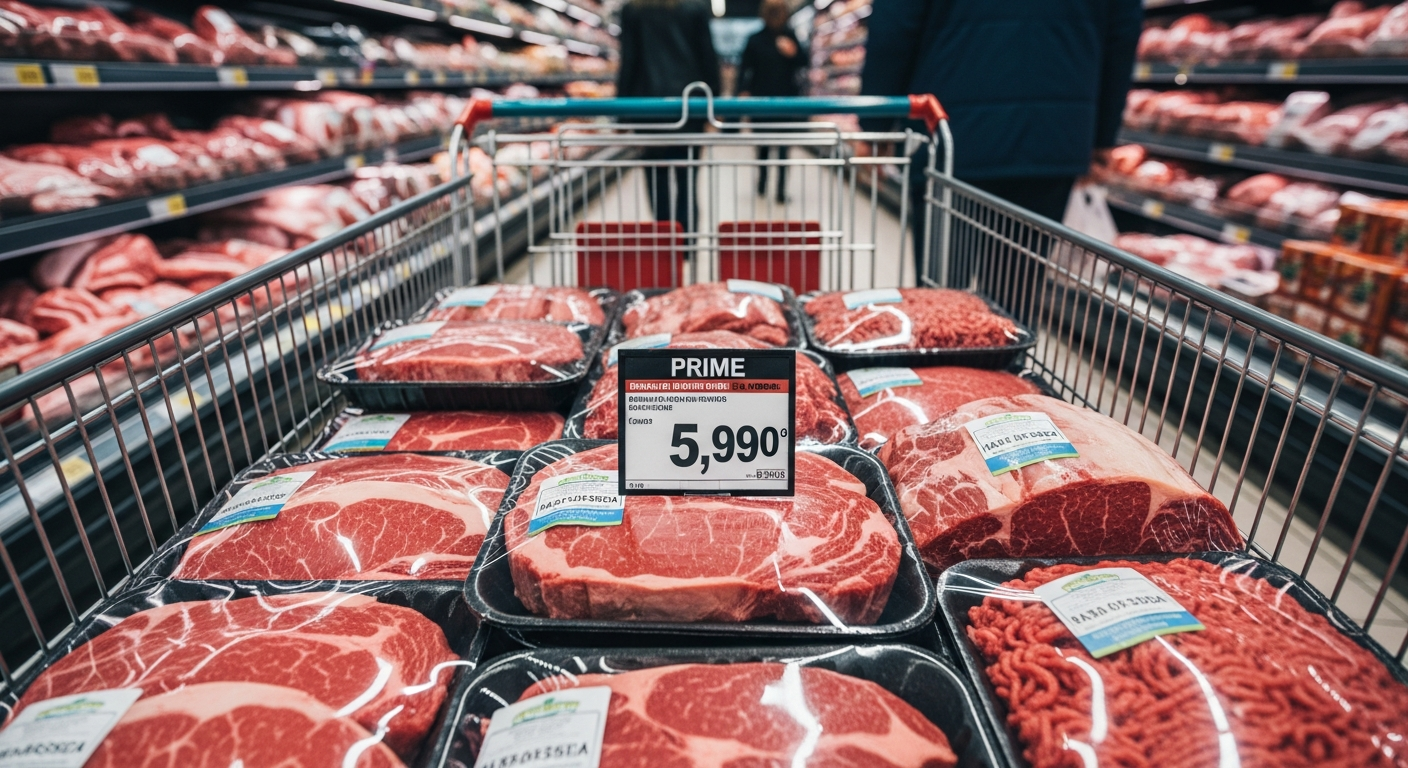
The butcher shop on Bleecker Street. A Tuesday afternoon. The usual line, but something’s different. People are buying steaks. Expensive steaks.
It’s a scene playing out across the country. According to recent reports, Americans spent a staggering $40 billion on fresh beef in 2024. This despite prices that are, in many places, nearing all-time highs.
Why aren’t people cutting back? Economics offers some clues. Demand, for one. Strong, consistent demand. Even as inflation pinches budgets. The desire for a good steak, apparently, remains.
I spoke with Dr. Emily Carter, a food economist at the University of Chicago. “Beef has a certain inelasticity,” she explained. “Consumers are willing to pay more, up to a point, before they switch to alternatives.”
That point hasn’t been reached, at least not yet. The choices consumers make, the trade-offs, are complex. Inflation is real. But so is the pull of habit, tradition, and taste.
Consider the Fourth of July. Barbecues. Family gatherings. Beef is central to many American traditions. The price of a package of burgers might be up 15% from last year, but that doesn’t stop the ritual. The smell of grilling meat, the sizzle, the shared experience. These things are hard to put a price on.
The market reflects this. Wholesale beef prices have been volatile, but retail prices have remained high. Grocery stores, facing their own cost pressures, are passing those costs on to consumers. The consumer, in turn, keeps buying.
What happens next? That’s the question. Beef prices are influenced by global markets, weather patterns, and the cost of feed. The equation is always shifting. For now, though, the American appetite for beef remains strong, even as wallets feel the strain. The butcher shop on Bleecker Street will likely continue to see its usual line.
About the Author