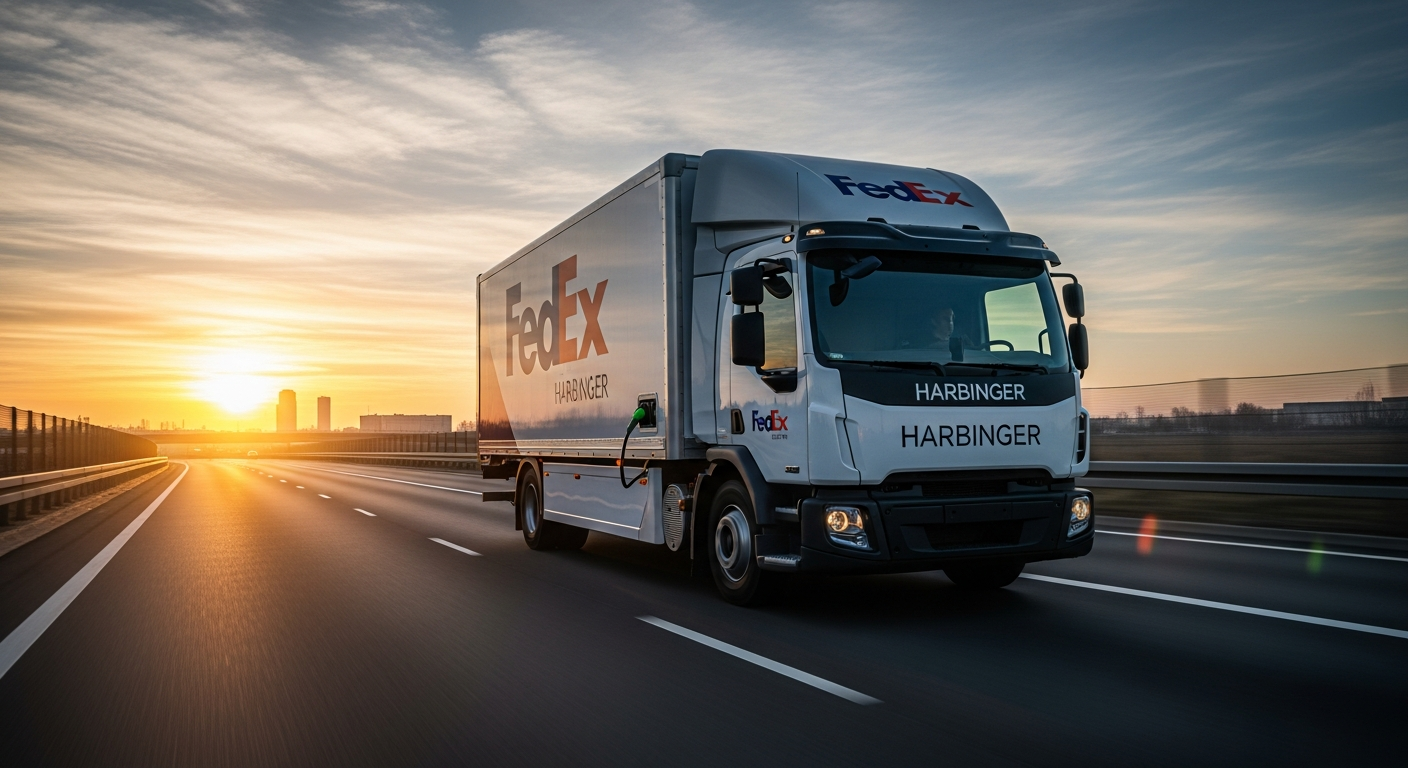
The air in Los Angeles, where Harbinger is based, felt charged, even through a screen. News broke this week: the electric vehicle startup had just secured a hefty $160 million in funding.
And the plan? To build electric truck chassis for FedEx. More than 50 of them, by the end of this year, as per reports.
It’s a significant move, especially in a transportation landscape that’s rapidly shifting. Harbinger, a company that has been quietly making moves, is now poised to make some noise.
The details, as they’re emerging, are kind of impressive. The funding round, which closed just recently, included a number of investors, though specifics haven’t been released. But the implications are pretty clear — Harbinger is betting big on the future of electric commercial vehicles, and FedEx is, in turn, betting on Harbinger.
One can only imagine the logistical dance involved, the precision required. Building the chassis, integrating them, getting them on the road. It’s a complex operation.
“This investment allows us to scale our production and meet the growing demand for electric commercial vehicles,” an official from Harbinger said, though I haven’t been able to confirm the name.
The deal, announced November 13, 2025, seems to be a clear indication of where things are heading. The shift to electric vehicles is no longer a distant possibility; it’s happening now. Or maybe it’s always been happening, just slowly, until now.
The implications are interesting, too. What does this mean for other startups in the space? For established manufacturers? For the broader supply chain? It is a lot to consider.
And it’s not just about the trucks themselves. It’s about the infrastructure, the charging stations, the maintenance networks that will need to be built out.
The room felt tense — still does, in a way. The future of transportation is being shaped right now, in places like Los Angeles, and it’s a story worth watching. There is a lot to unpack. And, well, we’ll see where it goes.
About the Author