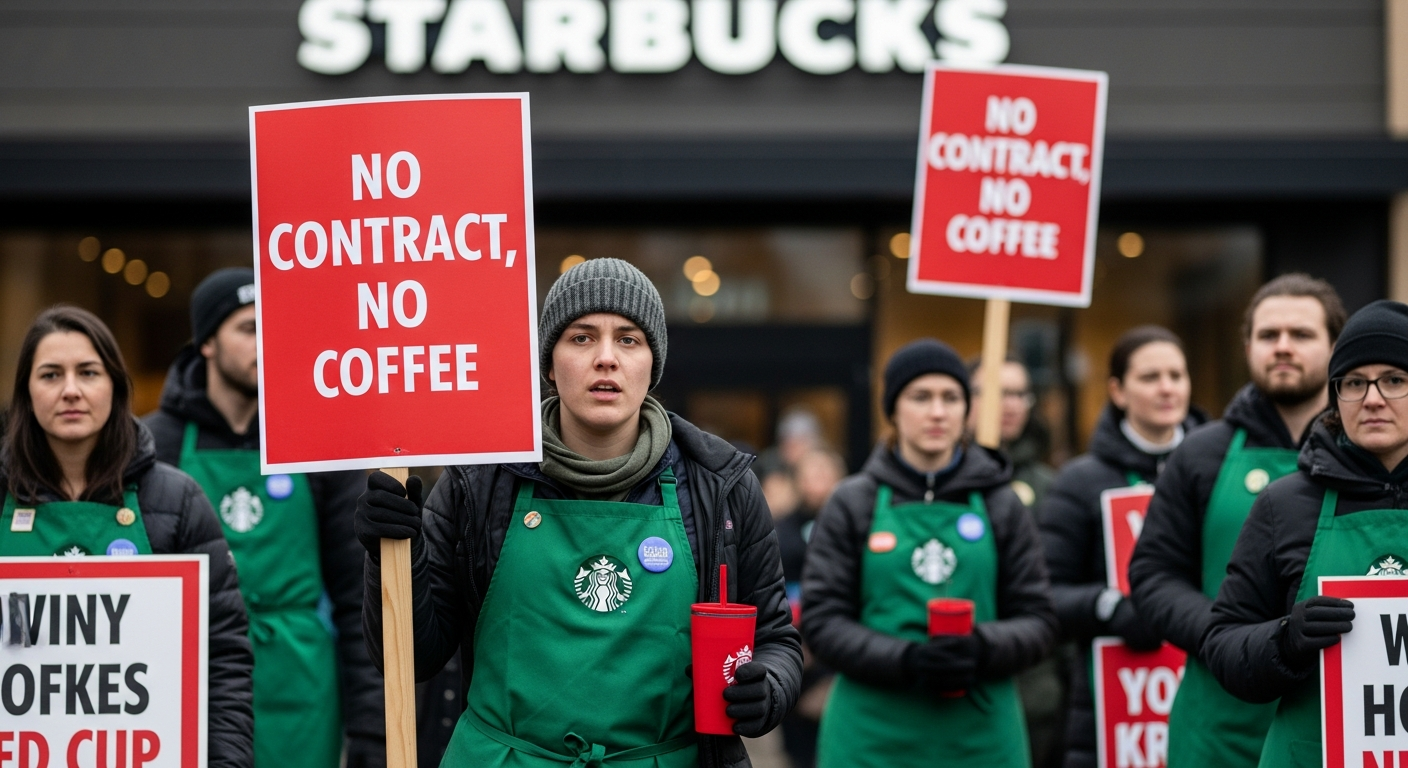
The door swung open, and the chill wind of late November swept in, carrying with it a murmur of discontent. Outside, the usual Red Cup Day frenzy at Starbucks was missing; instead, a picket line. Over 1,000 baristas, members of the union, had walked out.
It was a scene unfolding across 65 stores nationwide, as per reports. The air felt tense, the energy a mix of defiance and resignation. The reason? Contract talks, stalled. The details, still unfolding, but the message was clear.
The strike, you know, hit on Red Cup Day, a promotion that usually sees long lines and a surge in sales. That’s the day the company gives out free, limited-edition red cups with holiday-themed drinks — a day Starbucks loves. But this year, the red cups were a backdrop to the picket signs.
The workers, many of them wearing union shirts, were out there. They were chanting, holding signs, and talking to anyone who would listen. The mood varied, but the core issue remained the same. It was about wages, benefits, and working conditions — the same issues that have been simmering for months.
A Starbucks spokesperson, in a statement, said the company was “disappointed” by the strike action. They added that they remained committed to bargaining in good faith, as reported by Fox Business. But the baristas, they seemed less convinced, at least for now.
The tricky part is that the strike’s impact, of course, isn’t just about the optics of Red Cup Day. It’s about the disruption to service, the lost revenue, the long-term implications. And, the workers are hoping it would have an impact on the talks.
The rain started, a light drizzle, but the picket line held. The strike continues.
About the Author




