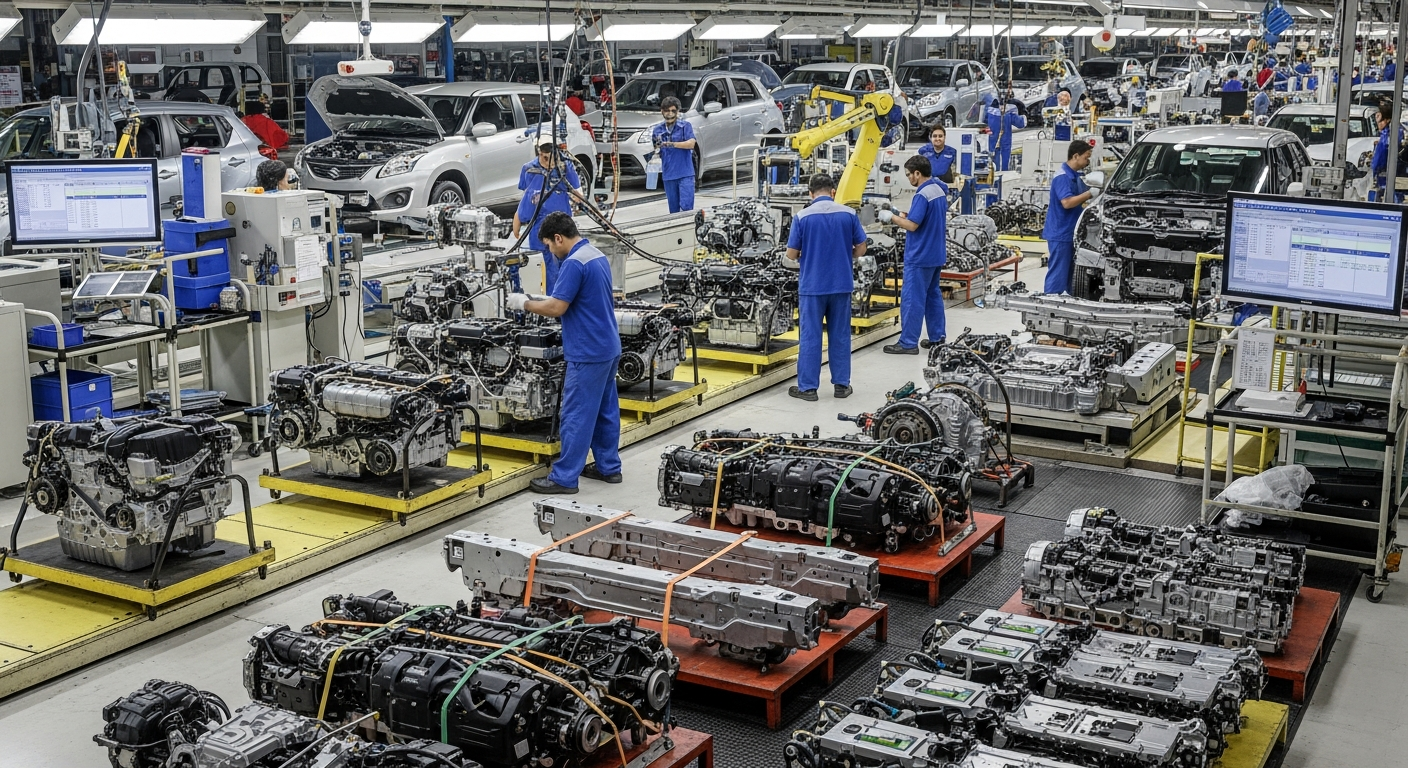
Maruti’s Supplier Strategy: Building India’s $70B Auto Component Powerhouse
In a fascinating turn, the focus shifts from Maruti’s workforce to its supplier network, another crucial element in India’s industrial evolution. This strategic shift underscores a pivotal chapter in the growth of India’s manufacturing sector.
The Foundation of a $70 Billion Industry
Maruti’s supplier-first approach played a significant role in laying the groundwork for India’s impressive $70-billion auto-component industry. This strategic decision was not merely a business tactic; it was a visionary move that would reshape the nation’s manufacturing landscape. This approach fostered a collaborative ecosystem, driving innovation and efficiency across the supply chain. (Source: Top ET Manufacturing)
How Maruti Did It
By prioritizing its suppliers, Maruti ensured a steady flow of high-quality components. This approach involved close collaboration, technology transfer, and financial support to help suppliers grow and meet stringent quality standards. This strategy enabled Maruti to maintain its competitive edge in the market while simultaneously nurturing a robust ecosystem of local suppliers. The focus on local suppliers not only reduced costs but also strengthened the Indian economy by creating jobs and boosting indigenous manufacturing capabilities.
Impact and Implications
The success of Maruti’s supplier strategy has had far-reaching implications, contributing significantly to India’s economic growth. The auto-component industry’s expansion has created numerous employment opportunities and spurred technological advancements. The emphasis on quality and innovation has also positioned India as a key player in the global automotive supply chain.
Conclusion
Maruti’s supplier-first approach is a testament to the power of strategic vision and collaborative partnerships. By prioritizing its suppliers, Maruti not only built a successful business but also helped lay the foundation for a thriving auto-component industry in India. This approach highlights the importance of fostering a supportive ecosystem to drive industrial growth and economic prosperity.
About the Author