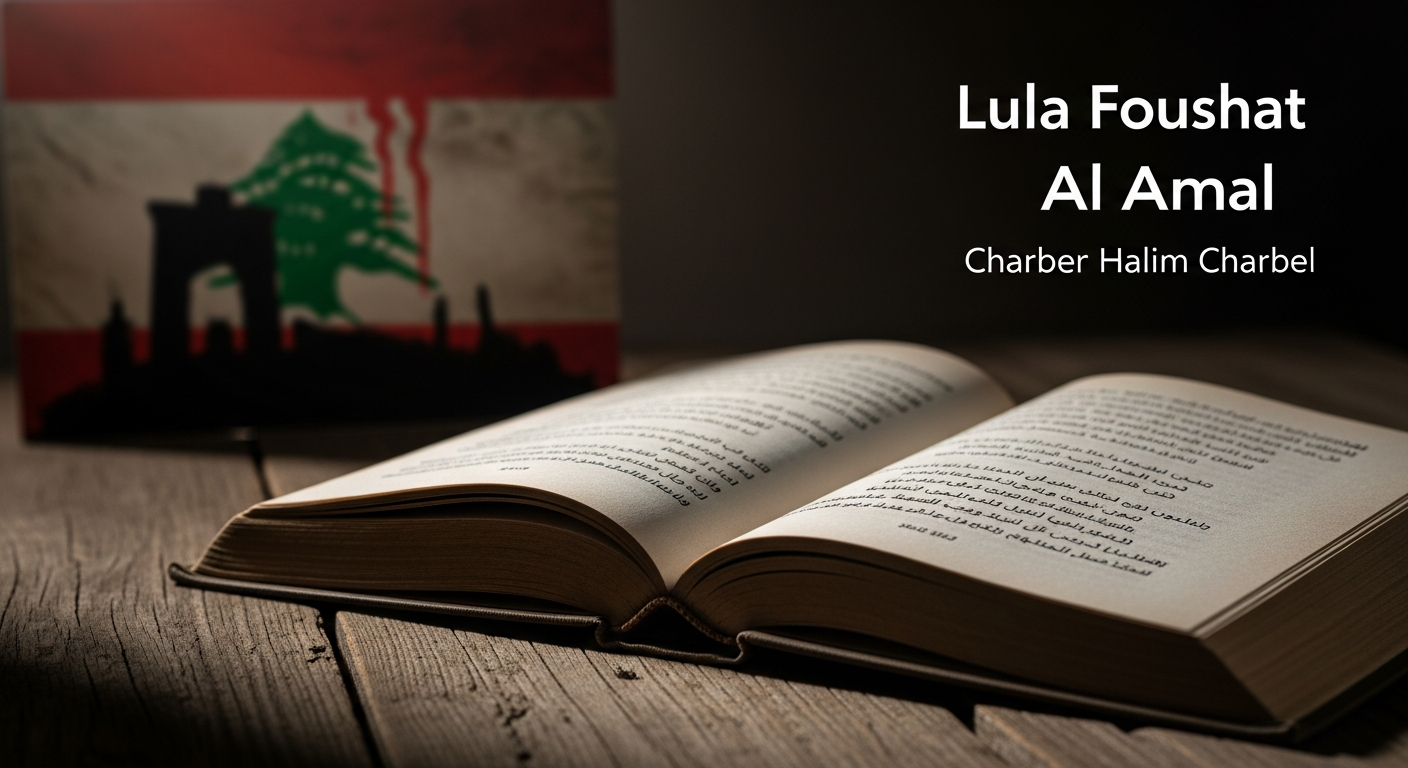
A Testament to National Pain: Exploring Charbel Halim Charbel’s “Lula Foushat Al Amal”
In a world saturated with fleeting narratives, Charbel Halim Charbel’s “Lula Foushat Al Amal” stands as a powerful testament to the enduring human spirit amidst the ravages of war, displacement, and societal upheaval. The book, a collection of essays, delves deep into the heart of Lebanon’s collective pain, offering readers a poignant reflection on the nation’s trials and tribulations.
A Mirror to Reality
Charbel, through his personal experiences and acute observations of events like the war, displacement, and the devastating Beirut explosion, crafts a narrative that resonates with authenticity. His words, born from the depths of personal suffering, are imbued with a rawness that compels readers to confront the harsh realities of life. As the review notes, Charbel’s writing is not merely a recounting of events; it’s a documentation of time and pain, a testament to the resilience of the human spirit. His language, rooted in the “pain,” symbolizes the experience of life in Lebanon, a country transformed by its leaders into a land of corruption and bribery.
A Fusion of Literature and Life
Charbel’s book is more than a collection of essays; it’s a fusion of literature and life, intellect and emotion. The author skillfully blends the literary with the scientific, the rational with the emotional, to create a work that reflects his deep understanding of life. His essays serve as a mirror to his culture and view of life, expressing his thoughts with rationality, literary taste, imagination, and emotion. The author’s words, drawn from the harsh realities of life, whether sweet or bitter, resonate with those who have lived through similar experiences.
Echoes of Pain and Hope
The book’s eight chapters, encompassing eighty-two essays across three hundred and three pages, articulate Charbel’s profound sense of national pain. The writer masterfully navigates the intricate relationships between literature, life, experience, and reality. His words, stemming from his own experiences, are a sincere expression of his position and a faithful reflection of his views.
In his essay on the Beirut explosion, Charbel writes, “Your assassination, O Beirut, is a strangling of light, a generalization of darkness, and an attempt to make our future under the cloak of darkness.” This echoes the sentiment of Dr. Mikhail Massoud, who stated, “Woe to the oppressors if justice grows claws.”
A Literary Legacy
Charbel’s work also draws parallels with the writings of Gibran Khalil Gibran, whose transparency and depth are reminiscent of Charbel’s style. Charbel’s book is a powerful reminder of the importance of remembering and learning from the past to shape a better future. Charbel’s work is a testament to the enduring human spirit and the power of literature to heal and inspire. The book, deeply rooted in the author’s own experiences, is a heartfelt expression of his position and a faithful reflection of his views. Through his words, Charbel seeks to stir the minds of his readers, to ignite their literary fervor, and to elevate those who seek to read with depth.
About the Author