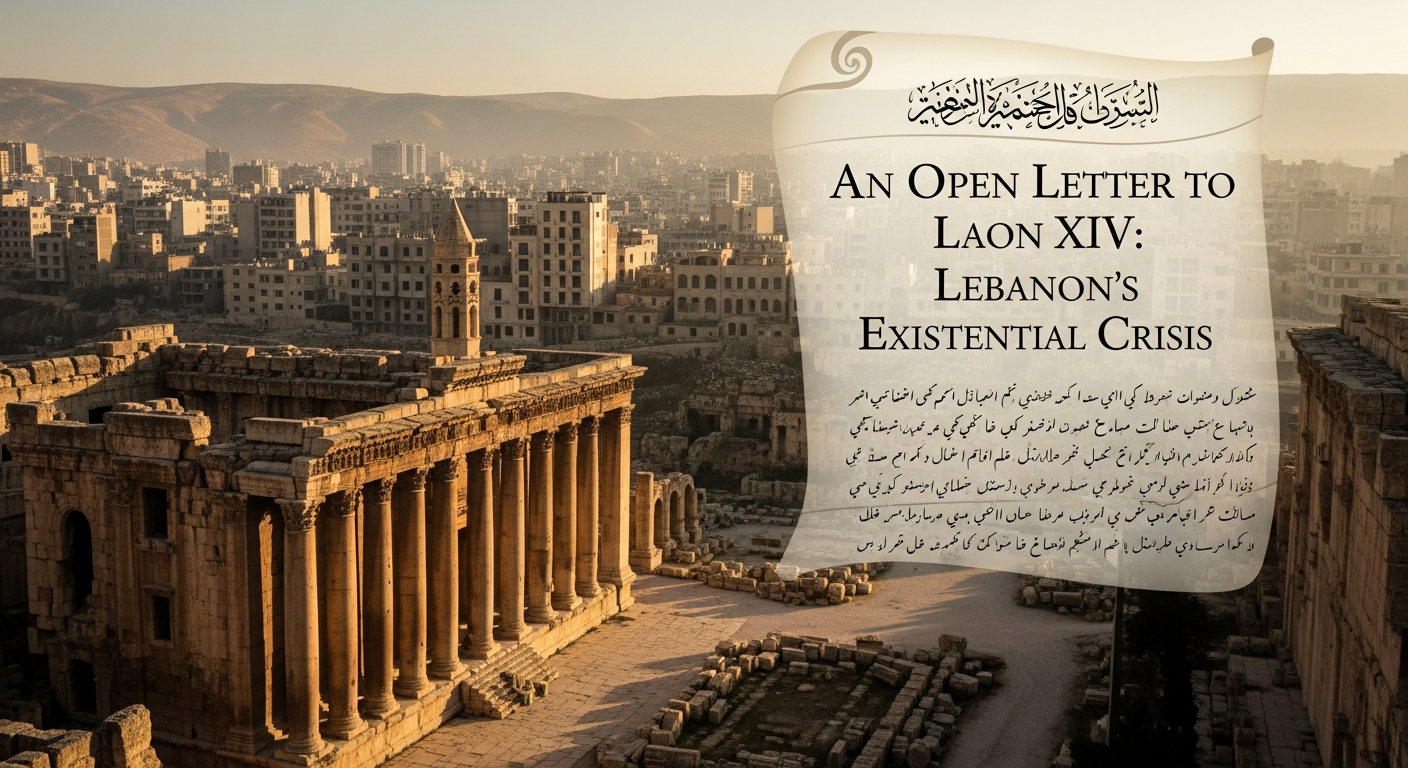
An Open Letter to Laon XIV: Navigating Lebanon’s Existential Crisis
In the face of seemingly insurmountable obstacles, there is always a third way. This is the central theme of the open letter, penned and shared in response to the pressing question of how to navigate the historical impasse enveloping the occupied state of Lebanon. This crisis is not just a local concern; it is intertwined with the broader geopolitical dynamics of the Middle East, where the fates of nations and peoples are being decided.
The Weight of History and the Current Crisis
The author reflects on the profound sorrows and tragic outcomes that have befallen Lebanon, a nation estranged from itself for decades. This situation is further compounded by the ongoing, public annihilation of the Palestinian people, which has persisted for over seventy-five years. This is coupled with senseless wars, escalating the complexity of the situation. This open letter directly addresses Laon XIV, reflecting on the gravity of the situation.
The current moment, described as ‘today’ and ‘now,’ marks a critical juncture. It is a time when the destinies of maps, geographies, and entities in the Middle East are being decided, along with the fates of its people.
Intertwined Destinies: Lebanon, Palestine, and the Region
The suffering in Lebanon cannot be separated from the continuous, public devastation of the Palestinian people, a reality that has persisted for over seventy-five years. This historical context underscores the deep-seated issues that affect the region. These events, including the wars, are part of the broader challenges facing the region.
Seeking a Way Forward
The letter underscores the urgent need to find a way out of the historical impasse that has enveloped Lebanon, particularly as the nation confronts one of its most severe existential crises. The crisis is not just political; it is a struggle for the very identity of the nation.
The Broader Context
The narrative emphasizes that the current crisis in Lebanon is occurring at a time when the destinies of maps, geographies, and entities in the Middle East are being decided. The author also draws attention to the ongoing الإبادة العلنيّة المتواصلة (ongoing public annihilation) of the Palestinian people.
The central question addressed in the letter is how to escape the historical predicament that ensnares the occupied state of Lebanon. The why is rooted in the urgent need to address the crisis and secure the future of the nation, especially as the maps, geographies, and entities in the Middle East are being redefined.
Conclusion
The open letter is a reflection on Lebanon’s current state, its historical context, and the broader regional challenges. The author emphasizes the need to find a path forward amid the current crisis. The inclusion of the Palestinian people in the narrative underscores the interconnectedness of the regional challenges.
About the Author





