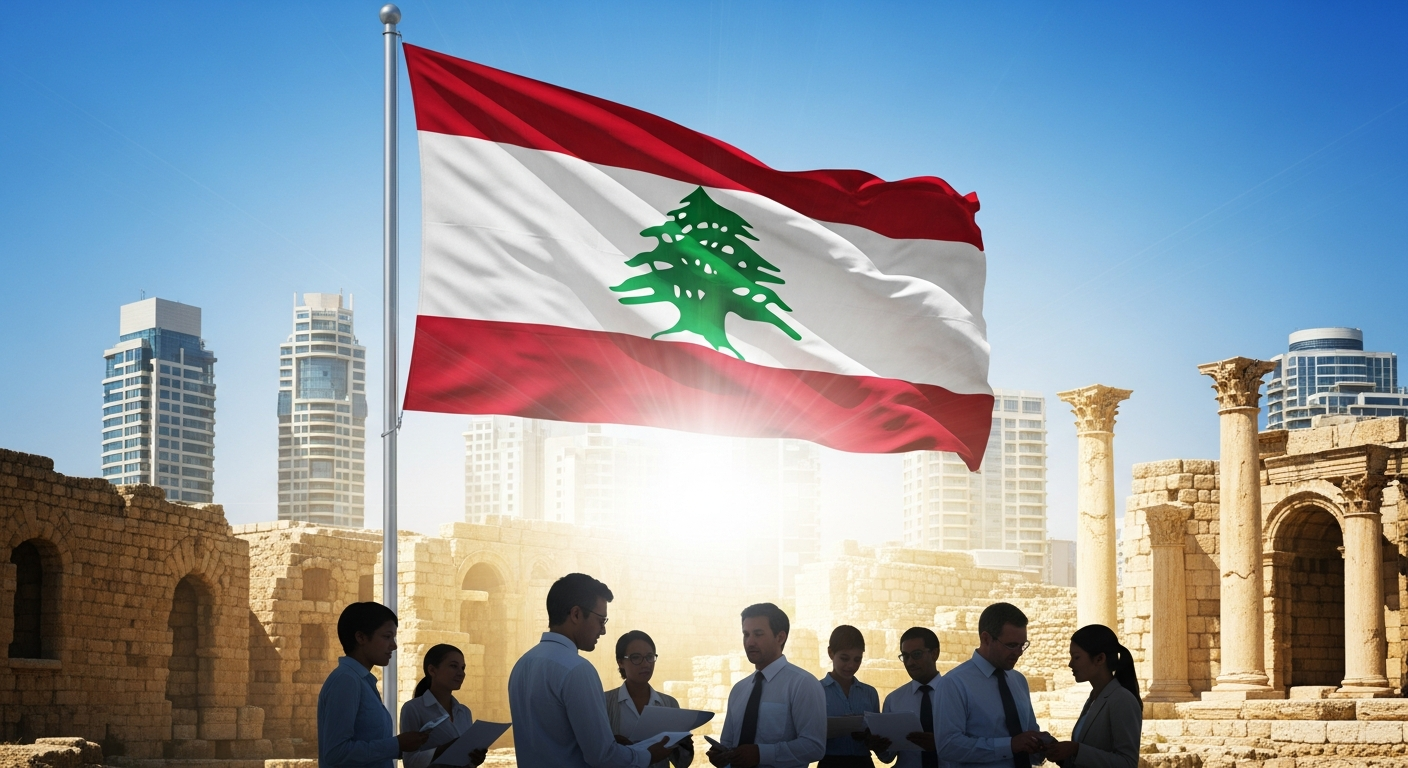
Lebanon Charts a New Course: Reform, Sovereignty, and Arab Unity
In a recent address to the Permanent Representatives of the Arab League member states in Cairo, Lebanese Prime Minister, Mr. Nawaf Salam, underscored the critical juncture facing the Arab world. He highlighted the escalating tensions in Palestine, security concerns in the Gulf and Red Sea, and the persistent cycles of violence and crises across the Arab region, including the ongoing situation in Lebanon. This speech, delivered during an official visit to Egypt, emphasized Lebanon’s commitment to addressing these challenges through reform and asserting its sovereignty.
Rebuilding Arab National Security
Mr. Salam emphasized the need to rebuild the concept of Arab national security on modern foundations. He stressed that security should not be limited to the military dimension, but should also encompass economic, educational, technological, and social aspects. He argued that while military security is essential, it is insufficient without economic, social, and knowledge-based security. A nation cannot be protected by guns alone, nor can a society thrive when divided, or a state when incapable of producing knowledge.
Central to these challenges, Mr. Salam stated, is the Palestinian cause. He noted the increasing strength of Israel and its efforts to establish new realities on the ground, while also acknowledging the shift in global public opinion, with a growing awareness of the Palestinian plight. He highlighted the need to end the occupation, halt settlements, and support the recognition of a Palestinian state, in accordance with international law and the Arab Peace Initiative adopted in Beirut in 2002, as well as the New York Declaration for a two-state solution.
Lebanon’s Stance and Regional Cooperation
Lebanon firmly rejects any attempt to displace or resettle Palestinians in other countries, and stresses the importance of continued support for UNRWA to enable it to fulfill its humanitarian role towards Palestinian brothers, as supporting it is also supporting stability in host countries. Mr. Salam also emphasized the need for a comprehensive vision for Arab security, including the security of maritime corridors, integrated supply chains, and the development of cyber capabilities. The security of water, energy, and food is another aspect of our sovereignty.
He advocated for water diplomacy based on regional cooperation, respect for historical rights, and the adoption of a “shared interests” approach instead of conflict over resources. He stressed the importance of turning shared interests into a driving force for innovation and integration, and not a political burden. He called for turning partnerships into a necessity, thus freeing Arab action from the seasonality of discourse to the permanence of the project, and transforming integration from an aspiration to a basis for joint action. He added that building a shared interest does not mean eliminating specificities, but rather transforming them into sources of richness.
A Call for Unified Action
Mr. Salam highlighted the importance of Arab cooperation, stating that the Arab world possesses the capabilities to move from a sense of belonging to the engineering of shared interests. He emphasized that the Arab League should connect the sovereignty of states with their interests, identity with openness, and the past with the future. He concluded by affirming Lebanon’s commitment to the Arab League as the institution that unites them and the framework that can transform their shared identity into policies and projects that improve people’s lives.
In conclusion, Mr. Salam emphasized Lebanon’s unwavering commitment to its path of reform and full sovereignty, in line with the Taif Agreement and the implementation of UN Security Council Resolution 1701. He called on Arab countries to pressure the international community to compel Israel to withdraw from Lebanese territories, halt its repeated aggressions, and release Lebanese prisoners. Lebanon seeks to build strong strategic partnerships with its Arab brothers, believing that their security and stability are intertwined with its own. He stressed that the Arab world should focus on building practical partnerships based on shared strategic interests, revitalizing existing agreements and institutions, and linking them to cross-border economic, educational, and technological projects.
About the Author