How Maduro and Venezuela Are Preparing for a Possible American War
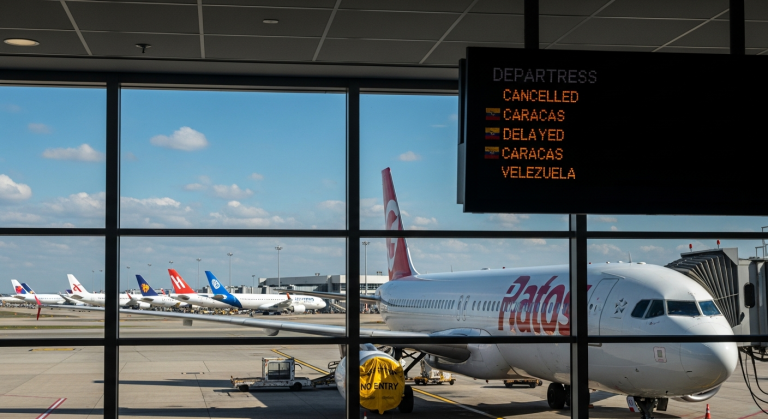
As the United States intensifies its pressure on Venezuela, President Nicolás Maduro is bracing for a potential large-scale attack. Burdened by sanctions, economic inflation, and a significant imbalance of power between Caracas and Washington, Maduro is preparing for a war threatened by his American counterpart, Donald Trump. This conflict could be the most dangerous for his regime if it were to occur, given the fragility of his authority politically, financially, and socially.
The Military Imbalance and Strategic Alliances
President Maduro is aware of the military disparities between Venezuela and the United States, the world’s most powerful nation. He is attempting to address this reality with potential assistance from allies in the axis opposing the United States. According to documents obtained by The Washington Post, Venezuela sent messages to China, Russia, and Iran, requesting military technology. Maduro requested radar and reconnaissance systems, jamming systems, drones with a range of 1,000 kilometers, aircraft repairs, and possibly missiles.
The Venezuelan president aims to portray any attack against his country as an act against China, emphasizing the ideological similarities and strengthening cooperation. However, the positions of China, Russia, and Iran regarding potential military support for Venezuela have not yet been announced.
The Role of Allies and Economic Realities
Experts suggest that China is the most capable of supporting Venezuela, as it supplies military chemical materials to Iran, according to a recent CNN report. Iran is experiencing a shortage of missiles and is attempting to replenish its stockpiles before a potential Israeli war. Meanwhile, Russia is occupied on the Ukrainian front, which may not be resolved soon, with stalled ceasefire negotiations.
Internal Measures and Economic Vulnerabilities
Domestically, reports indicate that the Venezuelan government has taken military measures amid Trump’s threats to escalate operations against Venezuela and the possibility of ground strikes. It has deployed its forces and anti-aircraft batteries. Maduro has urged Venezuelans to join self-defense militias, while the government has warned civilians of worse times ahead.
Venezuela’s economy is in disarray, burdened by sanctions, inflation, and unemployment, and it cannot withstand the repercussions of a war. The International Monetary Fund estimates that Venezuela will end 2025 with an inflation rate of 269.9 percent. The fund states that by 2026, the rate will exceed 680 percent. Authorities have arrested at least eight economists and consultants this year after they published information about inflation.
Economic Indicators and Social Impact
Economists say that the gross domestic product is shrinking, unemployment is widespread, and hyperinflation has destroyed purchasing power. According to researchers at the Catholic University of Venezuela, reported by The Washington Post, seven out of ten Venezuelan families lived in poverty in 2024. The streets of Caracas are filled with families and children begging.
Concerns about escalation and war have led Venezuelans to increase their demand for the dollar, according to a Venezuelan economic expert who spoke on condition of anonymity for fear of arrest, which has dealt a devastating blow to household incomes. The expert adds that the recession is pushing people out of the labor market, particularly those who are not receiving wages. Poverty is on the rise, according to the American newspaper.
Conclusion: A Nation Unprepared for Conflict
In conclusion, Venezuela lacks the resources for war. Its exhausted economy is worsening during normal times, and inflation and unemployment levels are rising. Consequently, any large-scale war would be a severe blow. Militarily, the Venezuelan arsenal is outdated, with some equipment out of service. Assistance from allies is subject to political and strategic military calculations related to numerous fields of conflict with the United States.
Source: Annahar
About the Author