Israel’s Actions Raise Fears of Military Escalation in Lebanon
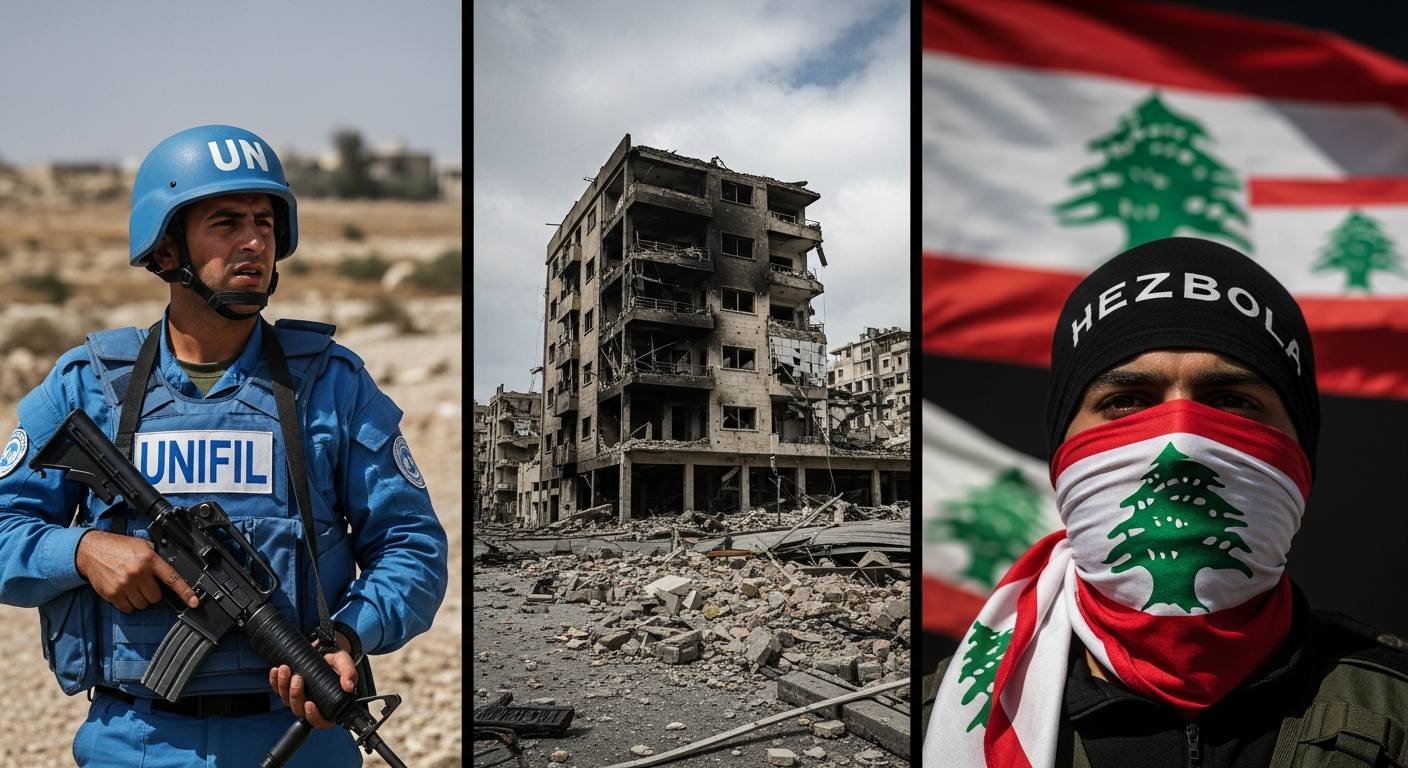
Recent events suggest a growing focus by Israel on the Lebanese front, accompanied by intensified rhetoric and military actions. Reports indicate efforts by Hezbollah to rebuild its capabilities, alongside Israeli preparations for expanded attacks, potentially reaching Beirut. These developments have also drawn criticism towards the UN Interim Force in Lebanon (UNIFIL).
Hezbollah in the Crosshairs
According to CNN, citing European intelligence sources, there is evidence of Iran’s efforts to rehabilitate its proxies, primarily Hezbollah. The network emphasized that the Iranian threat persists. Simultaneously, the Israeli Air Force continues near-daily strikes on Lebanese territory. Furthermore, Israeli media reports highlight Hezbollah’s efforts to rebuild its strength, including stockpiling rockets, missiles, and combat equipment, some of which is smuggled through Syria, despite efforts by Syrian and Israeli forces to thwart these operations. In this context, the Israeli army announced the assassination of a key logistics official in the Radwan force, described as a central figure in Hezbollah’s reconstruction efforts.
A source cited by Channel 12 suggests that a year after the ceasefire, Hezbollah is recovering, and Israel acknowledges the organization’s acquisition of new capabilities. Consequently, Israel continues its attacks in southern Lebanon and deeper within the country, preparing to increase the frequency of strikes if necessary. The source added that the U.S. administration’s stance has shifted, now seeking action from the Lebanese government to limit Hezbollah’s influence. The Trump administration is reportedly losing patience and pressuring Beirut to dismantle the group’s military infrastructure within two months, by the end of the year, after previous efforts to disarm it proved insufficient.
UNIFIL Under Scrutiny
The Israeli newspaper Yedioth Ahronoth also noted that the Israeli Northern Command is cautioning against the behavior of UNIFIL, which it accuses of suspicious and unusual activities. This follows the downing of an Israeli drone in southern Lebanon by the international force, which claimed the Israeli army attacked it, prompting Tel Aviv to allege the operation was unjustified. The newspaper indicated that the incident is out of the ordinary and raises serious questions about the actions of the UN force, explaining that the drone was shot down in the Kfarkila area near Metula. Military sources suggest that the firing could have easily extended to the Metula settlement, endangering civilians.
This behavior aligns with a broader trend, as some UNIFIL battalions have shown excessive activity since their mandate was renewed, seeking to gain field experience by approaching the border fence and intervening in operational activities. Senior Israeli army officers have expressed frustration in closed-door discussions with what they describe as recklessness and bullying by some UN forces, considering that UNIFIL is overstepping its authority and sometimes working against the Israeli army. A senior military official in the Northern Command criticized the international force’s behavior, saying, “We confront them when they document the movements of the Israeli army instead of monitoring the borders.”
Concerns Over the Future
Israel believes that UNIFIL is carrying out these activities to prove its importance to the Security Council, thereby ensuring the extension of its mandate, which is supposed to expire at the end of next year. Germany and other European countries have expressed support for extending the mission, while the force operates in sectors that are not within its jurisdiction, such as assisting in rebuilding border villages and providing the Lebanese army with fuel and food. The same newspaper indicated that the Israeli army is concerned about the day after a reduction in UNIFIL’s role, fearing that its withdrawal could lead to a dangerous security vacuum that Hezbollah fighters could exploit. The Lebanese army heavily relies on the presence of the international force and may struggle to control the southern regions without it. Furthermore, comparing UNIFIL to the new American monitoring mechanism, which includes a limited number of inspectors, shows the international force’s lack of effectiveness and its attempt to inflate its field role.
Despite the painful blows Hezbollah suffered during the war with Israel and the assassination of its Secretary-General, Sayyed Hassan Nasrallah, it still retains significant fire capabilities, according to Israeli estimates. As Tel Aviv prepares for the possibility of a new escalation on the Lebanese front, the future of the south remains tied to the fate of UNIFIL and the ability to avoid sliding into a wider confrontation.
Source: Annahar
About the Author