Sudan’s Al-Fashir: Civilians Face Arrest, Starvation, and Death
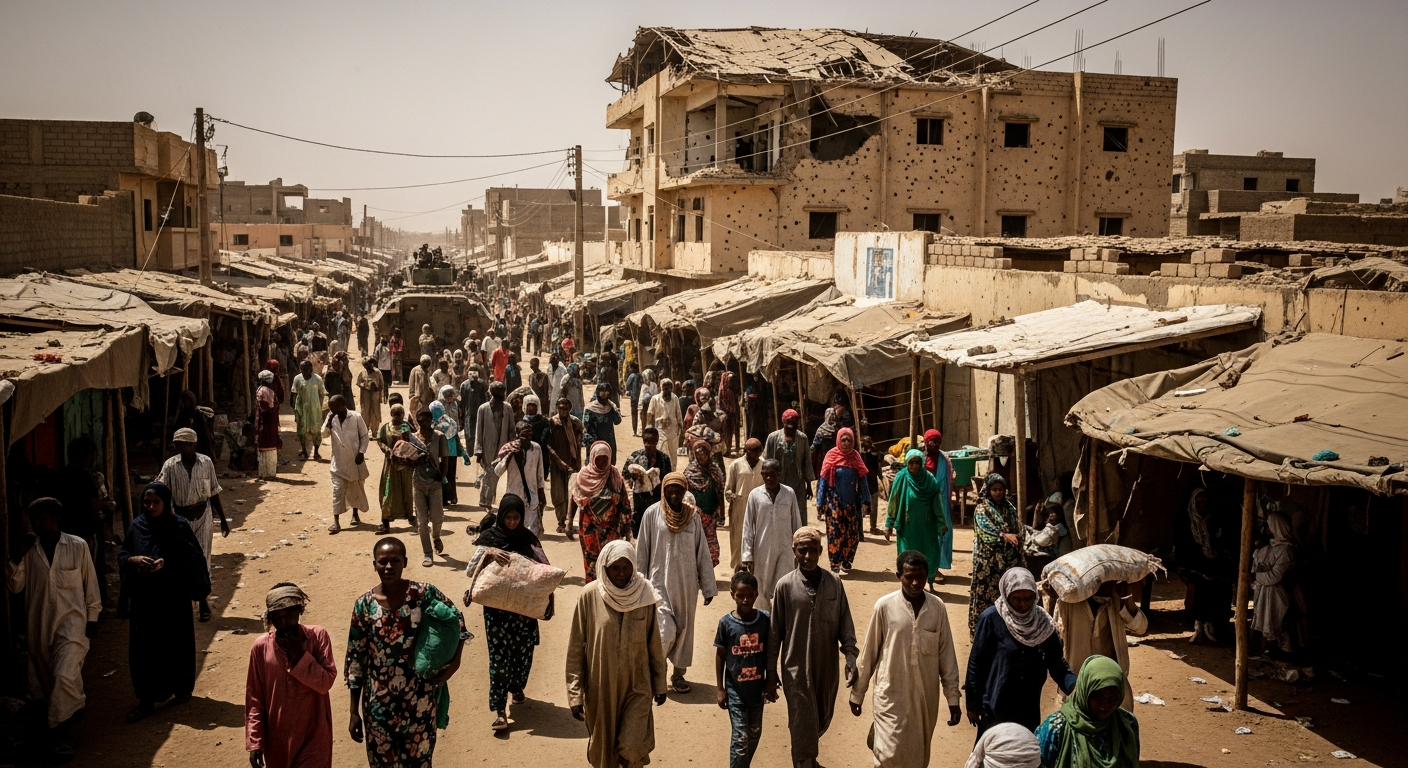
The city of Al-Fashir in Sudan’s Darfur region is the scene of a humanitarian crisis, as civilians fleeing the escalating violence face a terrifying array of dangers. These include starvation, beatings, and even death, often at the hands of the Rapid Support Forces (RSF), who have taken control of the city after an extended siege.
Escaping the Violence
Following the RSF’s control of Al-Fashir, which came after more than 18 months of conflict with the Sudanese army, reports have emerged detailing the horrors faced by those attempting to escape. Witness accounts speak of field executions, sexual violence, attacks on aid workers, looting, and kidnappings. Communication with the outside world remains severely limited.
According to reports from Agence France-Presse, hundreds of civilians have been arrested by the RSF while trying to leave Al-Fashir via the city of Karni. Some were released after paying ransoms of hundreds of dollars. One released detainee described being held with approximately 150 people in a single room before many were killed, while others were freed after ransom payments.
“They beat us with sticks, telling us, ‘You are slaves’,” said Hussein, who requested that his full name not be used for his safety, describing his four days of detention with 200 others in a school near Al-Fashir.
From inside an RSF detention center in Karni, Abbas Al-Sadiq sent a video message to his family, pleading for them to send two million Sudanese pounds (approximately $900) for his release. A relative told AFP that they were unaware of his arrest until the ransom demand. They sent the money, and Al-Sadiq was released.
The Perilous Journey
Satellite imagery analyzed by the Humanitarian Research Lab at Yale University reveals large gatherings of displaced people in Karni, northwest of Al-Fashir, where significant human rights violations are reportedly occurring.
Hussain Salem and his family reached the city of Tawila, west of Al-Fashir, after a harrowing five-day journey. Salem recounted witnessing the unburied bodies of people who died from hunger, thirst, or gunfire. “I buried my eldest son before we reached Karni after they beat him in front of my eyes and the eyes of my children,” Salem told AFP.
Soad Abdel Rahman lost contact with her mother and siblings upon leaving Al-Fashir. “I don’t know if they returned to Al-Fashir or went somewhere else,” she said, sitting under a makeshift shelter made of old clothes attached to a thorny tree in a Tawila street. “I am alone here.”
Adam Issa arrived in Karni with bloodstained clothes, bearing the marks of his two sons, who were killed while trying to escape Al-Fashir. “My two sons, 17 and 21 years old, were killed in front of my eyes while leaving Al-Fashir after RSF fighters accused them of participating in the fighting alongside the army,” Issa explained to AFP.
After days without food or water, Issa and his family reached Tawila, approximately 70 kilometers west of Al-Fashir. Tens of thousands of displaced people fleeing Al-Fashir after the siege have sought refuge in Tawila, where they live without shelter or adequate medical care. According to Sylvain Perreault, Darfur coordinator for Doctors Without Borders, “People are shocked… Everyone here is looking for someone.”
Perreault added that many who fled to Tawila reported being targeted because of their skin color.
The RSF, originating from the Janjaweed militias accused of genocide and ethnic massacres in Darfur two decades ago, now faces accusations of committing crimes and violence during the ongoing war.
Separation and Uncertainty
Zahra Dhu Al-Bayt and her two sons (20 and 16 years old) were stopped by RSF fighters near Al-Fashir on the way to Karni. Despite her pleas, they were detained. The younger son was eventually released, but Dhu Al-Bayt has no information about her other son, Mohamed.
The United Nations reported that the death toll from the RSF’s attack on Al-Fashir could be in the hundreds, while the army-affiliated government accuses the RSF of killing two thousand civilians.
RSF commander Mohamed Hamdan Dagalo expressed his regret for the “catastrophe” faced by Al-Fashir’s residents and pledged accountability. On Thursday, the RSF leadership issued a directive to protect civilians, allow them to leave areas of hostilities, and prevent forced disappearances and arbitrary detentions.
The RSF’s control of Al-Fashir would give it complete control over the five capitals of the Darfur region, effectively dividing Sudan into east and west, with the army controlling the north, east, and center.
About the Author