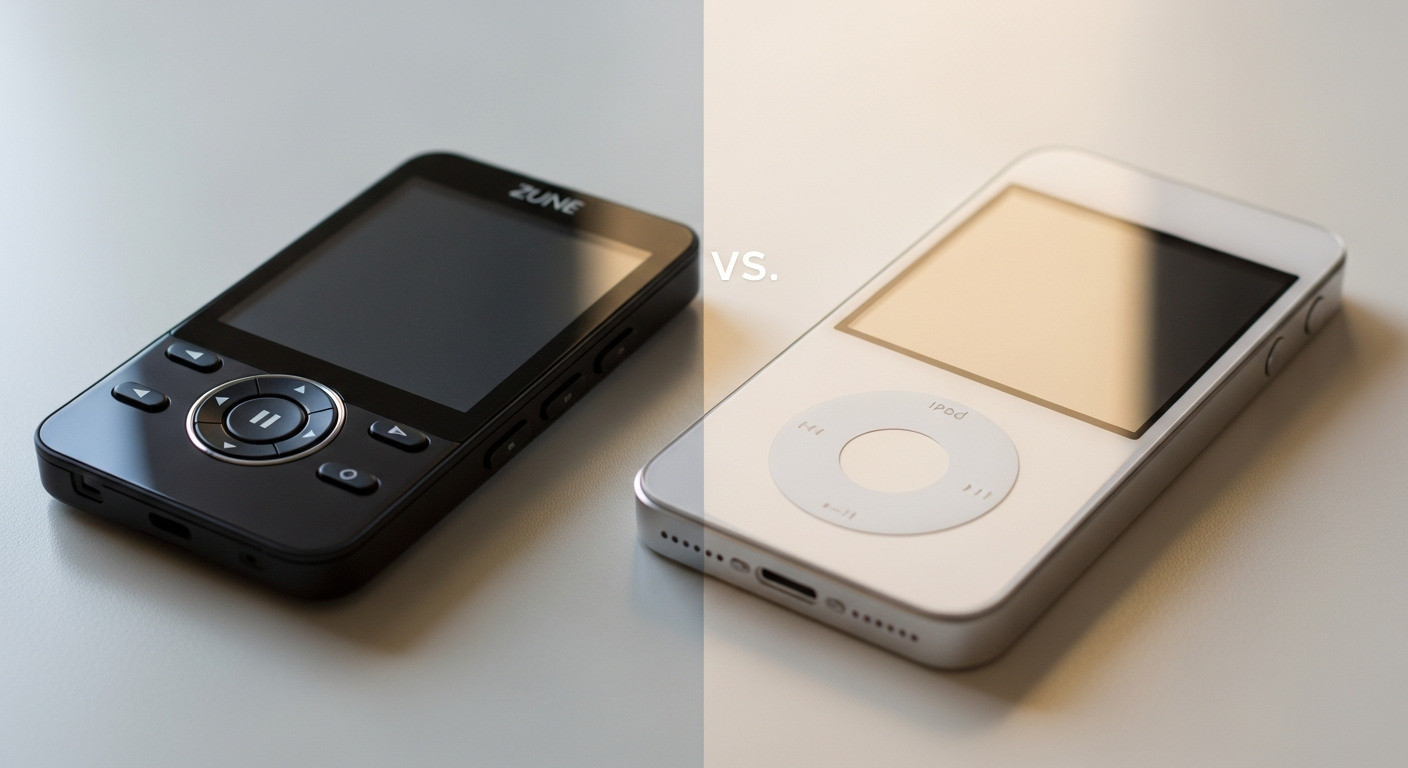
Why the Zune Never Killed the iPod
In the annals of tech history, the Microsoft Zune often appears as a footnote, a valiant but ultimately unsuccessful attempt to challenge Apple’s dominance with the iPod. As detailed by The Verge, Microsoft invested years and considerable resources in developing a true iPod competitor, yet it never truly gained traction.
The Right Bets, Wrong Time
What’s surprising about the Zune is that Microsoft made several astute observations. The company recognized early on that integrating social features could enhance user engagement. They understood the potential of these pocket-sized devices to evolve beyond mere music players. Furthermore, Microsoft had a number of innovative interface design concepts.
Social Integration: A Forward-Thinking Strategy
Microsoft’s foresight in integrating social features into the Zune was particularly notable. While other companies were still focused on basic music playback, Microsoft envisioned a platform where users could share music, connect with friends, and discover new artists. This strategy, however, was not enough to overcome the iPod’s established market position.
Too Little, Too Late
Ultimately, the Zune’s failure can be attributed to being too little, too late. Apple had already established a strong foothold in the digital media market, with a user-friendly product and a robust ecosystem of content. Microsoft’s efforts, despite their innovative aspects, couldn’t overcome Apple’s head start and market dominance.
Conclusion
The Zune’s story serves as a reminder that even well-conceived products can fail in a competitive market. Microsoft’s strategic insights into social features and broader functionality were commendable, but they were insufficient to overcome the iPod’s established presence and the broader market dynamics at play.
About the Author