Grand Egyptian Museum: Reviving the Pharaohs’ Civilization in a Modern Light
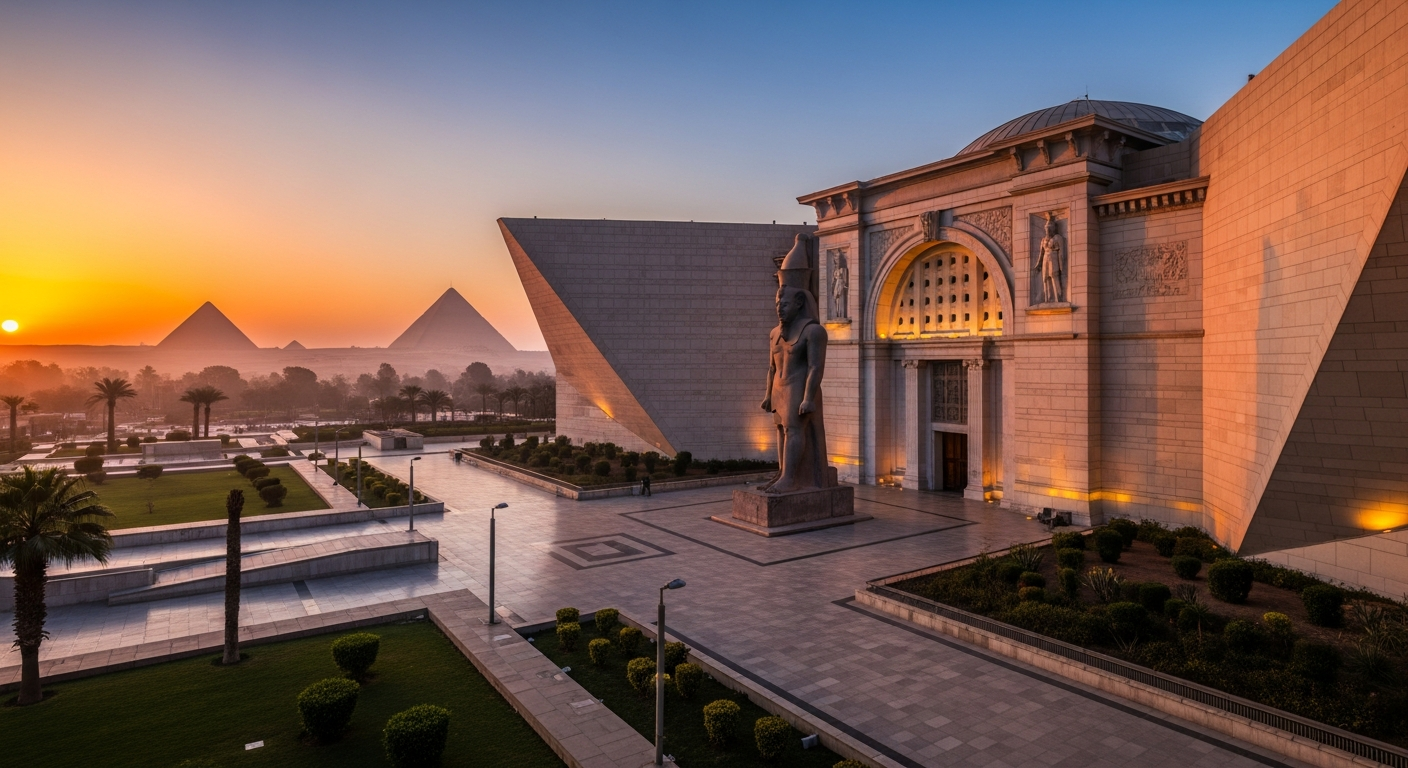
In a dazzling spectacle reminiscent of the tales of One Thousand and One Nights, the Grand Egyptian Museum (GEM) opened its doors with global participation. This momentous occasion, drawing attention from Tokyo to Rio de Janeiro and New York, captured the world’s fascination as thousands watched the grand event on screens worldwide. The museum, a testament to Egypt’s rich history, stands majestically on the Giza Plateau, its facade overlooking the golden sands of the pyramids.
A Monument to History
The inauguration was a celebration of Egypt’s glorious past, with the presence of dignitaries and leaders from around the world. Attendees received small models of the GEM, each bearing a country’s name, symbolizing their participation in the opening ceremony. Egyptian President Abdel Fattah al-Sisi placed the final piece representing Egypt, officially inaugurating the museum. He described the GEM as a tangible image of a nation that has thrived along the Nile since the dawn of history, emphasizing the enduring spirit of the Egyptian people as builders of civilizations and custodians of heritage. The museum is a testament to the ingenuity of the Egyptian people, who built the pyramids and inscribed the story of eternity on the walls.
A Symphony of Art and History
The opening ceremony was a masterful blend of the past and present. At the entrance, the statue of Ramses II welcomed guests, overseeing the event. The architectural details and decor were written in a language of grandeur, with lights and sounds creating a symbolic depth to the event. The opening featured a musical performance by the Egyptian artist, Sherine Ahmed Tarik, composed by Hisham Nazih, and conducted by Maestro Nader Nagi. The ceremony also included the return of the artist, Sherihan, who added her magic to musical pieces. The museum houses over 100,000 artifacts, with half of them on display, making it the largest collection dedicated to a single civilization.
Treasures of the Pharaohs
The Grand Egyptian Museum will be the final resting place for the colossal statue of King Ramses II, weighing 83 tons and standing 11 meters tall. A hall dedicated to Tutankhamun will showcase more than 4,500 funerary pieces from the tomb discovered by Howard Carter in 1922. The museum also features a separate building dedicated to the solar boat of Pharaoh Khufu, built nearly 4,600 years ago. Visitors can also view the restoration work on a second solar boat through a glass wall.
The Grand Egyptian Museum stands as a beacon of cultural preservation, celebrating the enduring legacy of the Pharaohs and the rich history of Egypt. The museum is a major step in putting Egypt on the global tourism map.
About the Author